Inside quirion
Five investment themes, one portfolio
Our Megatrends portfolio bundles several major investment themes at once. Here's why they matter both socially and economically.
Published on 4 min read

Thematic investments are in demand among investors. But which theme holds particular promise for the future? We have identified five and bundled them in our new Megatrends portfolio. According to our analysis, these five themes are especially closely linked to what we see as the most important global mega-trends:
- Urbanization
- Sustainability
- Demographic change
- Individualization
- Globalization
- Connectivity
And here's why the selected themes are also relevant both socially and economically:
1) Infrastructure
US$3.7 trillion per year: that's the figure the G20 initiative „Global Infrastructure Outlook“ estimates for the infrastructure investment needed worldwide by 2040. That's roughly as much as Germany's annual gross domestic product. Stable power grids, reliable energy and water supplies, efficient transport and traffic routes: the number of „construction sites“ is large, whether in developed countries or emerging economies. But solid infrastructure is the foundation for global economic growth. That's one reason why, at their summit in June 2022, the G7 nations announced an investment package worth US$600 billion, as a „Partnership for Global Infrastructure.“ With it, they are also countering China's „New Silk Road.“ Through that major project, the Middle Kingdom promotes trade routes via lending and infrastructure projects. Numerous companies worldwide stand to win lucrative contracts as these various initiatives get under way.
2) Smart Cities
43 million inhabitants in Delhi, 36 million in Tokyo, 34 million in Shanghai: these are the projections of the United Nations Department of Economic and Social Affairs for the year 2035. Urbanization is advancing. Already today, more people worldwide live in cities than in the countryside. This poses immense challenges not only for large metropolitan areas—for example when it comes to energy supply or transport. According to urban planners and experts, digitalization is paving the way toward solutions: from smart power grids that coordinate the generation, storage and consumption of energy, to smart mobility that combines different modes of transport. The build-out of the 5G communications network, which can handle particularly large volumes of data, plays an important role here. The economic potential of this theme is immense.
3) New Energies
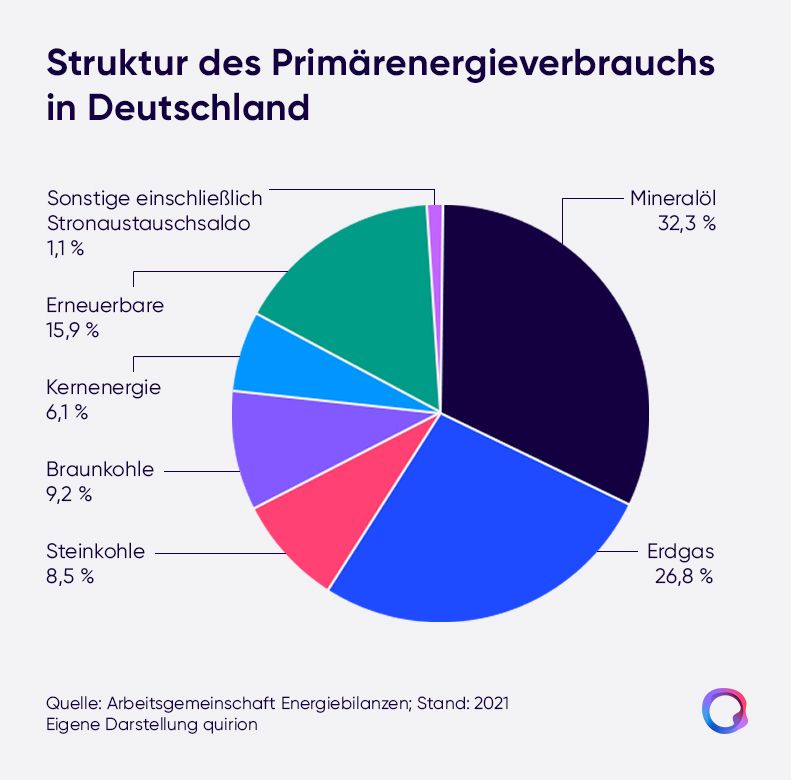
Climate change is one of the greatest global challenges. That's why greenhouse gases are to be cut massively—and those that are indispensable are, where possible, to be offset by removing CO2 from the atmosphere. To reach these goals, an energy transition is unavoidable. Take Germany as an example: according to the Federal Environment Agency, in 2020 around 83% of German greenhouse-gas emissions arose from converting mostly fossil energy sources into electricity and heat. Whether it's the generation and storage of renewable energy or technologies for neutralizing CO2: innovations are needed that help make an energy transition a reality. Because there is still a great deal to do.
4) Artificial Intelligence
Automation is reaching more and more areas of the economy—in industry as well as in retail, in the services sector and even in agriculture: hardly any sector is untouched. The importance of algorithms is growing ever greater in the process. Already today, technology is becoming increasingly autonomous: supermarkets manage without checkout staff, special apps can detect diseases, subways steer themselves. In such innovative applications, numerous experts see the potential for considerable efficiency gains. A study by Accenture and Frontier Economics, for instance, credits artificial intelligence with the potential to boost labor productivity in the USA by 35% by the year 2035.
5) Cybersecurity
For modern companies, information technology is indispensable. It keeps processes running smoothly. But when criminals break into these systems, block access to data and then try to extort a ransom, it can become expensive for the affected firms. Production lines temporarily grind to a halt, delivery notes and invoices can't be issued. According to 2021 figures from the digital association Bitkom, cyberattacks cause German companies around €220 billion in damage every year. To prevent this—or at least to limit the damage—substantial investment is needed, a growth opportunity for numerous providers of the relevant hardware and software.
Cybersecurity, just like Infrastructure, Smart Cities, New Energies and Artificial Intelligence, is a component of quirion's new Megatrends portfolio.
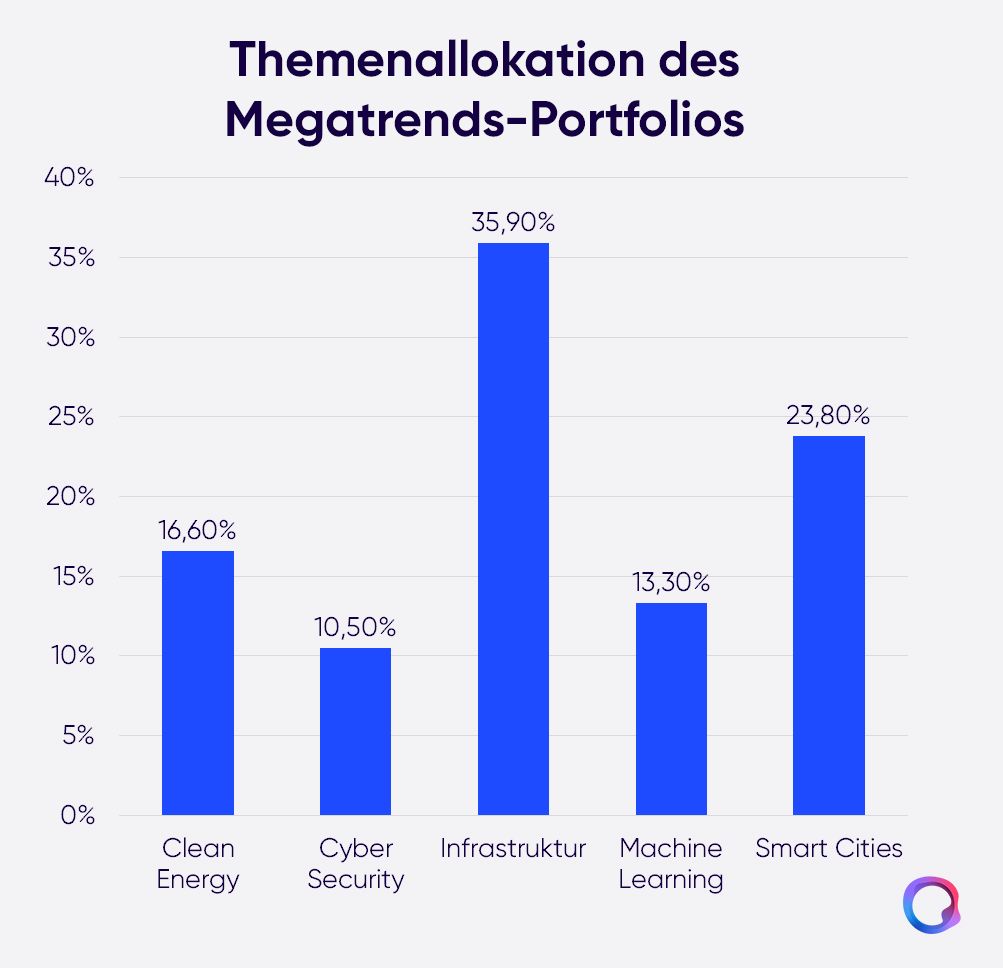
The portfolio consists 100% of equity ETFs. It is designed for investors with a correspondingly opportunity-oriented risk profile—and as a complement to a more broadly positioned core strategy, such as the ones quirion's global portfolios offer.
Learn more about the Megatrends portfolio here.
More from the blog

We have developed our sustainable portfolio further
As part of our regular rebalancing, we changed our sustainable ETF portfolio a little more than usual this time. Here is what it does for you.
02. Oct 2026

Working smarter with AI: he knows how
As Technical AI Lead, Felix Behne makes sure artificial intelligence does real work at quirion. How he found his way to us, and what he is building now.
28. Aug 2026

Concentrated power for your portfolio
quirion and Quirin Privatbank work closely intertwined as one team. That brings many advantages for customers.
05. Aug 2026
Invest now and build your wealth.
Open an account in just a few minutes with the test winner.