With our regular rebalancing, we adjusted our sustainable ETF portfolio somewhat more fundamentally this time. Why we did it and what it does for you.
At quirion, we follow an investment strategy that does not chase every current trend. Constant buying and selling empties your pockets: wherever possible, we avoid changing positions in the portfolios. Because of the costs and, above all, because of the risks that come with forecasts and speculation.
Sometimes, however, it is necessary to adjust the portfolios strategically. This time, the changes to our sustainable portfolio were a little more extensive. “At longer intervals, we put our approach to a more fundamental test,” explains Philipp Dobbert, Head of Asset Management at quirion and Quirin Privatbank. “This year we did that on the equity side for the first time since 2020, using a much broader data basis and further refined analysis methods.”
Factors guide the product selection
In our sustainable portfolio, we include environmental and social criteria in the selection. This limits the number of eligible securities and restricts the possible diversification. “Apart from that, we diversify the sustainable portfolio so that the balance of return opportunities and risks is as good as possible,” Dobbert stresses. To do this, Dobbert and his team rely on so-called factors, whose relevance has been proven scientifically.
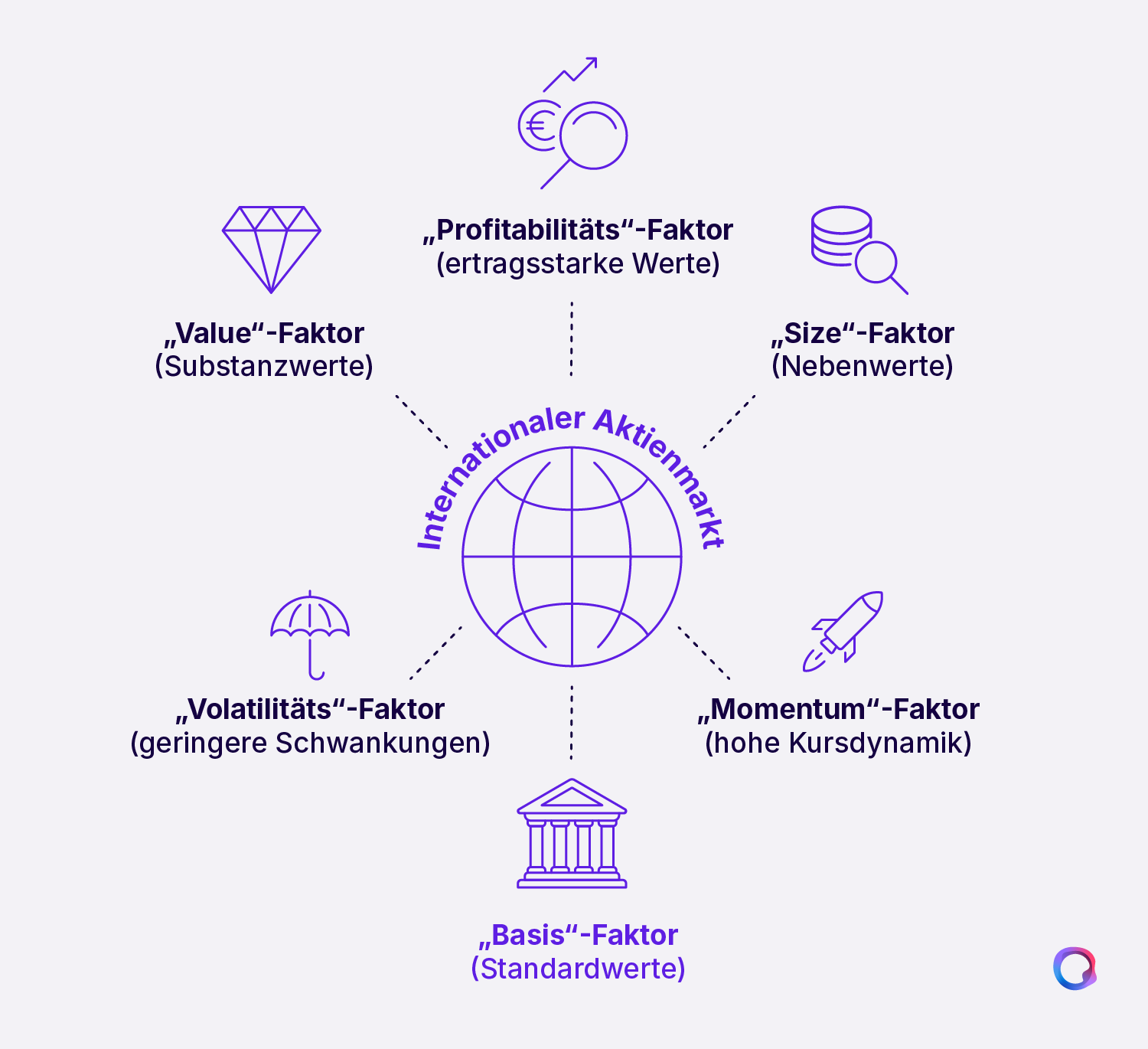
Some background: every share has various typical characteristics that influence both its return opportunities and its risks. “These include, for example, the valuation and the extent of price fluctuations,” Dobbert explains. “You can categorise shares by how strongly they show such characteristics. These categories are called factors.” Analyses determine which factor weighting the portfolio should aim for. The product selection then follows from that.
“Profitability” factor added
The most important change is that the portfolio now takes one more factor into account. “Our analyses show that the so-called profitability factor adds further diversification and an even more attractive risk-return profile,” Dobbert notes. The “value” and “profitability” factors work together. “The value factor is about shares that are considered undervalued. But some of them are valued low for good reason, because the business model has lost its substance.” Combining value with the profitability factor creates a counterweight.
Changes to equities and bonds
In the adjusted portfolio of 12 ETFs in total, the two new additions, Amundi MSCI World Min Volatility Advanced and Amundi MSCI World Momentum Advanced, play a key part in reaching the adjusted target factor profile. One important point: whatever their name, ETFs always cover several factors at the same time. “That is why we check carefully whether the product combination really brings the intended factor weighting into the portfolio,” Dobbert stresses. With the changes, the number of companies the sustainable portfolio holds shares in grows from around 3,000 to 4,220.
Something has changed in the bond segment as well, though less fundamentally. We already introduced a new structure in the bond portfolio last year, as in the global portfolio. In the two sub-components “stabilising” and “income-oriented”, we now include further market segments. Covered bonds, emerging market bonds and money market positions are now added to the mix. “Adding them raises the target returns of both sub-components without increasing the risk significantly,” Dobbert points out.
Rebalancing offsets price fluctuations
We made the changes at the same time as the regular rebalancing. Rebalancing offsets the effects of value fluctuations on the portfolio. Price fluctuations make the portfolio drift away from its target allocation gradually over time.
When rebalancing, you sell part of the securities whose weight has become too heavy. The money goes into securities whose weight has become too light. After rebalancing, the balance of return opportunities and risks matches the investor's personal risk profile again.
Costs and tax effects
Despite the more extensive changes, the product costs of the sustainable portfolio stay stable. Rebalancing is included in quirion's digital wealth management. There are no additional fees.
However: if securities are sold at a profit, the profit is taxable. “Some people assume it is better to do nothing, because then no taxes are due at all,” Dobbert notes. “But that is a misjudgement.” Dobbert points out that distributions from distributing funds, for example, have been taxed for a long time. For accumulating funds, an advance lump-sum tax (Vorabpauschale) has applied since 2019.
You can use the saver's allowance for investment income. But even if it is used up: “With a medium- to long-term investment horizon, the point is to realise return opportunities and avoid unnecessary risks,” Dobbert underlines. “The benefit of the portfolio adjustments and of rebalancing for reaching your investment goals outweighs the tax effects.”
You can find the new composition of our sustainable portfolio here.