Just 4 clicks to a sustainable portfolio: making your investments greener and more socially responsible isn't hard. 4 questions and answers about sustainable investing with quirion.
Is now a good time to invest sustainably?
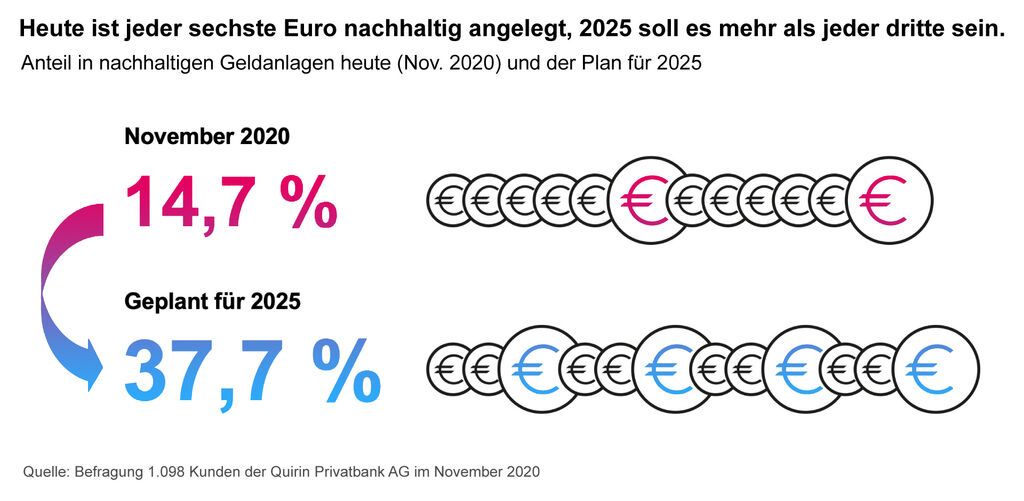
Yes! And not just because sustainability has moved sharply into focus across the economy. Sustainable investing has also become much easier to put into practice in terms of return and risk, and therefore makes more sense overall. Because while only a few years ago the main options were high-risk investment vehicles, such as funds holding just a handful of individual stocks or so-called closed-end stakes in wind or solar farms, there are now numerous sustainable ETFs. These make it possible to invest cost-effectively and with broad diversification, which reduces risk. Given these improved conditions, more and more investors now want to invest more sustainably in the future. A recent customer survey by Quirin Privatbank showed exactly this, for example.
I'm interested in a more sustainable investment. What do I need to do to set up my quirion account that way?
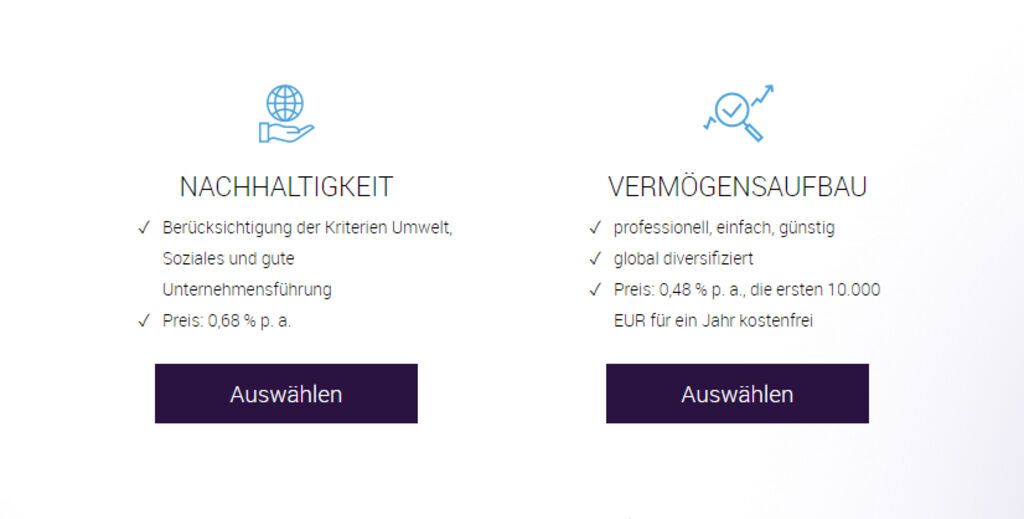
If you don't yet have an account with quirion, simply go to quirion.de and start answering the questions: first decide who you're investing for. Then decide whether you're investing to build wealth or for retirement, and over what time horizon, and with one more click you can specify that sustainability matters to you when it comes to your investment, too. Your portfolio is then automatically set up accordingly. If you already have an account with us, go to the portfolio overview. There you'll find the "New Sustainable Portfolio" button.
So how does quirion select the sustainable ETFs?
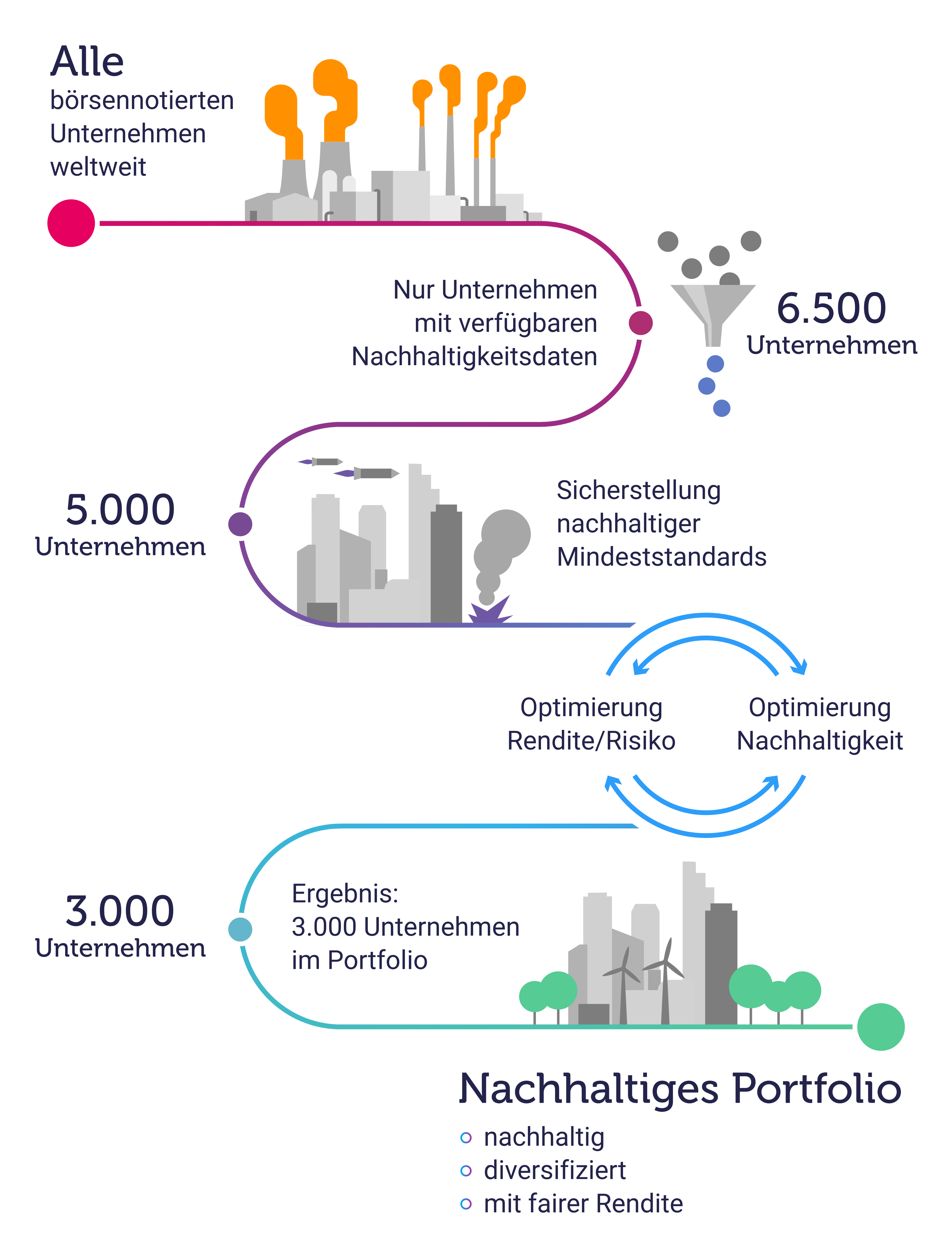
The selection process follows strict criteria in several stages. The first step is an analysis of the product providers. Here we also consider whether the fund company uses its voting rights at the companies it invests in to promote greater sustainability in the economy. In the second step, we exclude companies that manufacture landmines, cluster munitions and nuclear weapons and that violate the so-called United Nations Global Compact. This sets out extensive minimum standards for socially responsible business practices, for example the protection of human and labor rights. In the third step, we then take a closer look at the remaining products against a wide range of criteria, both in terms of sustainability and in terms of return and risk. This chart shows the filtering process:
Will my portfolio then really be sustainable?
The share of the portfolio that takes environmental and social characteristics into account varies depending on the proportion of equities and bonds in your portfolio. But it is at least 95%. Important: we never consider the sustainability criteria alone; we always place the highest value on the quality of the ETFs and on broad diversification. After all, the result should also remain stable in terms of the balance between return and risk. Only once that is assured can you also invest large portions of the money you have available sustainably with a clear conscience, and hold on to that investment for the long term, thereby making a lasting contribution to the transformation of the economy and society.
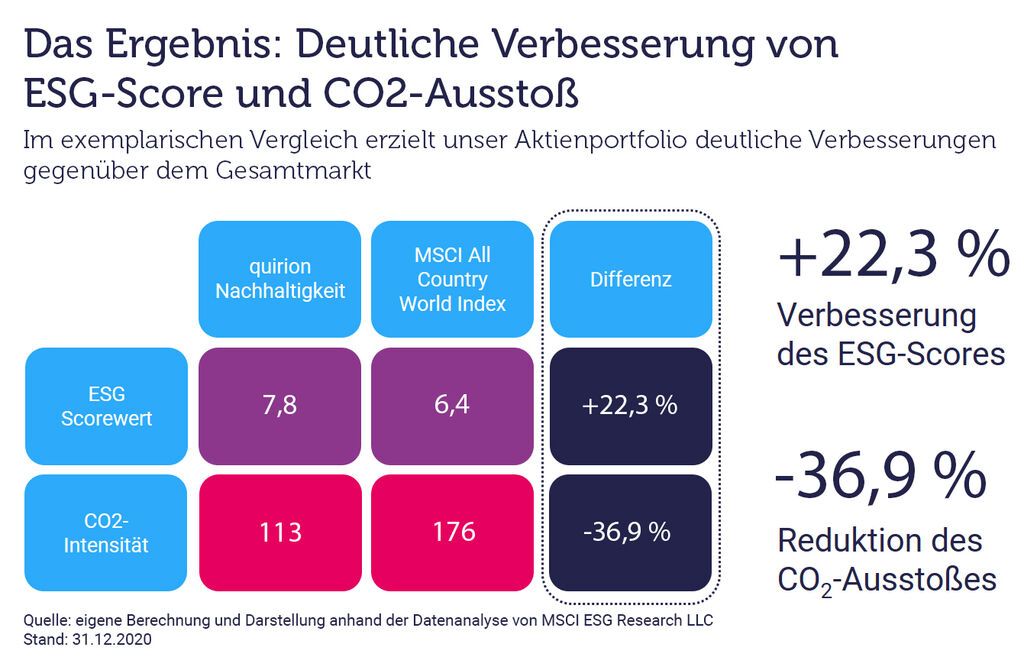
To be as transparent as possible, we produce a dedicated sustainability report every quarter for investors with a sustainable portfolio. There you'll find, for example, a concrete assessment of the portfolio's CO2 intensity, which is one of our selection criteria. We also analyze the "environmental contribution" and the "social contribution." We count as positive those business activities that help achieve the UN Sustainable Development Goals.
You can find further information about our sustainable portfolio, along with mandatory disclosures on the subject of sustainability, here.