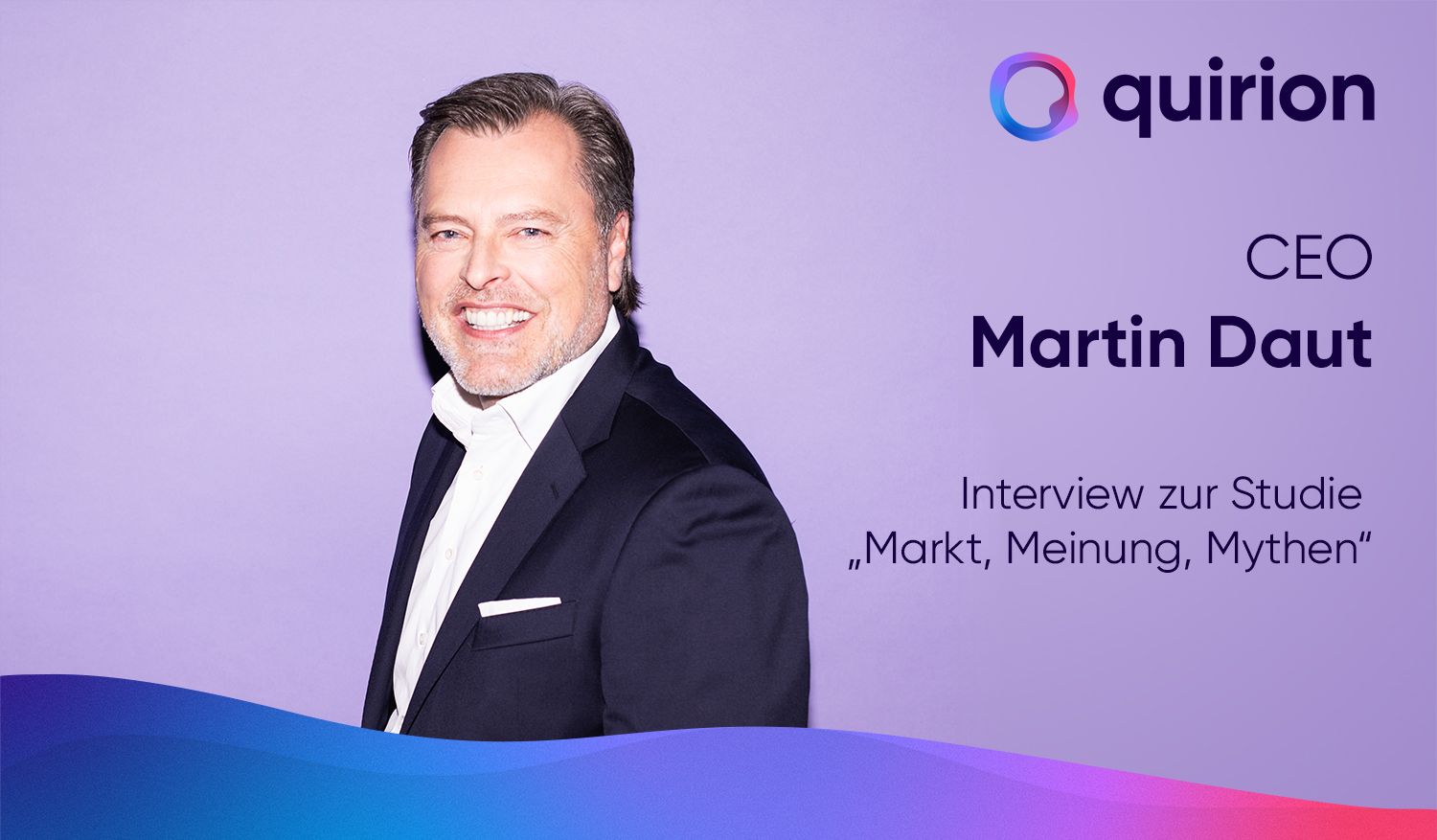
How great is the interest in digital asset management? What do investors expect from a robo-advisor, and what preconceptions are out there? Together with comdirect, we got to the bottom of questions like these in a study. Our CEO Martin Daut explains in an interview what we found out and which messages we’re taking away.
Around nine years ago, quirion was one of the first robo-advisors in Germany. Back then, hardly any investor here could make sense of the term. How has that changed?
Our “Robo-Advisor Study 2022” shows that a majority – 59 percent of all respondents – can now imagine investing money through a robo-advisor. Only around a third say they don’t know the term robo-advisor at all. Digital asset management is still fairly young, especially in Germany. That’s why these figures are promising. The potential is still huge. That’s also why we launched the survey together with comdirect. The robo-advisors quirion and cominvest are both among the market leaders in the sector, and each now manages more than one billion euros in assets. We wanted to know what users and non-users of robo-advice associate with this topic – and thereby identify what we still need to explain and inform people about more.
So what do people expect from a robo-advisor?
Those who know the term in principle but don’t yet invest that way are hoping above all for low costs and ease of use from robos. Pleasingly, these wishes largely match the advantages that users cite. For them, convenience tops the list of benefits, followed by digital availability and good value for money.
And where do you see a need for education?
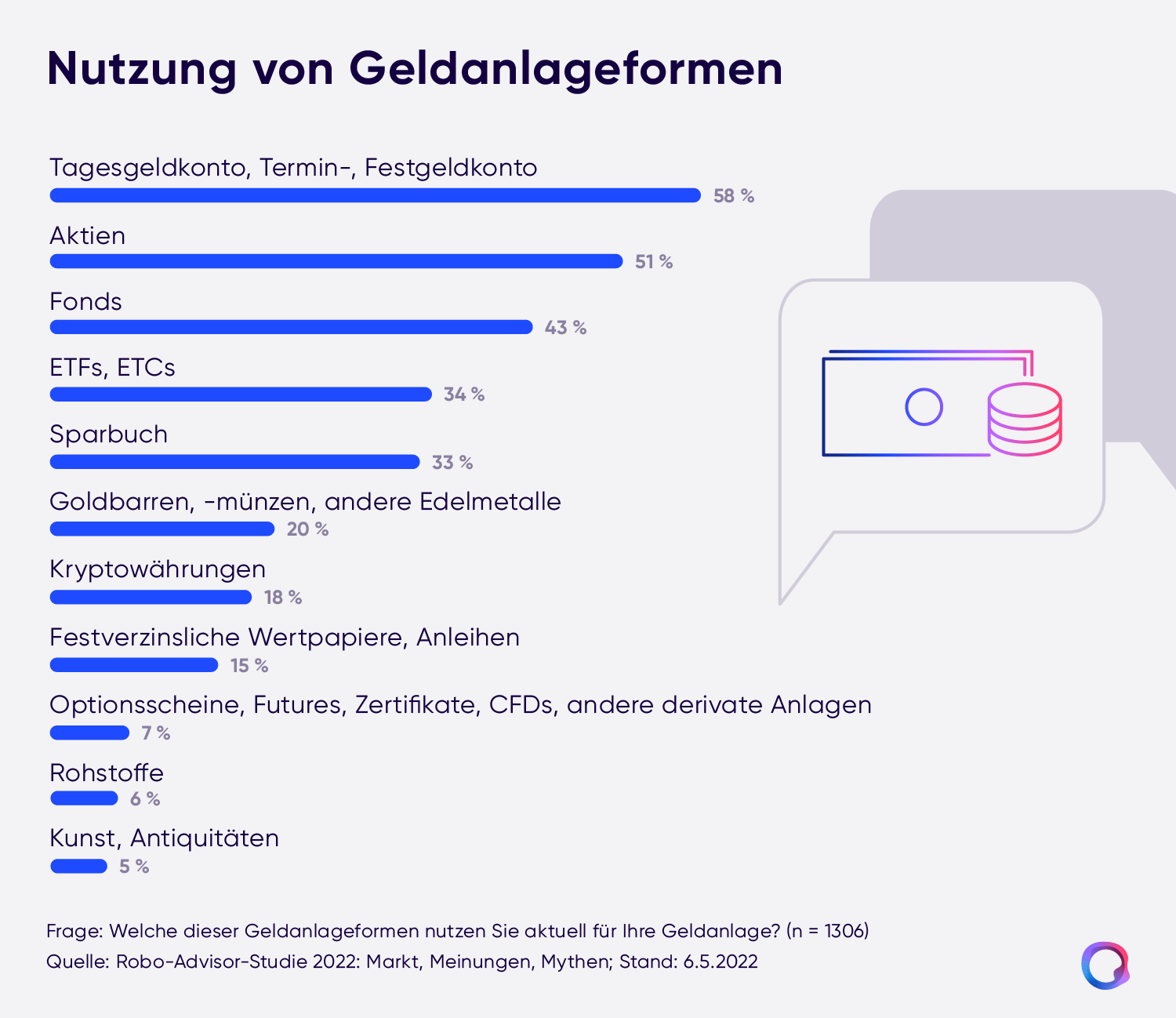
First of all with investing in general: at 58 percent, most respondents still use instant-access and fixed-term deposit accounts. Shares, funds and ETFs do follow immediately after. But too many people cling to interest-based forms of investment. After deducting inflation, interest products lead to a real loss of wealth. Yet many people still associate equity investments above all with “risk”. That is partly because public attention keeps focusing on individual stocks and short-term trends. Individual stocks really are high-risk and not really suited to private investors. Without the right diversification, an equity investment is a shot in the dark that very often backfires.
With quirion, you also rely on the equity market…
But you don’t speculate on individual shares or short-term trends. You invest in globally diversified ETF portfolios that “harvest” equity returns systematically and worldwide. With our investment strategy, we make the equity market accessible even to safety-oriented investors, in line with their risk profile. By adding bonds to the mix, we keep the fluctuations lower than in the equity market, depending on each person’s risk appetite – at least over the long term.
What preconceptions or misconceptions did you uncover in the study?
A whole range. Men in particular believe they can invest the money better themselves. Yet not even investment professionals – regardless of gender – systematically and consistently beat the market. Women, by contrast, more often complained in the study that robo-advisors were too impersonal for them. But even if the word “robo” makes it sound as though machines do all the work: with us, it is always people who hold the reins, and on request we offer independent, personal advice. What pleases me: interest in digital asset management no longer necessarily has anything to do with the amount of money available. It rises only slightly as wealth increases.
So how much money do you need to use digital asset management?
“Wealth” sounds like a lot at first. But with us it isn’t only about managing existing capital – it’s about structured wealth building. For one-off investments we have no minimum. Savings plans start from as little as €25 a month. For asset management, that’s already revolutionary. After all, you don’t just get a single security. With every savings instalment, you take a stake in around 8,000 shares and, where applicable, in hundreds of bonds on top of that.
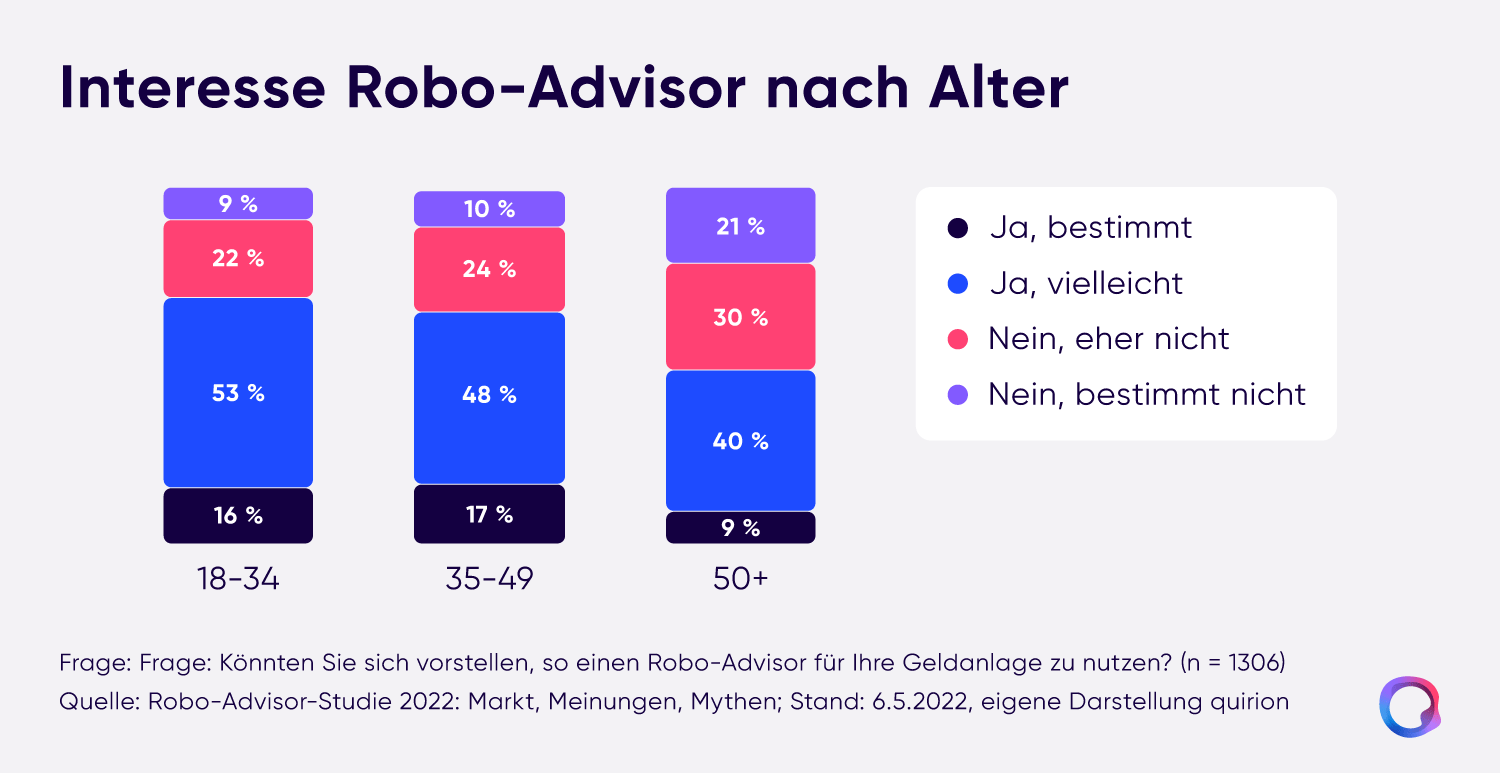
What about the assumption that robo-advisors are more something for younger people?
There’s something to that. Offerings such as apps and savings plans appeal above all to younger generations. But the concept as a whole convinces every age group. Only one percent of users see no specific advantage in investing with a robo-advisor. That matches the figures from quirion. Our churn rate is even below one percent. In my more than 20 years in this industry, I’ve never seen a rate that low. All of this makes me very optimistic: digital asset management is the next generation of investing – an offering for everyone who wants to build wealth simply and conveniently, yet systematically and professionally.