In recent years and decades, the economics profession has rightly been criticised for how far removed its models are from reality. That makes it all the more gratifying that, a month ago, Richard H. Thaler was honoured with the Nobel Prize in Economics. The 72-year-old American researcher is regarded as a pioneer of behavioural economics, a branch of economics that studies how people actually behave.
Thaler himself likes to point out how comical this definition is: it implies that the rest of economists don't concern themselves with real people at all, but remain trapped in a model world populated by self-interested, error-free, purely money-driven artificial beings. Thaler called these beings “Econs”, derived from the coined term “Homo economicus”. And it is thanks to his life's work that researchers are now losing interest in “Econs” and turning their attention back to “Humans” – those creatures of the species “Homo sapiens”, to which we happen to belong.
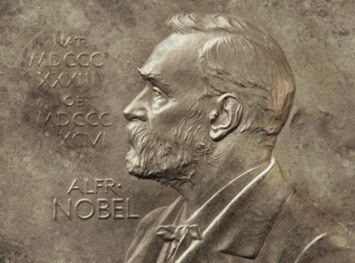
“"Econs" and "Humans" earned Thaler the Nobel Prize in Economics.”
Share
“Humans” think in categories to keep track of things. They create “mental accounts”. According to Thaler's research, the most likely day for a visit to the gym is the day after the monthly membership fee has been debited. This is typical short-term-driven “Human” behaviour that “Econs” would never engage in. After all, what does the benefit of a gym visit have to do with past account movements?
Thaler didn't stop at describing such “human” phenomena – he also actively helped put his insights into practice. Thanks to his work, for example, Americans are now saving more for retirement: his idea of automatically diverting future pay rises into retirement provision has proven workable – whereas asking “Humans” to please shop less from now on and start saving has not. Experience shows that it is often seemingly trivial “design questions” that can make a big difference to how “Humans” behave.
That is why Thaler's findings are increasingly being taken into account by governments and regulatory authorities too. Herein also lies a danger, because the research reveals how easily “Humans” can be manipulated. This is especially true when it comes to investing, where financial advisers have a particularly large information advantage over their clients and can steer them subtly with small design tricks. That is why it matters to Thaler that investors are nudged in a direction that serves their personal investment success. He recommends that private investors invest in the market in a diversified way and then do as little as possible afterwards. ETFs and index funds – which quirion uses exclusively in its portfolios – are the ideal instrument for such a strategy
Research clearly shows – Humans are easier to manipulate.
Share
This makes it all the more important that investment advice can be given without ulterior motives, in the client's interest. Fee-based advice and doing away with hidden commissions, as quirion offers, are an essential prerequisite for this.
Another aspect of Thaler's research speaks in favour of an automated investment strategy: unfortunately, you have to be aware that emotional investment mistakes aren't made only by “other people”. Often you have to recognise yourself in them too. It is characteristic of “Humans” that they like to suppress their own mistakes and therefore don't always learn from them. This is where automated investment advice can play to its strengths, because it forces you to define your investment strategy and stick to it over the long term. That protects you from emotional bad decisions.
Asked what he would do with the prize money of roughly one million euros, Thaler replied in his humorous way that he intended to spend it as irrationally as possible. Anyone who prefers to rely on reason when investing, however, has come to exactly the right place with quirion. And, very much in the tradition of Richard H. Thaler, we help interested clients a little in overcoming their all-too-human inertia: if you decide to open an account with us before the end of the year, we will manage the first €10,000 of your investment free of charge for you, permanently*.