
There are many opinions – and some persistent rumours – about what investing in equities is really like. We put five claims under the microscope and tell you what’s true.
1) „Equities are only for gamblers“
Multiplying or losing your stake in as short a time as possible: the image of the stock exchange as one big casino is widespread. Anyone who pictures it that way sees the equity market as a place where, apart from professionals, gamblers above all congregate. A few weeks ago, a post circulating on social media offered a good example of this view. As supposed proof that equities are fundamentally unsuitable for retirement provision, the author showed the price chart of electric-car maker Tesla over a very short period of six months. During this time, the share had lost value dramatically.
Betting short-term on individual stocks: investing that way does indeed have a fair amount in common with gambling. But it doesn’t have to be like that. Diversification – spreading across many individual stocks and markets – together with a long-term investment horizon cushions price fluctuations. This can be demonstrated, for example, using the MSCI World equity index.
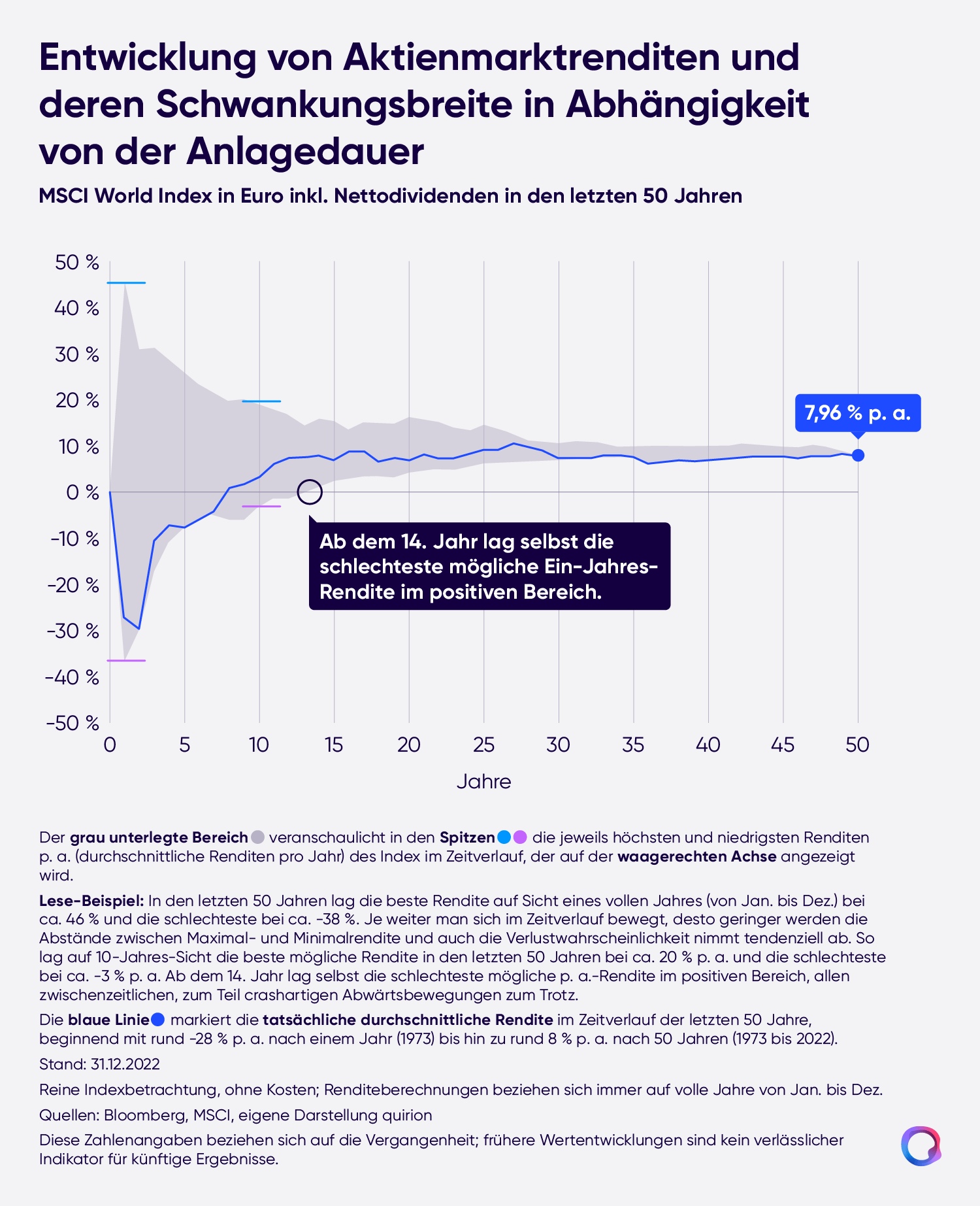
And yet quirion’s global portfolio is set up far more broadly still than the MSCI World. At the end of January 2023, the index contained around 1,500 equities from 23 countries; quirion’s global portfolio, about 8,000 equities from over 70 countries.
2) „The equity markets have decoupled from the real economy“
The cliché of the gamblers on the equity market is sometimes linked to the belief that price movements are driven by speculation that has little to do with the real economy. Here, too, the same applies: in the short term and for individual stocks, that can certainly be true. Great euphoria can trigger price jumps that quickly fizzle out again.
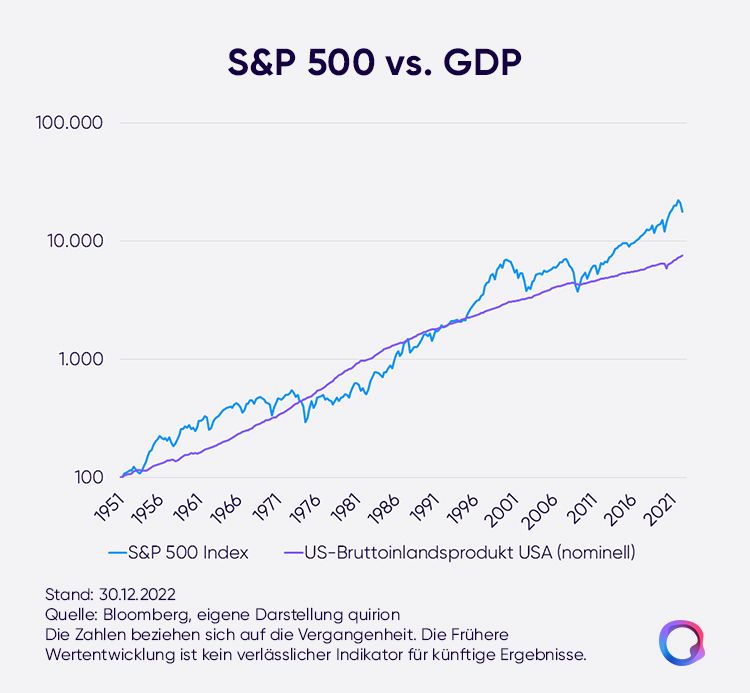
However, it is equally true that, on average and over the long term, the world’s equity markets have historically always risen. There is a good reason for this. Equities give you a stake in companies that create value. Not every company manages to create value, and above all not permanently. But the economy as a whole is geared towards growth. The link between equity markets and the economy is quite fundamental. This is shown, for example, by the development of the US stock index S&P 500 compared with American gross domestic product.
3) „When it comes to returns, it’s all about the right timing“
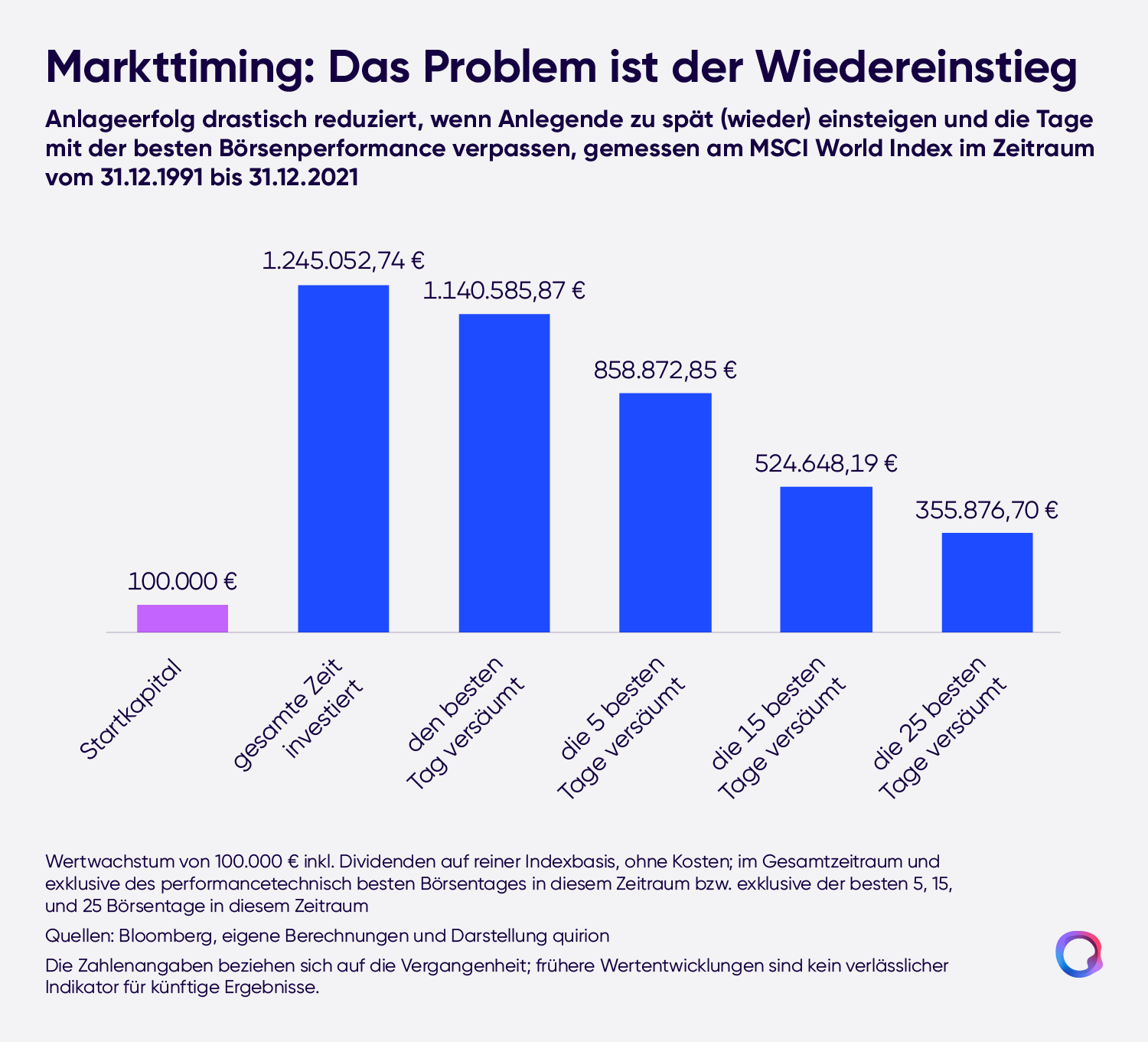
Buy cheap, sell dear: that’s another one of those claims that sounds plausible at first. Many people, at least, believe that only those who happen to catch a good moment for getting in and out are successful when investing. The problem: share prices are constantly fluctuating. And no one knows exactly when price trends will turn.
Anyone who, say, exited the market in the winter of 2022 expecting falling prices may have been annoyed in the first weeks of this year, or wondered when the right time to get back in was. The equity market can, at times, repeatedly see stronger fluctuations. No one knows when the best days will be – but they are quickly missed. And that can have a major effect on returns.
4) „Equities are mainly a man’s business“
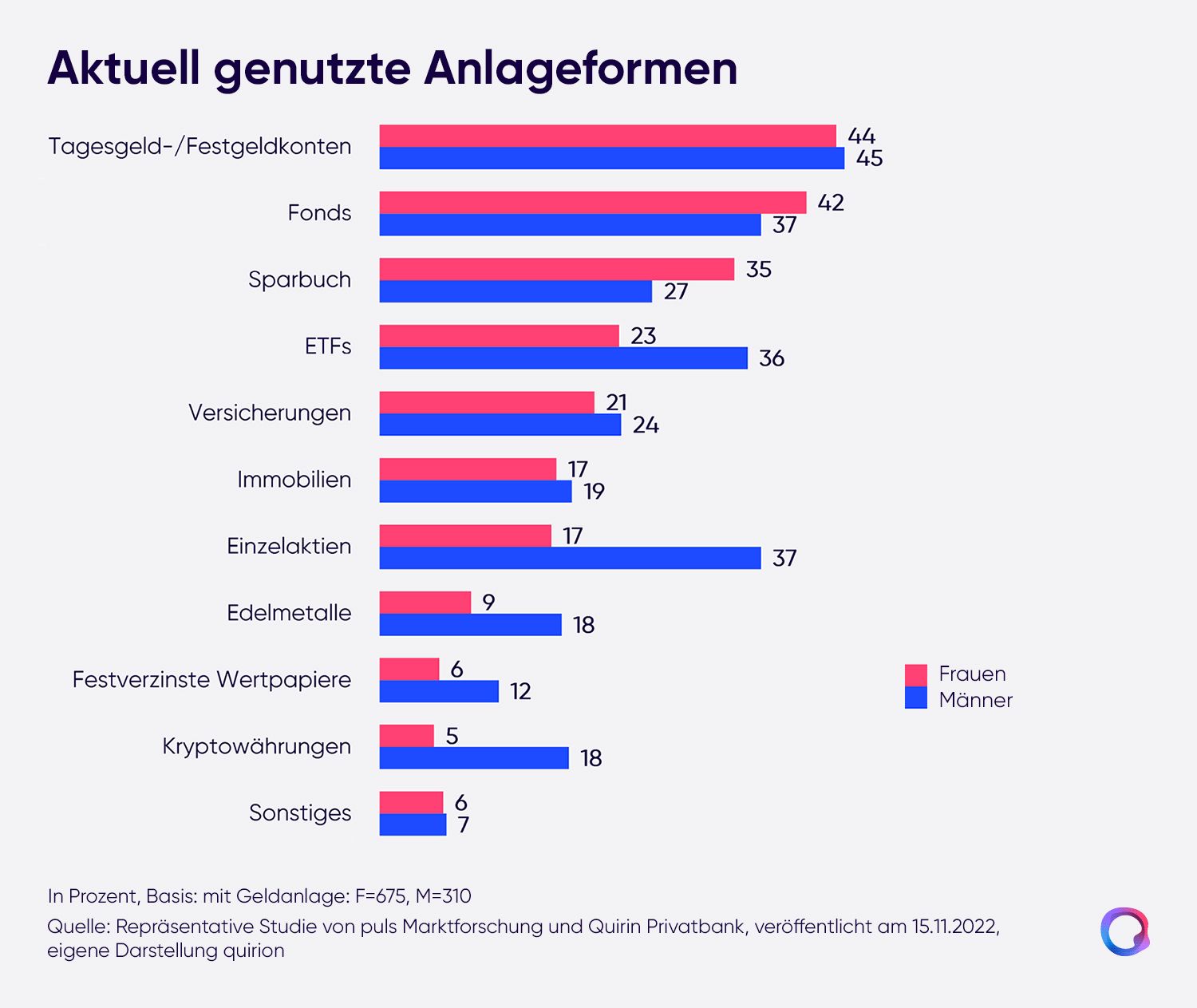
According to figures from the Deutsches Aktieninstitut, the number of people investing money in equities in Germany reached a record level despite the market turbulence of 2022. Growth was above average precisely among women investors (up 11 percent). That said: around 8.1 million male equity investors were matched by around 4.7 million female equity investors. So it is statistically true that men are more inclined, and women less inclined, to invest in equities. A study by Quirin Privatbank confirmed this last year, too.
And yet the right investment strategy is essentially the same for everyone. Although concentrating on a pure equity portfolio isn’t right for everyone. At quirion, investors can choose between ten variants of the global or the sustainable portfolio: depending on risk appetite, bonds are mixed in, which additionally cushion the price fluctuations of the equity markets.
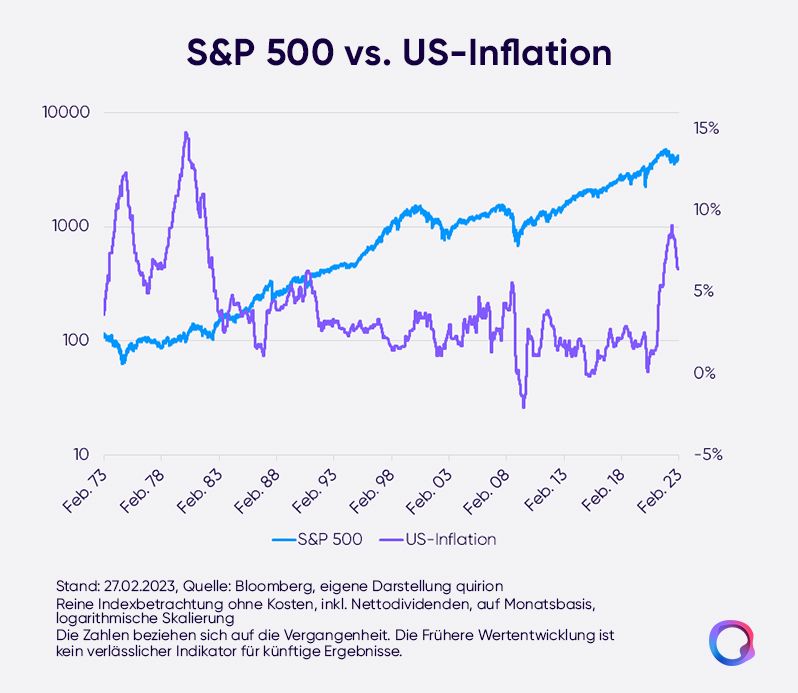
5) „Equities offer protection against inflation“
When inflation rates rise as abruptly as they did last year, that’s no good news for the equity market either. Central banks respond with interest-rate hikes, which makes financing more expensive and weighs negatively on company valuations. So in the short term, prices can come under pressure when inflation picks up.
But equities give you a stake in the value creation of the economy. When the price level rises, sooner or later that is reflected in companies’ revenues and profits. This doesn’t hold for every single company, but it does for the broader market. Over the long term, investing in equities can therefore protect wealth against the loss of purchasing power caused by inflation.
Conclusion: a smart investment strategy relies neither on the targeted selection of individual stocks nor on speculation about the right moment. With a portfolio that is permanently and systematically broadly diversified, however, investors can pursue their goals fairly reliably. And that includes, not least, building wealth for retirement.