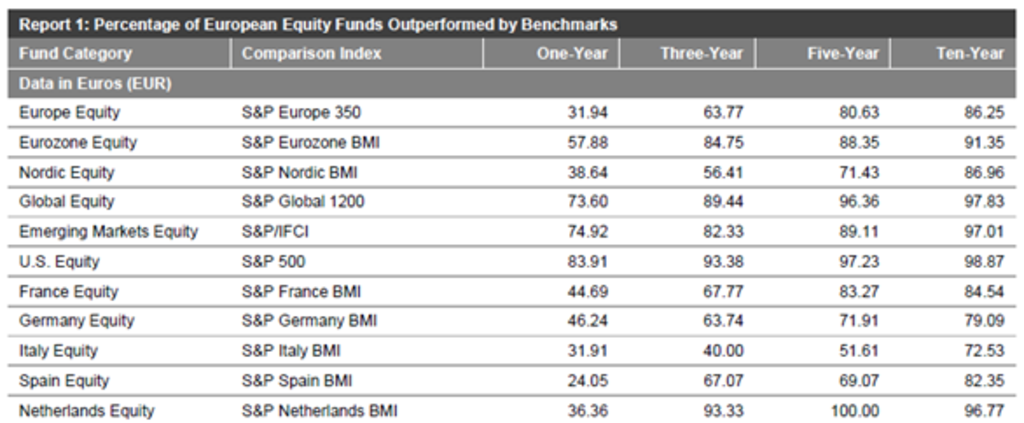
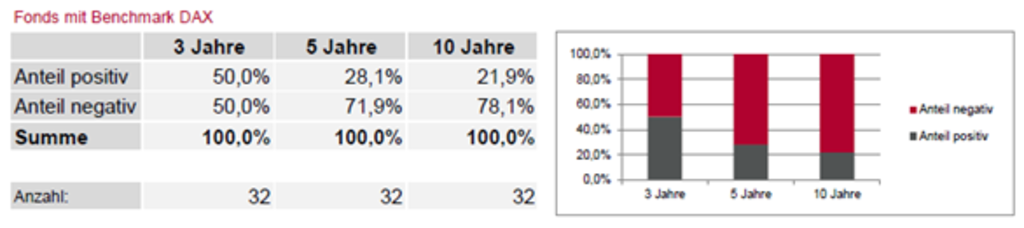
Take German equities as an example: Over an investment period of three years, a respectable 50 percent of products still manage to beat the market. The share of outperformers melts away dramatically, however, when you extend the observation period to five years. Only 28 percent of funds then beat the DAX benchmark. Over ten years, it's just 22 percent. A recent study by quirin bank AG comes to this conclusion. „The figures show it clearly: the hope of an extra return through investing in active funds is dashed in a great many cases. The bottom line is high costs and, as a result, often not even the market return,“ says Professor Dr. Stefan May, Head of Asset Management at the Berlin-based private bank. „It takes a great deal of luck to invest in the fund that later turns out to be one of the outperformers. The likelihood of a hit is low,“ May adds.
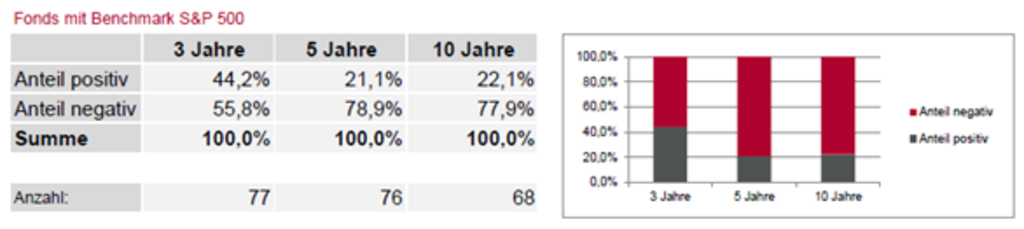
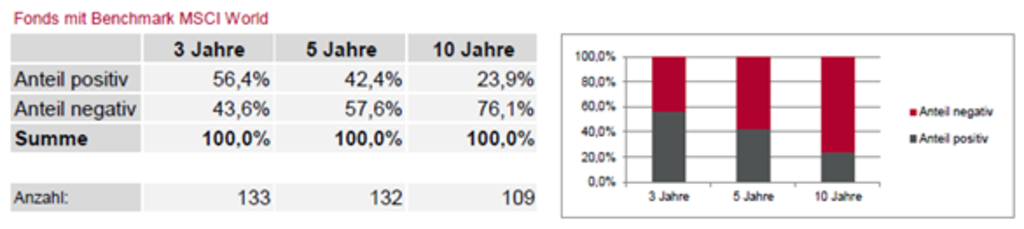
The wholesale failure of active equity funds applies not only to the German stock market but, for example, to the US or the global stock market as well. Among equity funds with a US investment focus, 55.8 percent underperform the S&P 500 benchmark over an investment period of three years, 78.9 percent over five years and 77.9 percent over ten years. Among the funds that invest in the global stock market, 43.6 percent fail to beat the MSCI World benchmark over three years, 57.6 percent over five years and 76.1 percent over ten years.
„No matter where you look, the results are not just sobering, they are shattering. Once again it becomes clear that the fund industry's promises when it comes to active management aren't worth the paper they're written on. The only question is when this realisation will catch on among investors across the board,“ May sums up.