There it was again: the fear of recession. The economic mood had indeed cooled noticeably in August. According to the Federal Statistical Office, real gross domestic product in the second quarter had fallen by 0.1 percent compared with the first, adjusted for seasonal and calendar effects, and the federal government too was now expecting growth of just 0.5 percent for this year. Investors were reminded of the final quarter of last year, when fears of a recession sent the markets tumbling. In reality, however, the economy grew again by 0.4 percent in the first quarter of 2019.
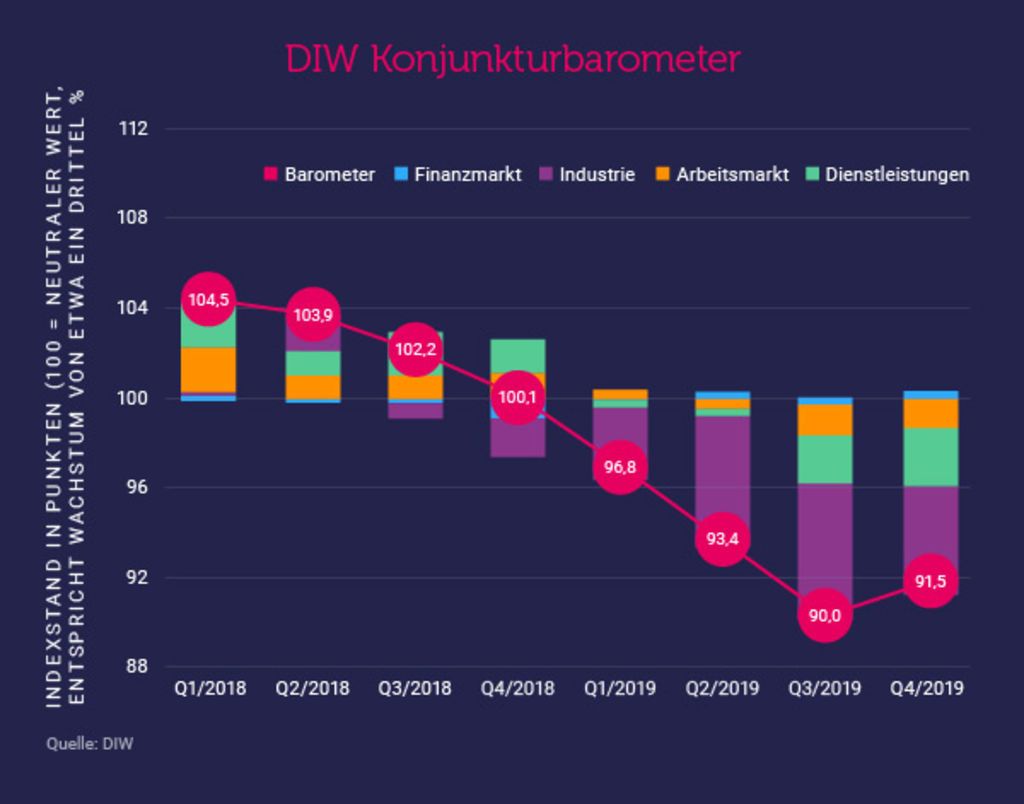
And this time, too, the concrete danger appears to have been averted. The Ifo Index, Germany's most important economic barometer, showed a slight rise of 0.3 points to 95.0 points in November. German economic growth of as much as 0.2 percent is even to be expected for the fourth quarter, said Ifo President Clemens Fuest. And the German Institute for Economic Research, too, sees a “silver lining on the horizon”. After economic output rose by 0.1 percent last quarter, the experts expect growth of a similar magnitude in the current final quarter of the year as well. The view of the economic barometer is correspondingly positive:
Intelligence instead of forecasts
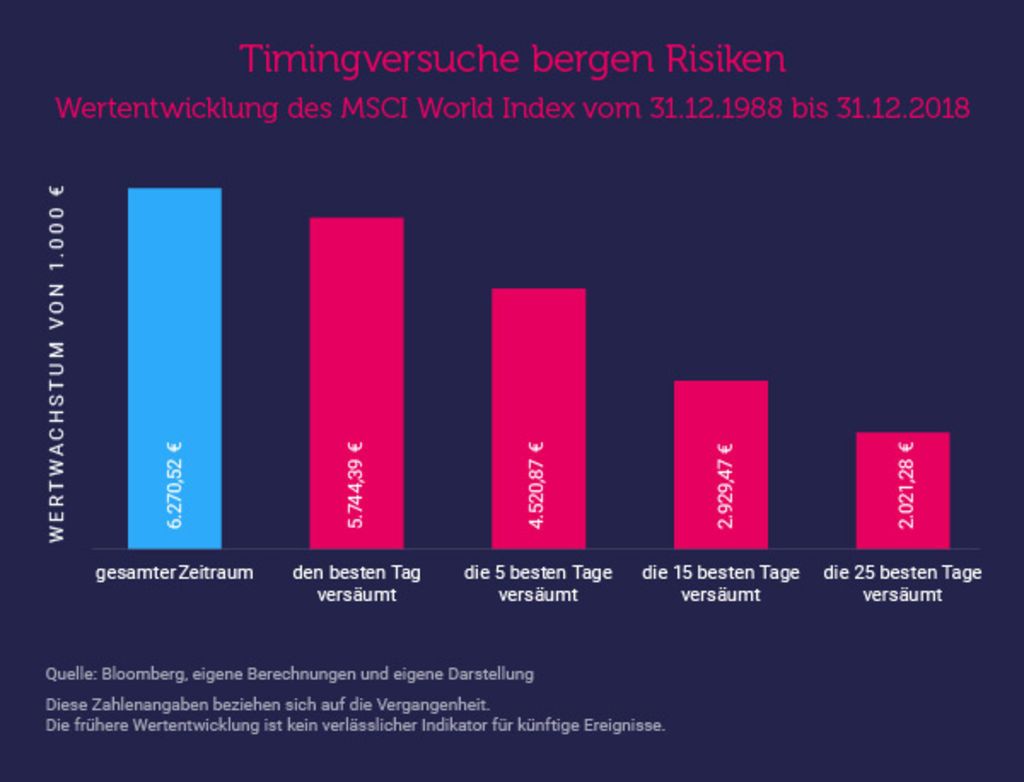
As an investor, it's right to be mindful of the current economic and political risks. What would be wrong, however, is to let a shifting mood – and, in light of the high annual gains so far, the temptation – lead you to reduce your equity allocation and lock in the short-term gains of recent months. Attempts at timing carry incalculable risks. Even if you happen to get the exit right once, just a small delay in getting back in can leave your investment results worse than if you had strategically stayed the course, forecast-free, through the weak phases.
These figures relate to the past. Past performance is not a reliable indicator of future events
quirion's equity and bond portfolios are fundamentally set up to spread the invested sums across the various investment regions and countries independently of current developments. However a trade conflict between the US and China unfolds, or however the United Kingdom's exit from the European Union proceeds: within our scientific approach this is not relevant, because quirion deliberately refrains from making concentrated bets that are based on forecasts. Instead, we focus on international diversification that minimises the risks from such events as far as possible. Through ETFs and index-tracking funds, we invest in around 8,000 companies in over 70 countries, across all sectors and currency areas. With this maximum possible diversification, we give investors a stake in all the relevant companies worldwide – and thereby keep risk as low as possible.
Maintaining the balance of risk and return
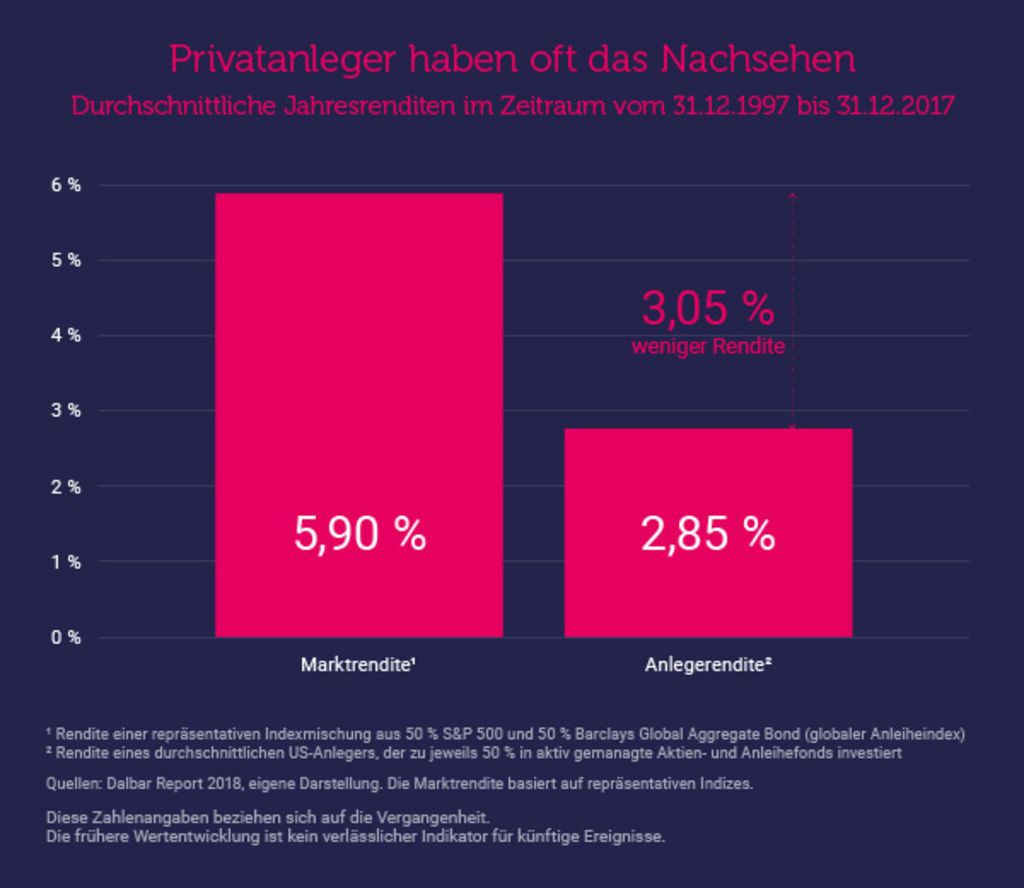
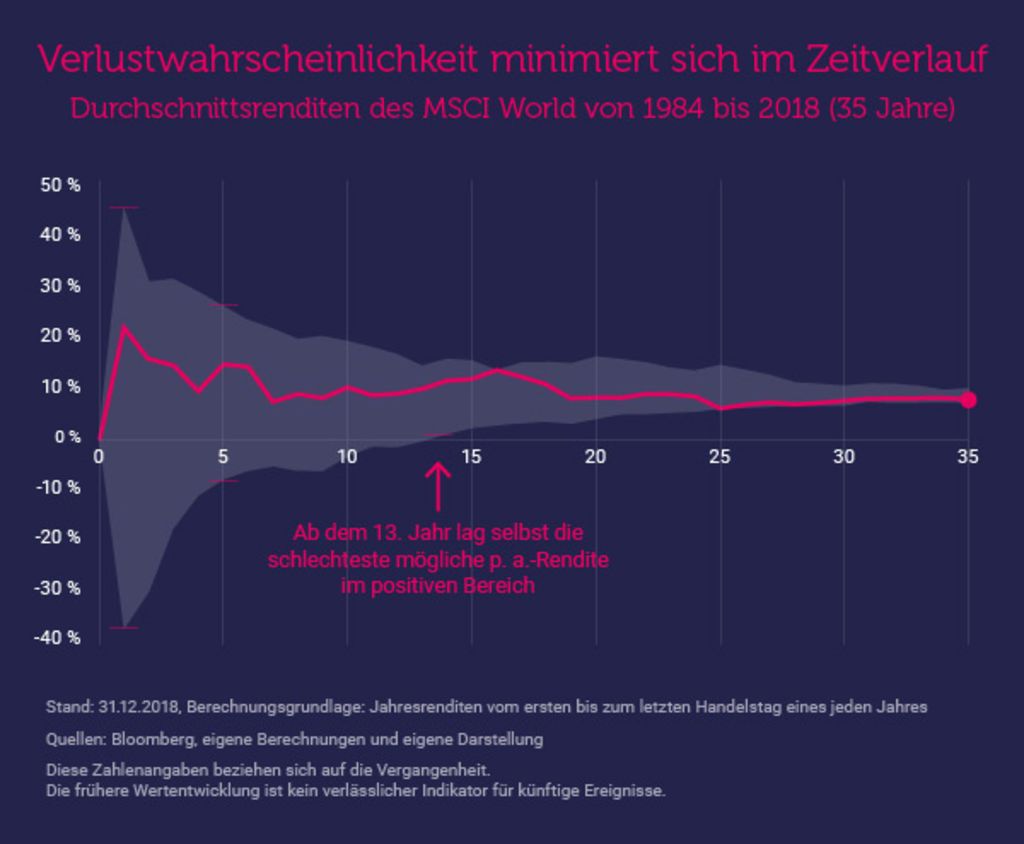
This isn't just a theoretical insight, but very much a principle of the utmost practical relevance: especially in times of heightened volatility and drastic, surprising downward movements on the financial markets, it is crucial for long-term investment success to stay invested unswervingly, in line with your individual risk tolerance and investment goals. The longer, the better, because the probability of loss diminishes over time. Looking at the MSCI World over a 35-year period, from year 13 onwards even the worst possible average return was in positive territory – despite all the interim, at times crash-like, downward movements on the equity markets.
These figures relate to the past. Past performance is not a reliable indicator of future events
These figures relate to the past. Past performance is not a reliable indicator of future events
What's important with such a strategy is that the balance between risk and return chosen by the investor is maintained. So if price fluctuations lead to a deviation from the target, we identify the change in good time with our strategic risk management and reallocate the investor's portfolio free of charge: this is called rebalancing. This way, the portfolios stay on course – and our investors can sit back and relax.
Speaking of relaxing. Since 1950, there have already been six recessionary phases in the Federal Republic, most recently in 2009 in the context of the global financial and economic crisis. And these phases were always followed by strong catch-up effects in the subsequent years.
Our concept. In black and white.
Want even more information? Then download our white paper now, free of charge!