The hype around stocks like GameStop even made the front pages of tabloids that normally take little interest in the stock market. Brokers halted trading and drew the wrath of investors – or should we really call it the wrath of speculators? quirion founder Karl Matthäus Schmidt reflected on this topic in his diary.
If you don't have years of capital-market experience and only follow financial news and share prices in passing, you might currently get the impression that the stock markets are mutating more and more into casinos. This conclusion may seem especially compelling to investors who have no experience of the capital markets yet. The recent events surrounding the shares of the American video-game chain GameStop, for example, look a lot like gambling. Veritable swarms of investors and so-called short sellers waged a fierce battle over several days, causing enormous swings in what was otherwise a little-known stock.
David versus Goliath: How small investors set out to strike fear into Wall Street
Headlines like "Small investors bring a billion-dollar hedge fund to its knees" were everywhere in those days. Some of them sounded like David against Goliath, or like Robin Hood against the Sheriff of Nottingham. A positive connotation was clearly in the air. But is this really about good versus evil, poor versus rich? And what actually happened?
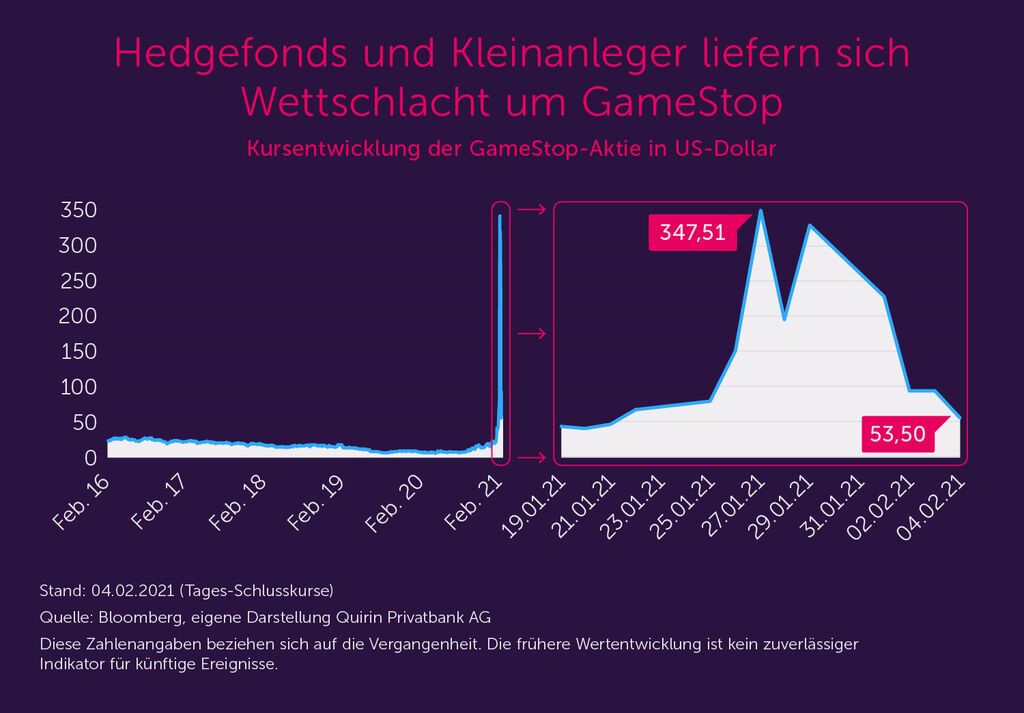
The share price of GameStop, a company in serious commercial trouble, had been on a downward slide for some time. Various hedge funds were betting that the price would keep falling. And then came the surprise: young private investors in particular joined forces in special internet forums such as Reddit to bet against them, investing in GameStop on a massive scale. In doing so, they drove the share price to extreme highs, which in turn meant billions in losses for the hedge funds. A kind of power struggle broke out, initiated by the millennial generation, who wanted to really show the "big players" a thing or two. And for a while, it actually worked.
Broker apps foster a gambler's mentality
Broker apps such as the aptly named Robinhood app also played an important role here. Apps like these have caused very low-cost trading in individual stocks to flourish, particularly in the US. But they should be treated with caution. As you can surely imagine, I'm of two minds about this – after all, nearly 30 years ago I myself founded Consors, the first online broker in Germany. On the one hand, I greatly value simple, direct access to the capital markets. On the other, even back then I had to realise fairly quickly that the Consors customers who traded most actively were also the ones who lost the most money. And the same thing will happen this time too – or rather, it has already happened.
Because with this kind of substance-free gambling, it is usually only a matter of time before the bubble bursts. And the bursting is already in full swing. At the start of the year the share was still trading at 18 US dollars; at times (during trading on 29 January 2021) it climbed to over 480 US dollars, and it is now on its way back to the hard ground of reality. As this article went to press, it stood at 40.78 US dollars (closing price of 19 February 2021).
A lot of scorched earth is left behind
These bitter setbacks are a logical consequence when share prices soar without solid grounds. After all, GameStop was posting losses and had already been on a wobbly course before the pandemic. And a company like that has, more or less unwittingly, become the plaything of speculators. But: as quickly as such waves of speculation build up, they are broken again just as fast once some investors start cashing in. Then the herd instinct kicks in the other direction and everyone rushes to follow like lemmings.
Is the stability of the entire financial system at risk?
In light of these events, many investors are asking themselves whether bets like the one around GameStop could jeopardise the stability of the entire financial system. But I can reassure you: to disrupt the workings of the roughly 80-trillion-US-dollar global stock market, you would need a huge, homogeneously acting group of investors – and that over the long term. But there is no question of that here. Yes, the original group of buyers coordinated and bought in a concerted way, which produced an initial price surge. But then what so often happens set in: investors who saw the price rise jumped onto the already moving train because they sensed further gains. This turned the whole thing into a classic speculative bubble that will produce winners and losers. At that point you can no longer speak of a homogeneously acting group.
GameStop's recent price development also shows that, in the end, the usual market mechanisms of supply and demand take hold. The arrangements made online were merely the spark that ignited the price rally. But stocks simply cannot decouple completely and permanently from (market) reality. So the GameStop train was probably stopped far sooner than many of the movement's instigators had hoped. The financial system is therefore not being turned on its head. What's more, it has already survived very different crises without losing its core functions. Just think of the bursting of the technology bubble at the turn of the millennium, the global financial crisis of 2008/2009, or the euro crisis.
Many investors already regard the stock markets as casinos anyway
But back to the casino association. If you ask investors today why they don't invest in shares, the most common answer is: for fear of losing everything. This fear is often deeply rooted in investors. They believe that investing in the capital markets is pure gambling and far too risky. Studies point in a similar direction, such as one by the Frankfurt School of Finance & Management, according to which 67 percent of respondents are afraid of heavy losses. Bad experiences – like those with the Telekom share around the turn of the millennium – certainly contributed to this, and the current events around GameStop will surely leave a bad memory for some as well.
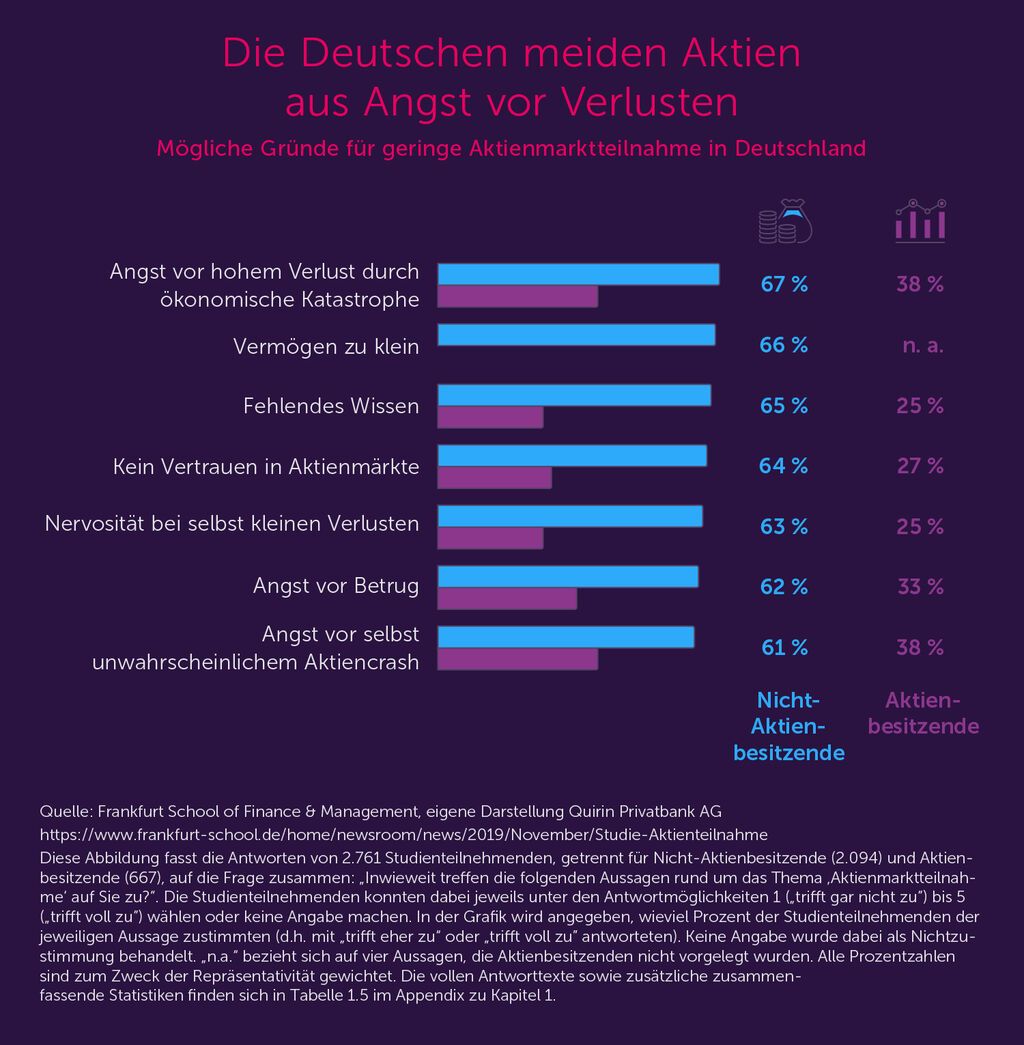
Yet exactly the opposite is true – equity investments are, especially in times of low and negative interest rates, the type of investment that offers the highest expected returns over the long term – provided you do it right.
Shares give you a stake in corporate growth
Because the basic idea behind a share is not gambling, but highly sound. Whoever buys a share becomes a co-owner of the company. In doing so, they share in the company's opportunities – but also in its risks. For taking on these risks, they are rewarded with a risk premium. This comes partly in the form of dividends and partly in price gains, which ultimately rest on economic growth, or rather on the company's profit growth.
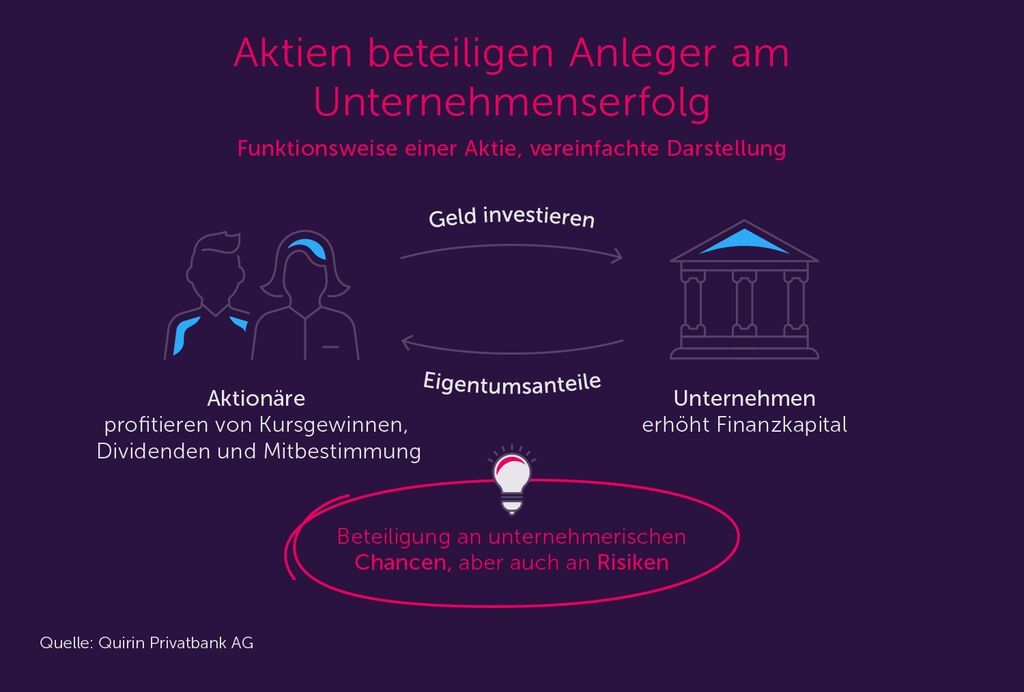
Many investors are unaware of this basic principle of the individual share; it has been forgotten, or is sometimes overshadowed by current events.
But: invest not in one, but in many stocks
Capital-market events that attract as much public attention as GameStop does right now can have two kinds of consequences: they reinforce the already existing fear that the markets are incalculable casinos. Or they awaken the desire to take part in these irrational growth fantasies and get rich quick. In a nutshell: fear and greed are two sides of one and the same coin.
This can lead investors either to go hunting for the top stocks and risk a total loss in the process, or to avoid shares altogether and instead park their money in zero-interest savings accounts, or to fall for the false promises of dubious investments on the grey capital market. With the first, they "only" miss out on returns; with the last, they take on far too much risk and thereby jeopardise their entire wealth.
My fear is that, in my view, the hype around GameStop once again sets back Germany's already muted equity culture and makes it even harder to establish the share as a way of participating in economic progress and as a pillar of retirement provision. Yet it is indispensable for building and growing wealth. What matters is how you invest in shares: not in individual stocks and not driven by a contest against the big investors, but broadly diversified and rationally, according to scientific criteria. And if you take that to heart, even the crazy excesses of the capital markets can't become dangerous for you. On top of that, you kill several birds with one stone – you participate in the economic growth of companies, which is the basic idea behind shares, and through broad diversification you significantly reduce your risks over the long term. Because in a broadly diversified portfolio of, say, 10,000 stocks, the total failure of a single holding barely registers. And that way, investing in shares has absolutely nothing in common with a casino; instead, it spares your nerves and, above all, your wallet in both the short and the long term.
Here you can find out how independence, selection and diversification make for a secure investment concept at quirion.