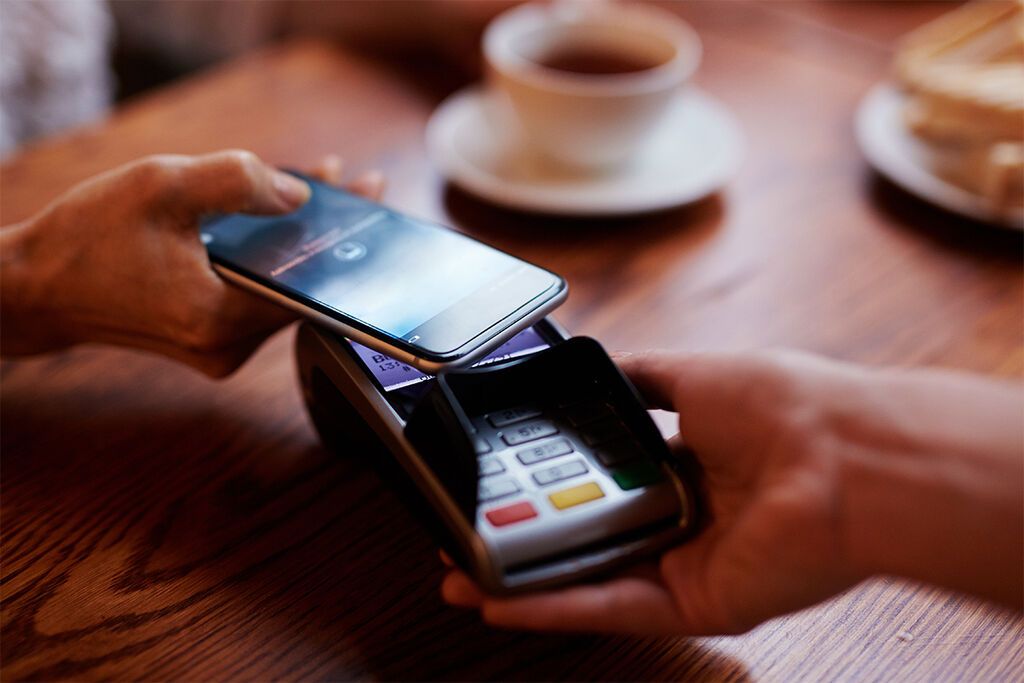
The ECB is setting the course for a digital euro. But what does that actually mean? And how does the digital euro differ from crypto assets like Bitcoin? Seven questions and answers.
Why is the ECB thinking about a digital euro?
Whether Bitcoin or future projects like Facebook's "Diem": private initiatives for digital money have been making central banks around the world nervous for several years now. Strictly speaking, only the legal means of payment monitored by central banks count as currencies. But means of payment can also come from private organizations or companies. And with digitalization, the importance of cash is dwindling – currently the only direct access citizens have to central bank money. "We stand at the beginning of the era of digital money," states Fabio Panetta, member of the ECB's Executive Board. A digital euro is intended to prevent Europe from becoming dependent on digital means of payment that are issued in countries outside the eurozone and controlled from there. In the ECB's view, this could undermine financial stability and monetary policy sovereignty.
What does a digital euro offer?
A digital euro would be central bank money and would thus have key properties that cash also has. It would be generally accepted and guaranteed by the central bank. "Private solutions for digital and online payments offer important advantages such as convenience, speed and efficiency," ECB Executive Board member Panetta concedes. "But they also come with risks in terms of data protection, security and accessibility." A digital euro is meant to incur lower transaction costs. A digital euro would also carry no liquidity, credit or market risk.
What is the difference from crypto assets?
The decisive point is that the money is issued by the central bank. But exactly how a digital euro will be designed technically – and whether it will really be realized – is still open at present. First, a two-year investigation phase is starting. One thing is clear: the digital euro is intended to be used as a means of payment and not for investment. Speculative objects like crypto assets are subject to very strong fluctuations. The stability of monetary value, however, plays a decisive role for use as a means of payment. It has not yet been decided whether a so-called "centralised ledger technology" or a "distributed ledger technology" will be used. The blockchain, the basis of crypto assets like Bitcoin, is a "distributed ledger technology." With this, information on transactions is bundled into a block, and the blocks are stored in chronological order of the transactions not centrally but in various databases. This is how bitcoins are managed by a peer-to-peer network.
So what happens to cash then?
In any case, a digital euro is only meant to complement cash and not replace it. The ECB has explicitly affirmed this.
How could a digital euro affect the way we pay?
With central bank digital currencies (CBDCs), a distinction is drawn between retail and wholesale solutions. With retail solutions, end users have direct access to the digital currency; with wholesale solutions, access is limited to specific financial institutions. If the digital euro were geared toward end users via electronic wallets, it could become a government alternative to private payment methods such as PayPal or Apple Pay. An intermediary payment service provider would then no longer be necessary.
What effects would a digital euro have on the economy?
A programmable digital euro based on "distributed ledger technology" could be linked to "smart contracts." These are computer protocols through which contractual agreements are settled automatically. This technology is credited with great potential in view of the "Internet of Things." According to estimates, more than 75 billion devices could be connected to the internet in 2025. Many of these devices could also be integrated into payment systems. Electric vehicles with a built-in wallet, for example, could automatically settle the bill for electricity consumption at charging stations. Similarly, in goods logistics, "intelligent" machines in a factory could automatically trigger payments as soon as they had registered the delivery of ordered products. Goods logistics in particular are still very document-heavy at present. Payment processes could ideally be simplified and accelerated across borders in this way.

When are the central bank digital currencies coming?
In October 2020, the Bahamas became the first country in the world to introduce a central bank digital currency, the "Sand Dollar." According to a survey by the Bank for International Settlements (BIS) among more than 60 central banks worldwide, 86 percent are currently exploring the possibilities of introducing central bank digital currencies. China's initiative for an electronic yuan, which is already being tested in practice in various regions of the country, is currently being followed with particular attention. In Sweden, a model country of an almost cashless society, the central bank launched a project for an electronic krona in 2017. But the investigation and testing phase is far from complete. The digital euro will still be a while in coming: the ECB estimates that after the investigation phase ends, another three years would be needed for development.