The sharp swings on the capital markets over the past year did nothing to dent confidence in digital wealth management — on the contrary: confidence has continued to rise. That is the finding of the „Robo-Advisor Study 2023“ by quirion and comdirect, for which around 1,300 people were surveyed. Five fascinating insights.
1) Robos strengthen confidence
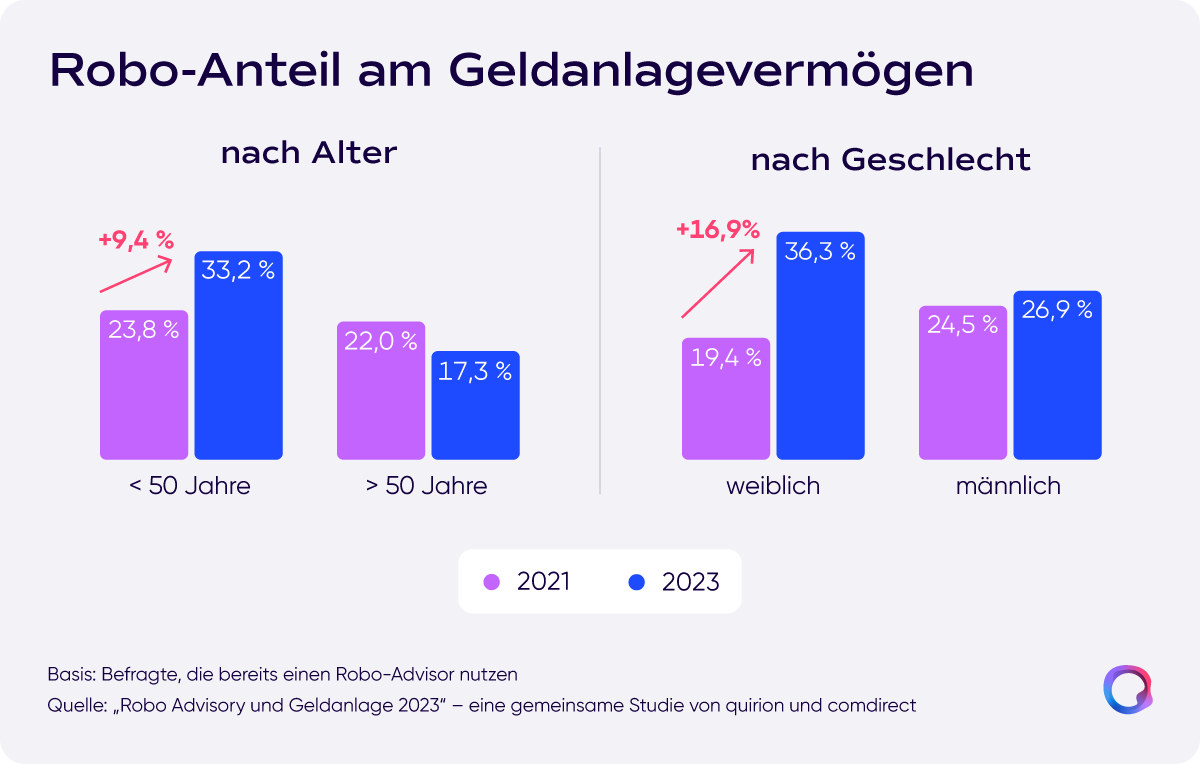
Confidence in digital wealth management has grown overall. That is clear from the second joint Robo-Advisor Study by quirion and comdirect. Against the backdrop of last year's sharp price swings — during which the fund industry, for example, had to absorb massive outflows — that is anything but a given. According to the survey, 47 percent of users rate robo-advisors more favourably than in 2021 (unchanged: 44 percent). Even among those who do not use a robo, 18 percent view them more positively (unchanged: 77 percent). This strengthened confidence is also reflected in the fact that users now entrust robos with a larger share of their assets. That is especially true of younger people and of women investors.
2) Return opportunities often left untapped
When it comes to forms of investment, however, interest-bearing savings products remain as popular as ever. As interest rates have risen, instant-access accounts, term deposits and fixed-term deposits have extended their lead even further in investors' favour and are now used by 65 percent of respondents (2021: 58 percent). The passbook savings account holds steady at 33 percent — even though the interest rate there usually has a zero before the decimal point. On the plus side: interest in ETFs has risen by seven percentage points compared with the previous study. 41 percent of respondents currently use them to invest. So it seems that more people are recognising their advantages as a cheap way to share in the return opportunities of the capital markets.
3) Many find investing too complicated
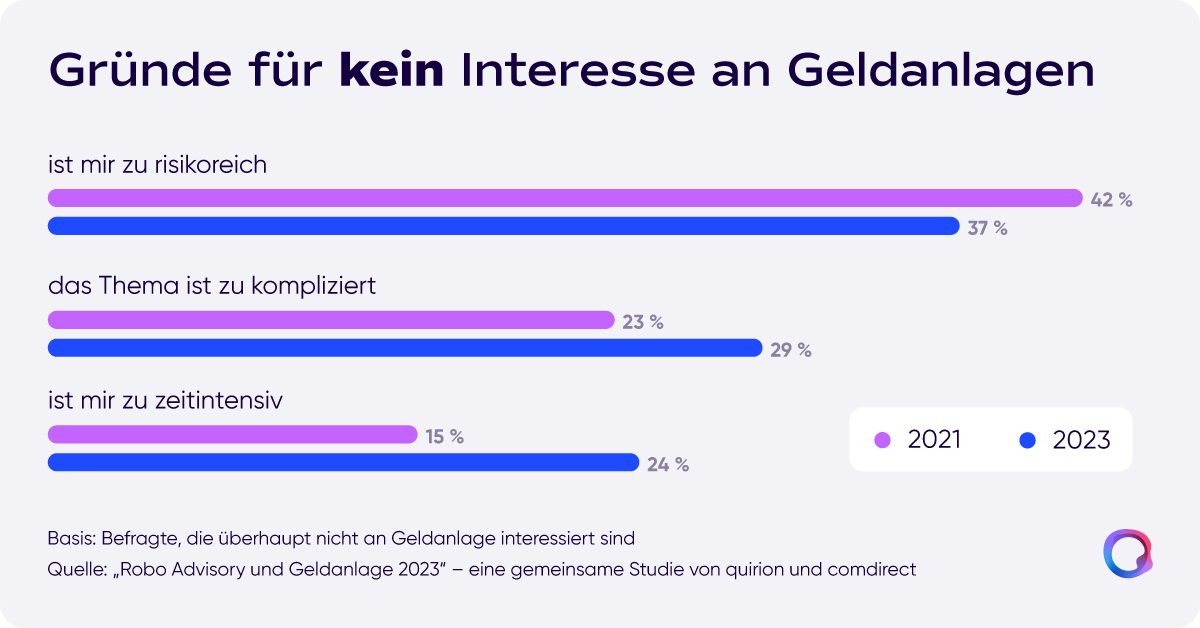
Too risky, no trust in banks, too complicated: the main reasons for not engaging with investing have stayed largely the same. What has shifted, though, is their relative weight. More people now say that the topic of investing is too complex for them and that engaging with it takes up too much of their time.
At odds with this is the fact that many credit themselves with the greatest competence to steer their investments through phases of market crisis. Among those familiar with robo-advice, a full 52 percent are convinced they can best weather crises on their own. That points to a high — but, sadly, usually also misplaced — self-confidence. From other studies we know that investing on your own is dominated by emotions and mostly leads to below-average results.
4) Robos make investing easier
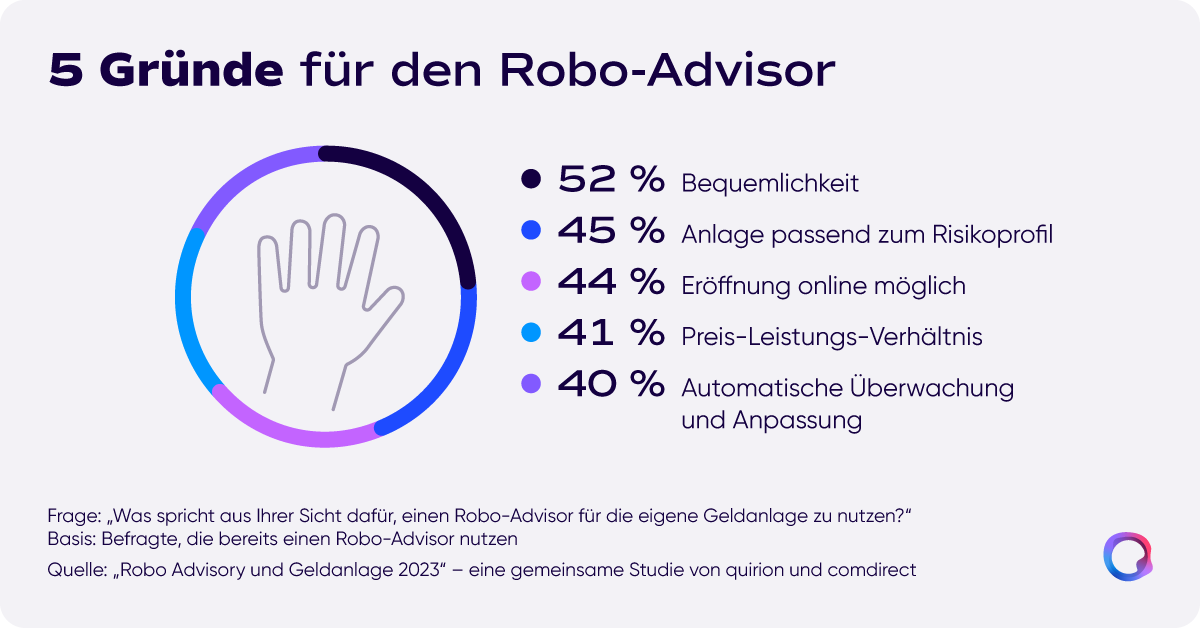
Convenience remains the single biggest advantage of a robo-advisor for users. Investing money without prior knowledge, tailored to your own risk profile: benefits like these are also increasingly valued. At quirion, investors use a scientifically grounded, systematic investment strategy without having to engage with the topic of investing themselves.
5) Plenty of potential for saving
According to the study, the assets available for investment as well as potential savings rates have stayed relatively constant — and are quite considerable. 76 percent of respondents have more than €10,000, and 30 percent even more than €50,000, in freely available investable assets. More than 90 percent would be able to save at least €100 a month. 77 percent could afford to set aside €250 or more each month.
The barriers to investing are particularly low at quirion. You can set up a savings plan from as little as €25 a month. With every savings instalment, investors pay into a full-fledged wealth management service within the global or sustainable ETF portfolio. In the Digital package this costs just 0.48 percent per year — an affordable way into digital wealth management.