Set realistic goals, keep an eye on cost efficiency: both are among the success factors in investing. Here is why these – and which other levers – help you avoid investment mistakes.
1) Set realistic goals
„300 percent upside potential in 12 months“: return targets like these, spread by some media outlets or finfluencers, sound tempting at first. They suggest that you can get rich very quickly – if only you back the right stocks. But this kind of speculation is pure gambling. Hoping to draw the winning ticket by chance is not an investment strategy. A look at long-term evaluations of investment results shows that these hopes are dashed in most cases.
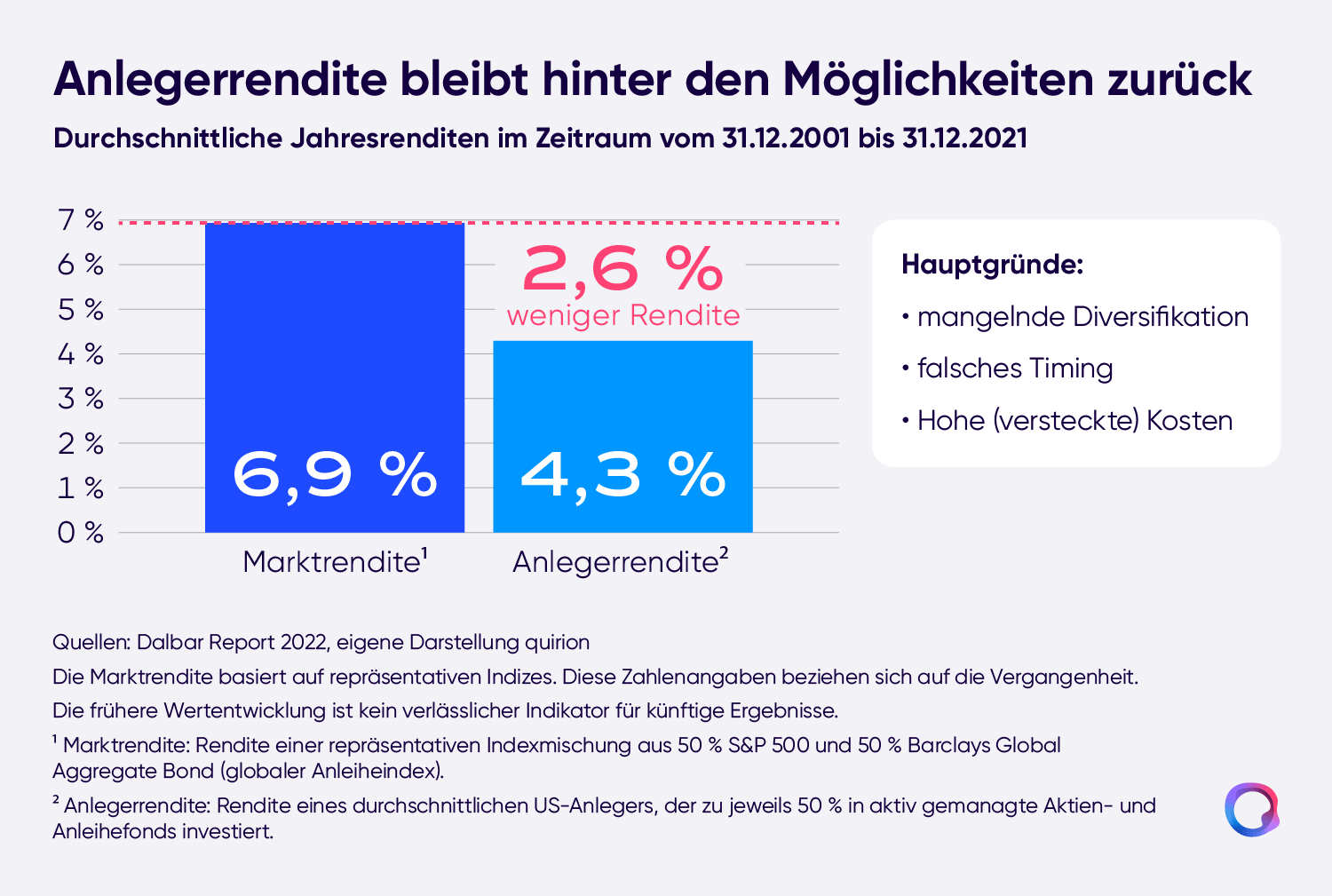
Depending on the period and the type of stock index, you arrive at different market returns. For the MSCI World, for example, the average annual return from 2003 to 2022 was 7.9 percent. On paper, and before costs, capital of, say, 10,000 euros invested in the index over this period would have grown to around 45,750 euros. Building wealth works above all when it is aimed at the market return over the long term.
2) Do not neglect the risks
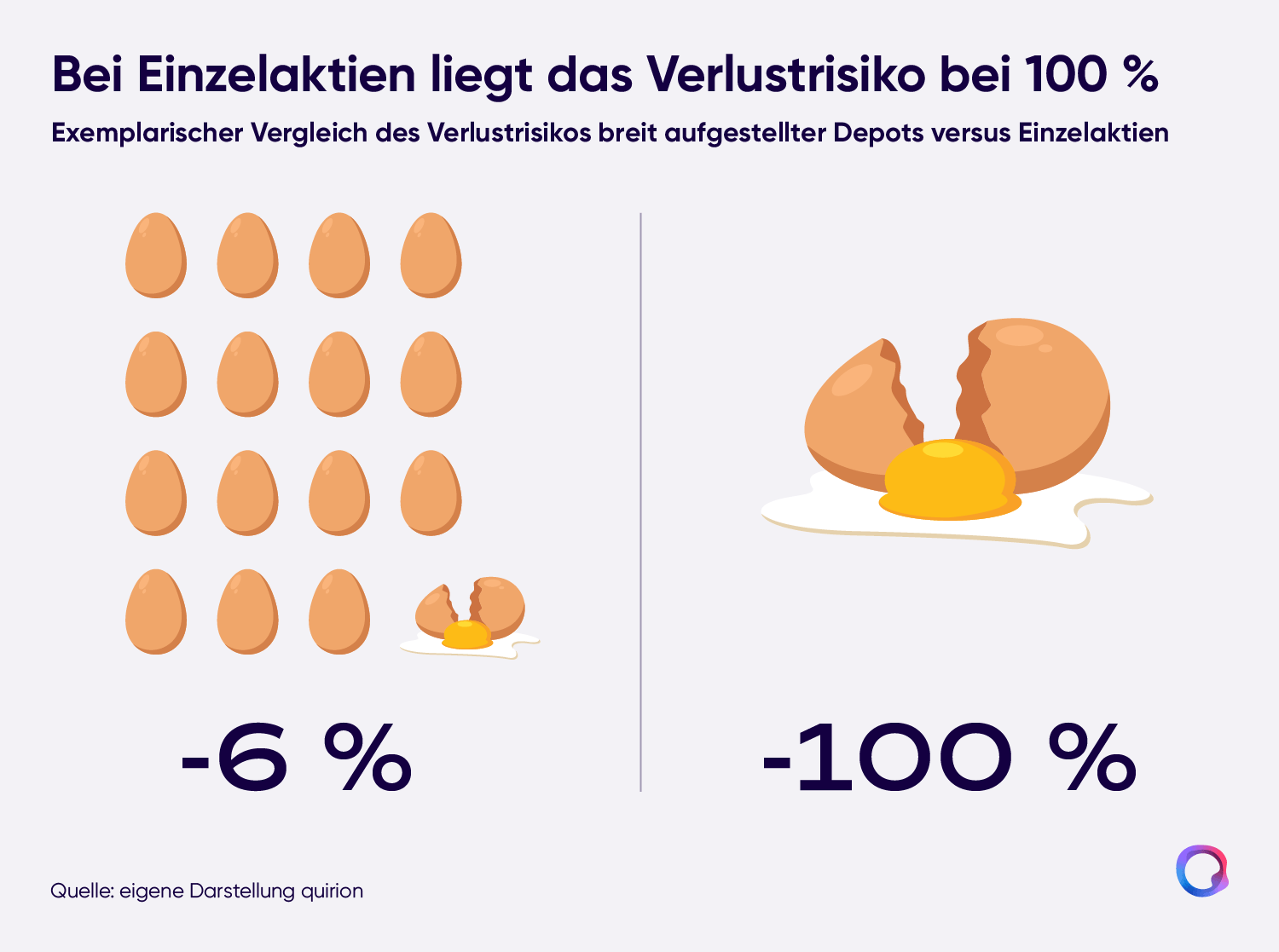
It sounds a little worn out by now, but it often goes unheeded: return and risk go hand in hand. If you want return potential on the stock markets, you have to be able to withstand price swings. Here, too, a long investment horizon helps. As does broad diversification: in the event of a total loss, anyone who has bet specifically on a single stock loses everything at once. The more holdings there are in the portfolio, the better the risk is spread.
A pure equity portfolio is not the right choice for every investor. Bonds can additionally help to stabilise a portfolio and keep price swings manageable.
3) Keep an eye on cost efficiency
Diversification can be achieved with funds in various ways. Active fund managers make a specific selection and charge high fees for it. ETFs generally track an index and are therefore significantly cheaper – but no less successful. Cost and performance comparisons have shown this for many years. According to a study by the European securities regulator ESMA, the average costs of active equity funds between 2017 and 2021 were 1.7 percent per year. For ETFs, they were only 0.43 percent. In terms of average performance, the actives, at plus 9.9 percent, were nonetheless inferior to the ETFs, at 11.9 percent.
That said: making a selection among the hundreds of ETFs that are now available on the market is no easy feat. Even if ETFs track the performance of the same stock market index, there are sometimes big differences in costs and quality. Scrutinising costs and performance is therefore advisable with ETFs as well.
4) Do without market timing
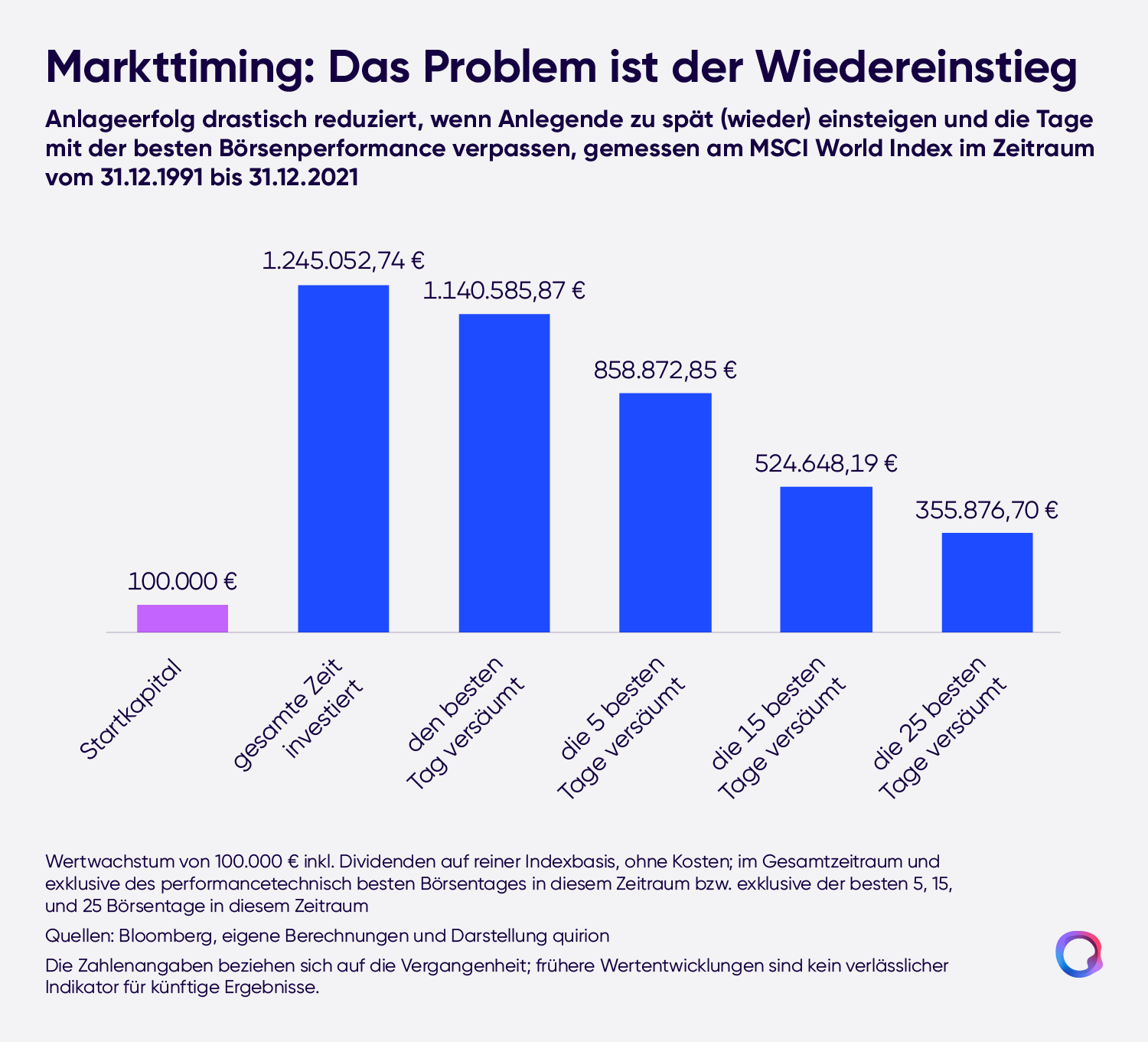
One of the most common questions investors ask is about the right time to invest. What is decisive, however, is the length of time. Whether you caught an ideal moment to buy or sell can always only be judged in hindsight. Because no one knows the future. It is better not to get drawn into forecasts in your investment strategy in the first place, and to stay invested for the long term within your personal investment horizon. Otherwise you may well miss out on the best of it.
5) Use our digital asset management
If you want to take all these tips into account at once without having to do much yourself, you can use our digital asset management. quirion's investment strategy is aimed at the return potential of the global equity market. The global portfolio gives you a stake in around 8,000 equities. In addition, depending on the investor's risk profile, bonds are added in ten-percent increments, likewise broadly diversified. The investment strategy deliberately does not rely on forecasts and, for both equities and bonds, uses low-cost ETFs. In doing so, the investment management monitors their costs and quality.
quirion's digital asset management is also available as the ETF Savings Plan PLUS, from 25 euros a month. That makes it even easier to build wealth systematically. And for money that should remain available at shorter notice, quirion also has a solution. On the Clearing Account PLUS there is currently 2.5 percent (as of 23 May 2023) interest.