Not all investments are created equal. In some cases the hope of long-term wealth growth is well founded; in others it is pure speculation. A closer look at 7 alternatives.
The app flashes up that Bitcoin has hit yet another record. An investor magazine claims the oil price is about to go through the roof. A colleague has just splashed out on a few gold bars. He reckons it's the best way to protect your wealth in turbulent times. Does any of this sound familiar? Perhaps for you it's a particular stock or interest-rate product that someone recently pointed you towards.
Whether from the media or from people you know, there is a constant stream of new investment „tips“. But anyone who wants to build wealth over the long term should take a close look at what actually drives returns in the various asset classes. That's how you avoid nasty surprises.
1) Stocks
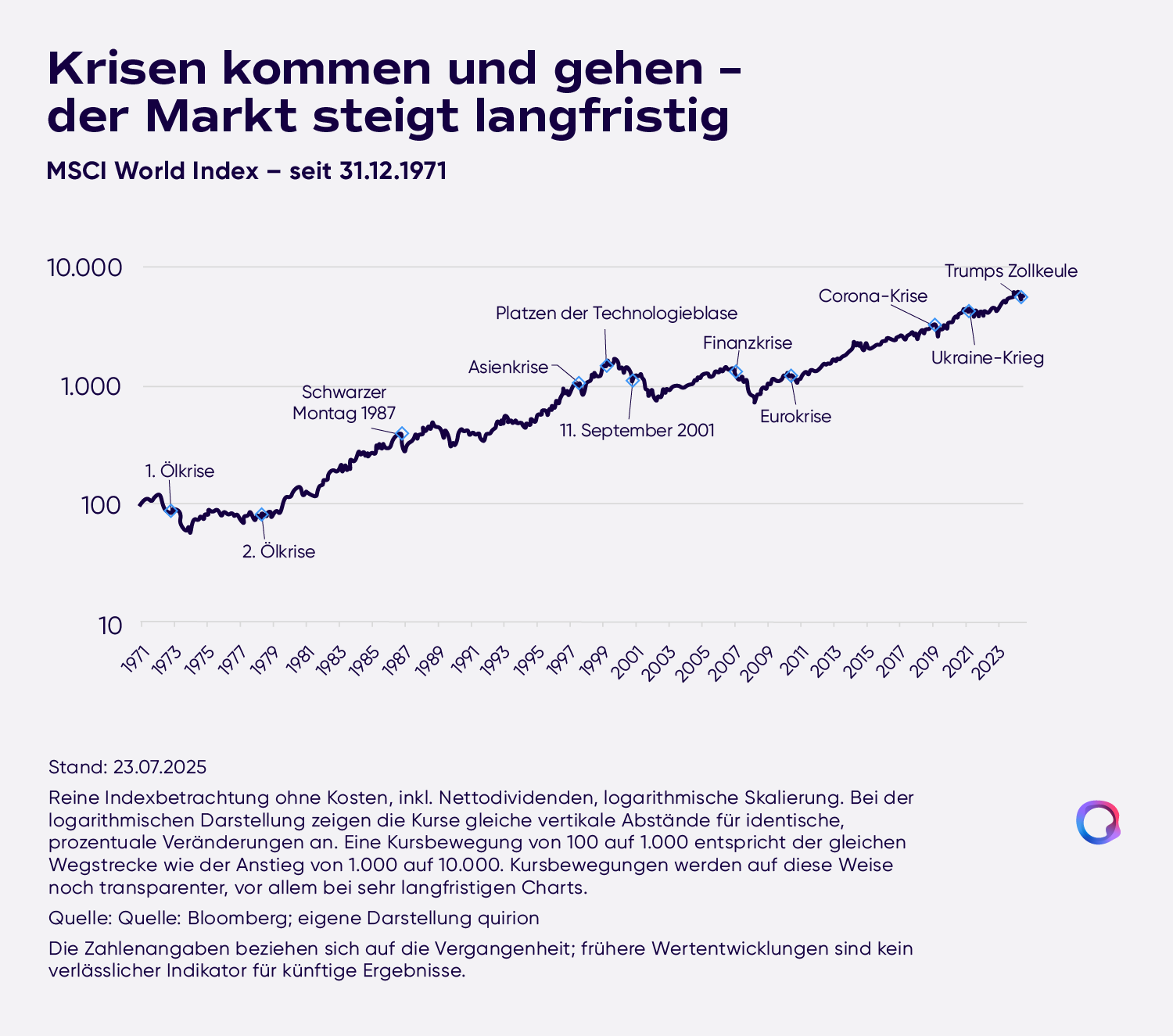
Stocks give you a stake in companies. A company's goal is to generate a profit and, ideally, to grow it. This entrepreneurial value creation is the source of the returns you earn on stocks. The risk: demand for particular products or services can decline or dry up altogether. Individual companies can drop out of the market, and entire industries can lose their relevance. Whole regions, too, can go through long economic dry spells. That's why diversification is so important when you invest in the stock market. With a global portfolio you reduce your risks and effectively tap into the growth of the world economy.
Because, by and large, the world economy is geared towards growth. And that doesn't necessarily mean ever-larger sales volumes. Improvements in quality also give the economy a boost — despite every crisis along the way. That, in turn, is reflected in stock prices rising over the long term.
2) Commodities
Whether it's metals like copper or energy sources like oil, industry depends on commodities. With commodities, however, value creation isn't „built in“ the way it is with stocks. It's conceivable — and indeed quite desirable — that demand for individual commodities might fall; with oil, for example, thanks to more energy-efficient technologies or to alternative energy sources. There is no growth logic with commodities of the kind that applies to the economy as a whole.
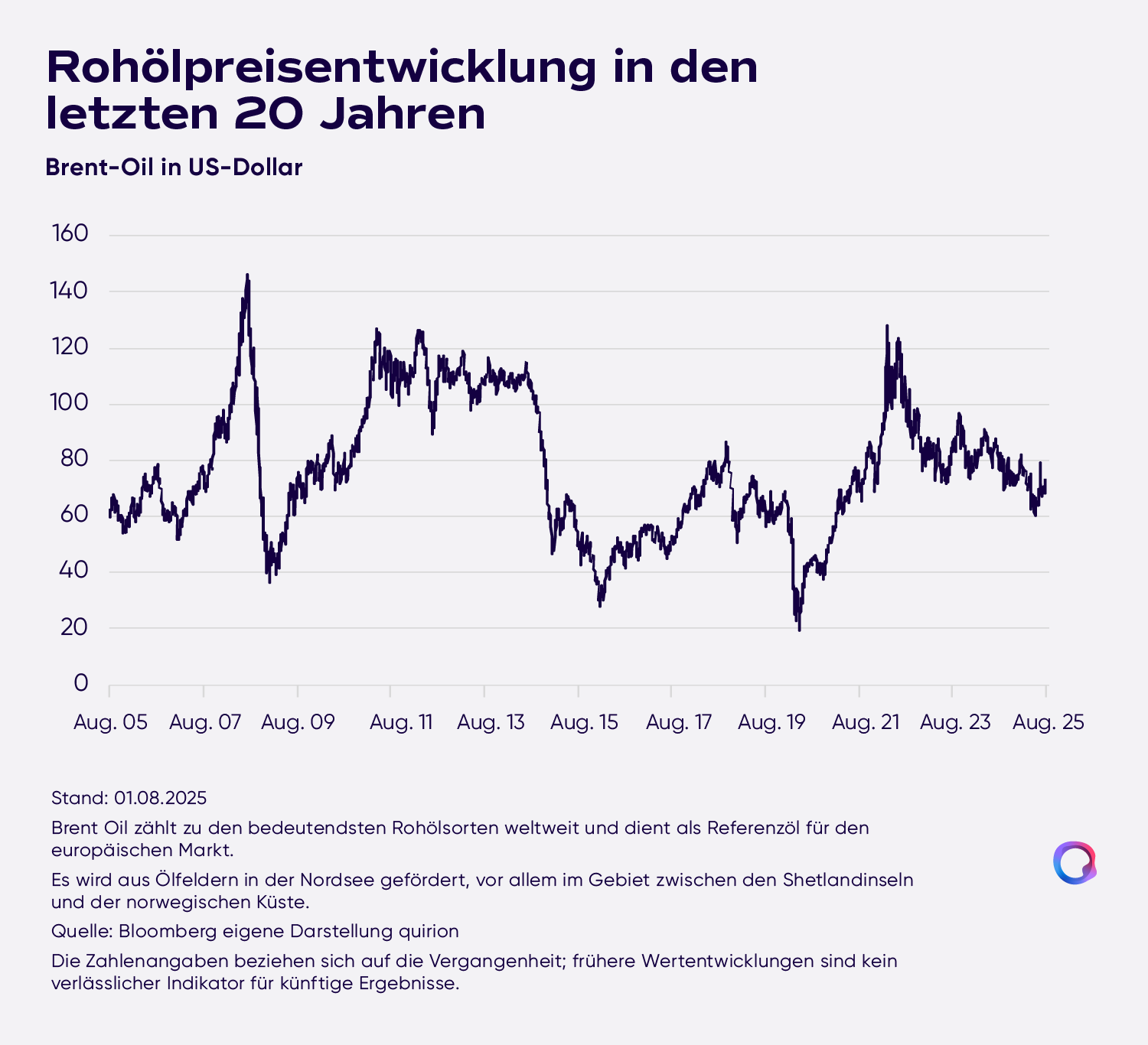
What's more, you can't take a stake in a commodity as easily as you can in a listed company. With oil, investing usually involves the futures market and runs through complex products. Prices often swing wildly. The risk is correspondingly high. Investments like these are not suitable for building wealth over the long term.
2) Gold
Gold has held a magical allure for people since time immemorial. Today, demand comes mainly from jewellery-making — but also from many investors, for whom gold trades on its image as a „safe haven in a crisis“. More recently, central banks have also been increasing their holdings in order to become less dependent on the US dollar. That last point in particular is regarded as one of the key reasons for the price rise of recent years.
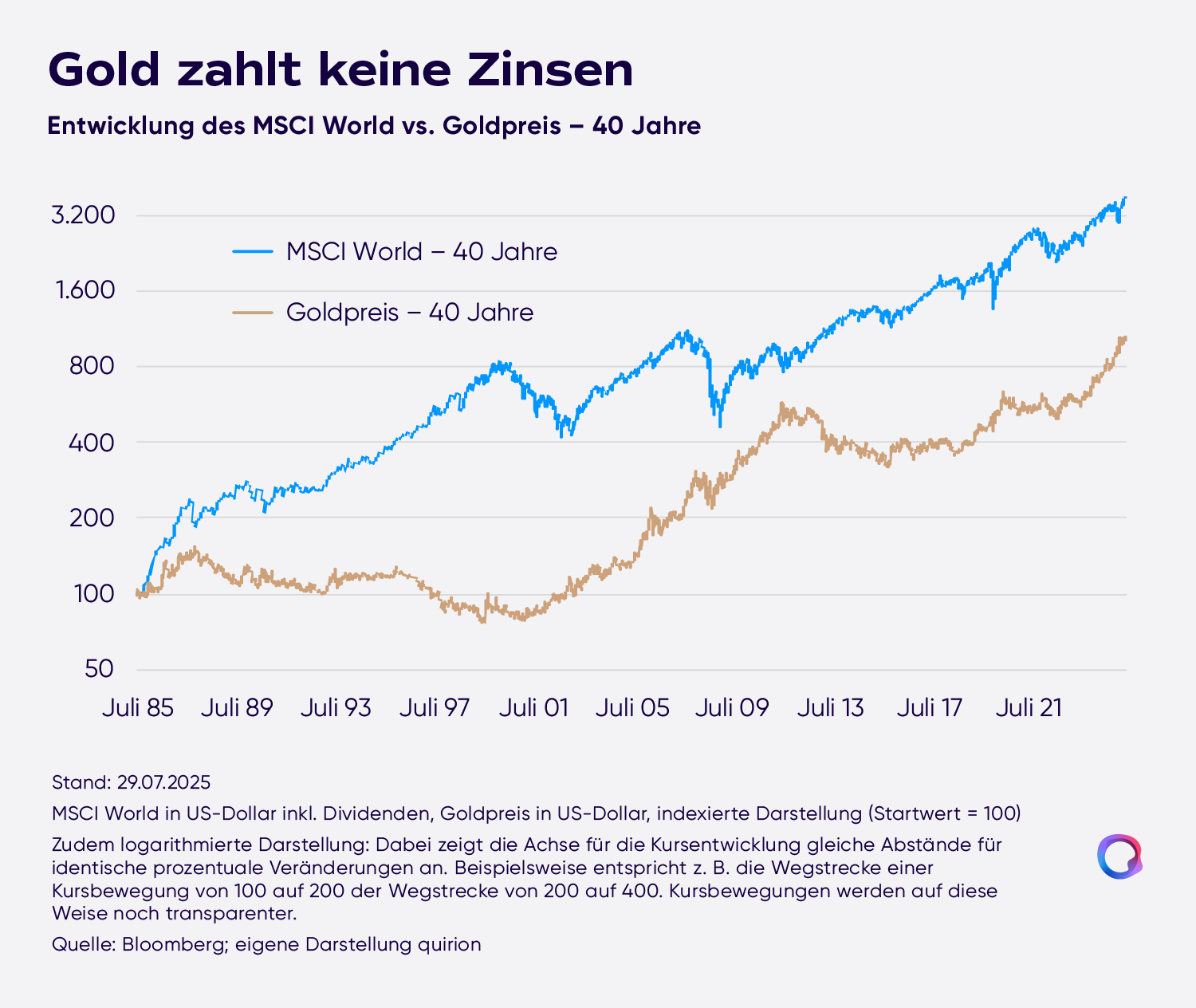
There is, however, no economic reason for gold prices to rise over the long term. The precious metal is not productive in itself and generates no ongoing income. It is therefore only suitable as a small addition to a portfolio — and above all for those to whom gold gives a sense of security.
4) Crypto
Ever since Donald Trump's election campaign, cryptocurrencies like Bitcoin have been back in the headlines constantly. His announcement of a US crypto reserve initially triggered price jumps, but these soon fizzled out. Then came fresh impetus from Trump's „Genius Act“, which creates a legal framework for dollar-pegged „stablecoins“.
But extreme price swings are likely to remain the order of the day with cryptocurrencies. That's because their value is driven by pure speculation. (link to https://www.quirion.de/post/bitcoin-eine-gute-geldanlage) If cryptocurrencies became worthless, it would have no economic significance. You should therefore only invest with a keen awareness of the risks and with a very small portion of your wealth. Cryptocurrencies are not a core investment for building wealth.
5) „Private Markets“
When something isn't publicly accessible, it makes us especially curious: we suspect we might be missing out on something exciting. Whether it's venture capital, infrastructure investments or private equity, they all belong to the „private markets“ category. Normally only institutional investors get a look-in, and the minimum investments are high.
ELTIFs promise to change that. „European Long-Term Investment Funds“ are a relatively new class of fund. And they have their pitfalls: unlike equity ETFs, for example, they come with long holding periods. These are usually at least 24 months, and there's a one-year notice period. On top of high front-end loads there's often a performance fee as well. And the chances of success for the individual projects in the fund can only be guessed at. In any case, taking a stake in economic value creation can be done far more efficiently through equity ETFs.
6) Bonds
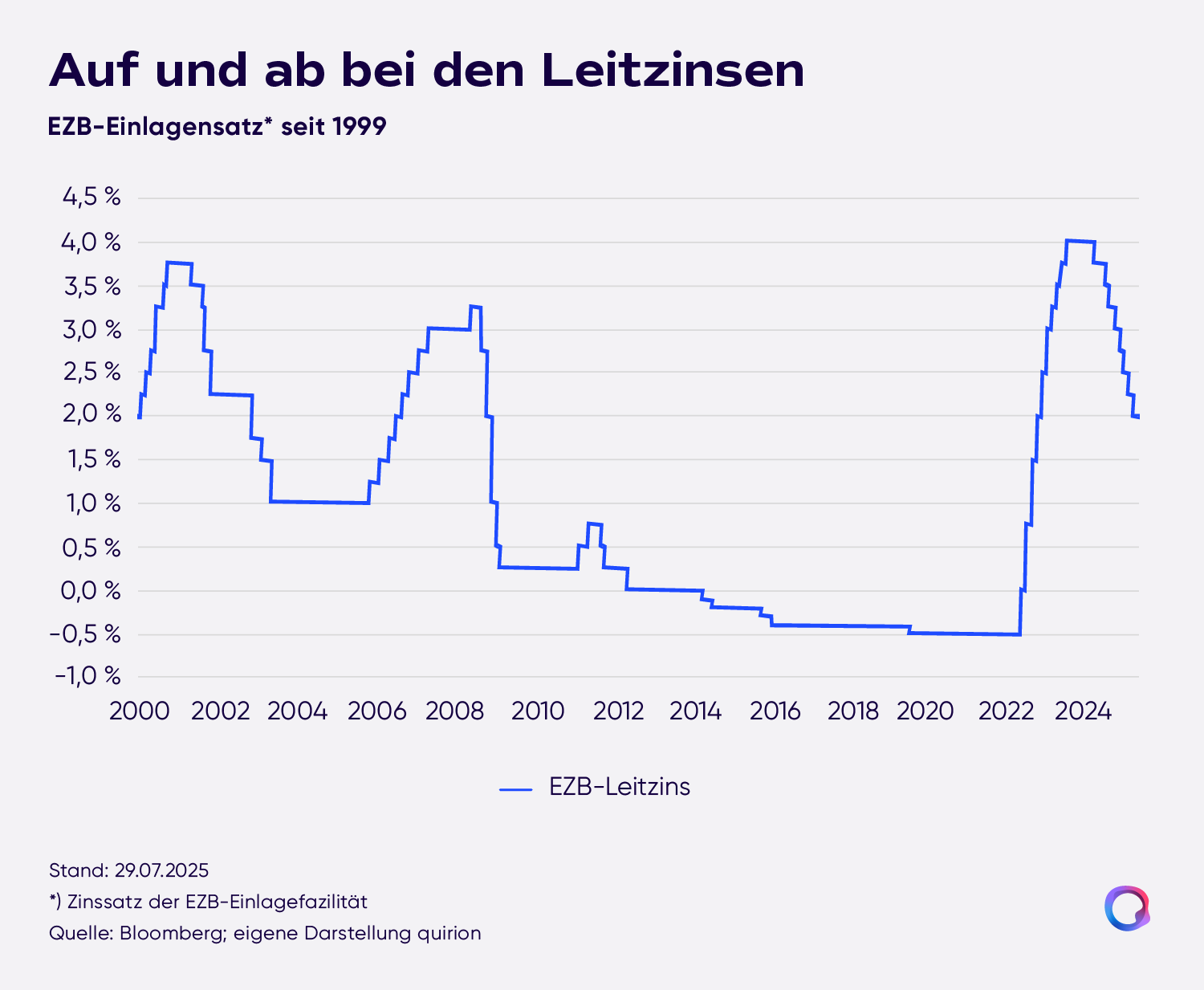
The fact that bonds have something to do with lending is right there in the concept. You lend money for a period agreed in advance and receive a set rate of interest in return. Return and risk depend on the issuer's creditworthiness and on the bond's maturity. The base-rate level also plays a role. If the base rate falls, for example, that likewise pushes down the interest on new issues.
Bonds do not give you a stake in economic value creation. Their long-term return prospects are generally lower than those of stocks — but so are their price swings. That's especially true of high-quality government bonds. By adding bonds, you can therefore cushion the volatility of the equity portion in your own portfolio. Here again, broad diversification is advisable in order to reduce risk.
7) Instant-access savings (Tagesgeld)
Products like instant-access savings accounts (Tagesgeld) have no price fluctuations. But in exchange, investors have to accept significant disadvantages when it comes to returns. Banks can set the interest rate more or less as they please. According to an analysis by Verivox, in May the Sparkassen paid on average just 0.44 percent on instant-access savings, and regional cooperative banks 0.46 percent. At national banks the average rate was 1.27 percent. By now rates are likely to have fallen further, as the ECB cut its key interest rates again in June. In any case, the interest is far lower than current inflation.
Instant-access savings are no good for building wealth over the long term. They make sense for money you want to „park“ short-term. A smart alternative for that purpose: quirion Cash-Invest.
Conclusion:
For building wealth over the long term and systematically, stocks are the best-suited asset class. Because no other asset class is as closely tied to the value creation of the economy. And here a portfolio that is as broadly diversified as possible is advisable. quirion's global ETF portfolio is diversified according to scientific criteria and gives you a stake in around 8,000 stocks from over 70 countries.
A pure equity investment isn't optimal in every case, though. The ideal solution depends on your personal investment goal and your individual risk profile. If you'd like to know more, simply answer a few straightforward questions online — about your appetite for risk and your investment horizon, for example. At the touch of a button you'll receive an investment proposal that fits your profile.
To see our investment proposal, head this way.