So far, however, sustainable investments have often had a reputation for being expensive, risky or (less) rewarding. For a long time that was exactly right, and it has become fixed in investors' minds. The study findings confirm this too: many investors are convinced that they have to give up returns for the sake of sustainability, pay dearly for it, or accept higher risks. But that isn't the case, at least not anymore. That is, as long as investors keep a few basic principles in mind and take advantage of the new opportunities for sustainable investing.
Myth 1: "Sustainable investments are more expensive than others"
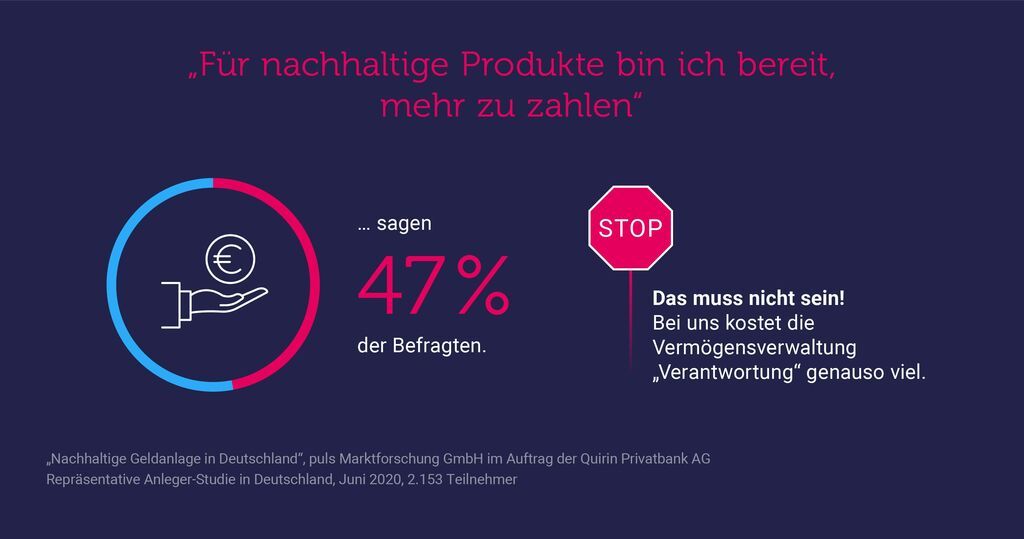
Until now, investors often had to pay dearly for the positive impact of sustainable investments on the environment and society. From an investment-management perspective, the reason is obvious: in the past, sustainable investment solutions were mostly available only in the form of forecast-driven, so-called "active" funds. These involve far higher costs for fund management than, for example, low-cost ETFs, but those costs are not, or only partly, attributable to the integration of sustainability criteria. These higher costs for sustainable products were accepted because of the generally greater willingness to pay for sustainable investment products. The study shows this too. Almost one in two of the 2,153 representatively surveyed respondents said they were willing to pay more for sustainable products than for non-sustainable ones. As commendable as this willingness in the name of a good cause may seem, it is just as unnecessary, at least when it comes to sustainable investing. Figuratively speaking, this is (now) no longer available only in the expensive organic supermarket, but also in a cost-effective and not necessarily less sustainable version. Today a low-cost approach using ETFs and index products is perfectly possible, just as we offer it at quirion in the "Comfort" package, for example.
Myth 2: "Sustainable investments deliver lower returns"
And such a modern approach to sustainable investing dispels yet another myth. In the past, sustainable portfolios mostly delivered lower returns than non-sustainable benchmarks, because they were too poorly diversified and losses could therefore hit them hard. From this, investors often drew the false conclusion that this lower return was itself a contribution to greater sustainability. But that isn't the case. This misconception is also borne out by the study. According to the findings, one in four investors is willing to forgo part of their return for the sake of sustainability. And not an insignificant part, at that: up to 30% less return would be acceptable to the investors surveyed. For this, a conventional investment offering a 2% return was posited, and respondents were asked how much return the sustainable alternative would have to offer for them to just barely still choose the sustainable version. The result: investors would give up as much as 0.62% and thus almost a third of the 2% on offer.
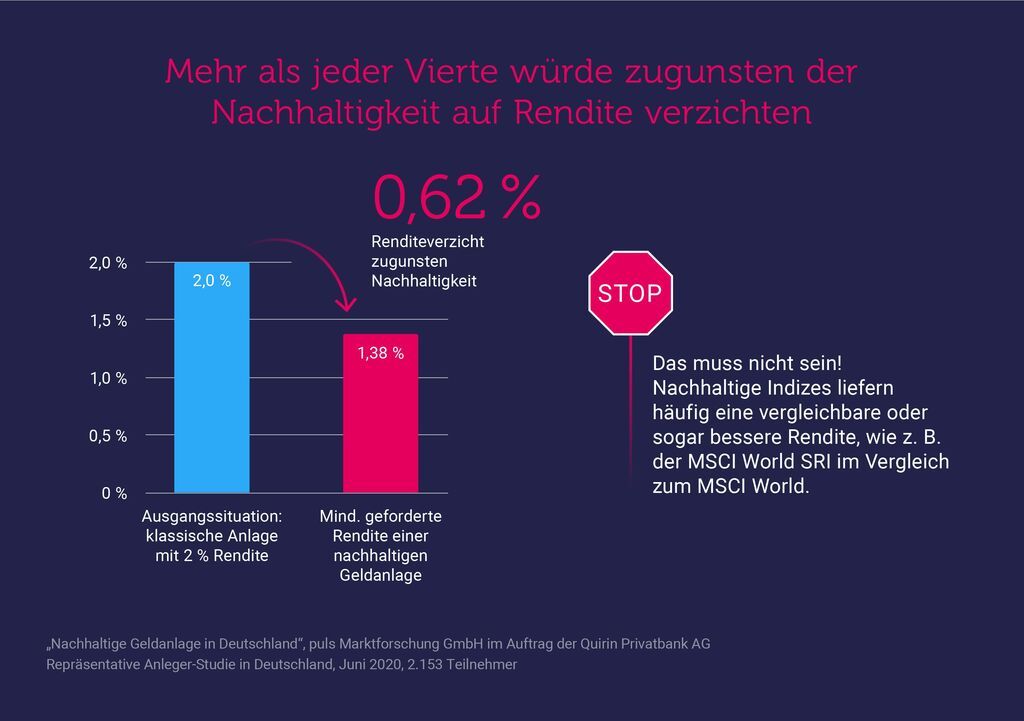
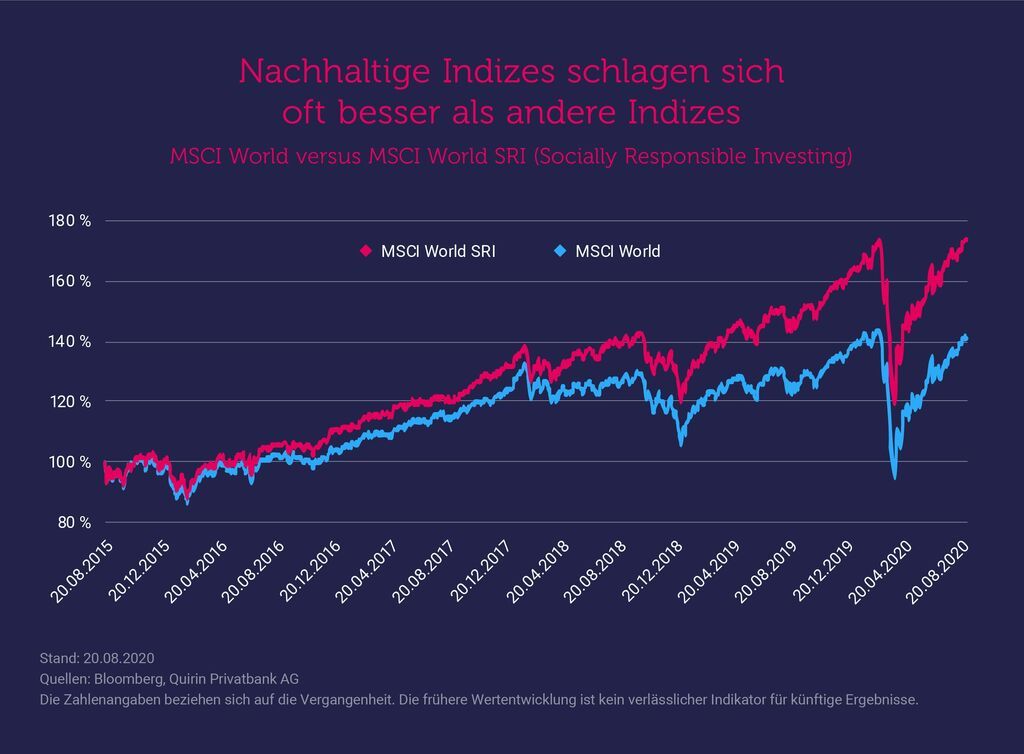
Here too the same applies: as praiseworthy as this willingness is, it makes little sense. No one today needs to give up returns in order to invest sustainably. On the contrary: sustainable indices often even perform better than non-sustainable ones, meaning they deliver a better return than their non-sustainable counterparts.
Myth 3: "Sustainable investments are riskier"
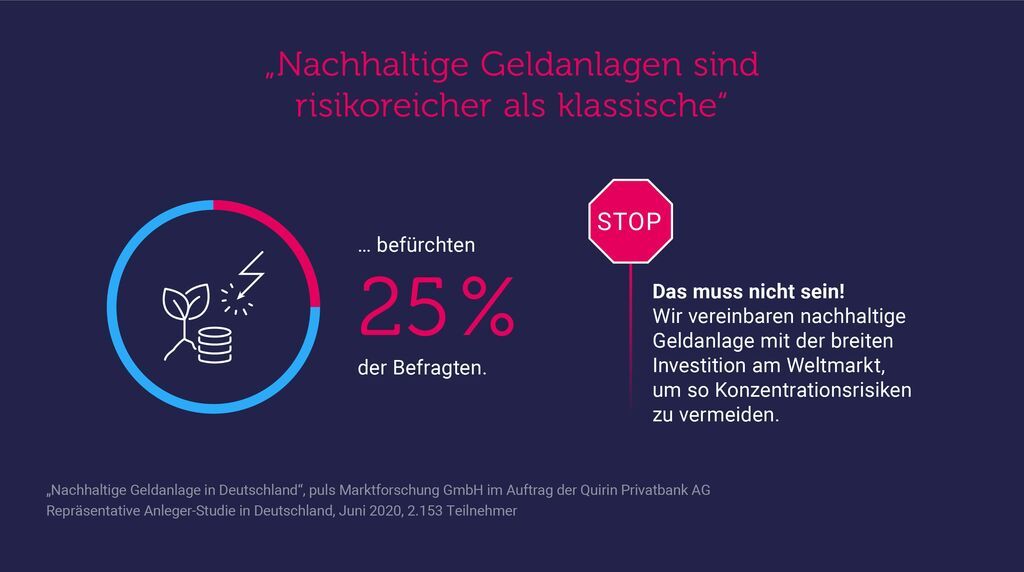
One in four respondents in the survey said that sustainable investments are riskier than conventional ones. This belief doesn't come out of nowhere, because in fact, in many places, that is still exactly the case, as just described. Why? Because of the numerous exclusions of non-sustainable companies from the investment universe made in traditional sustainability approaches, portfolios are in many cases very heavily concentrated. Many of the large, globally investing, actively managed sustainable equity funds in Germany, for example, hold fewer than 100 positions in the portfolio. That is not even a sixteenth of the stocks contained in the MSCI World Index, a global benchmark index for equities from developed markets. And to successfully reduce risk through diversification, that is far too few.
Until recently there were in fact hardly any suitable products and no sufficiently large body of data on companies operating sustainably to be able to put together a sustainability portfolio that was as broadly diversified as possible according to scientific criteria. That has only changed over the past few years and months, so that sustainable investment solutions are now possible that avoid the pitfalls of the past.
The best of both worlds: sustainability and return
This is how we implement sustainable investing for our clients too, with the sustainability portfolio in the "Comfort" service package, which we have offered since December 2019. This is neither "pure eco" nor a product with a coat of green paint. Rather, the portfolio combines, so to speak, the best of both worlds: return and sustainability. That means the eleven sustainability strategies strike an economically sensible balance between improving sustainability metrics (ESG criteria and CO2 emissions) and ensuring sufficient diversification. ESG stands for Environment, Social and Governance (good corporate governance). This is implemented using cost-effective ETFs and index-oriented funds. Investors thus invest in the world's capital markets on a scientifically sound basis, specifically in more than 3,000 stocks as well as bonds from around 800 different issuers, and thereby gain the crucial broad spreading of risk. With this approach, we take responsibility not only for a sustainable transformation of the economy and society, but also for our clients' lasting investment success.
Sustainable investments are becoming ever more popular
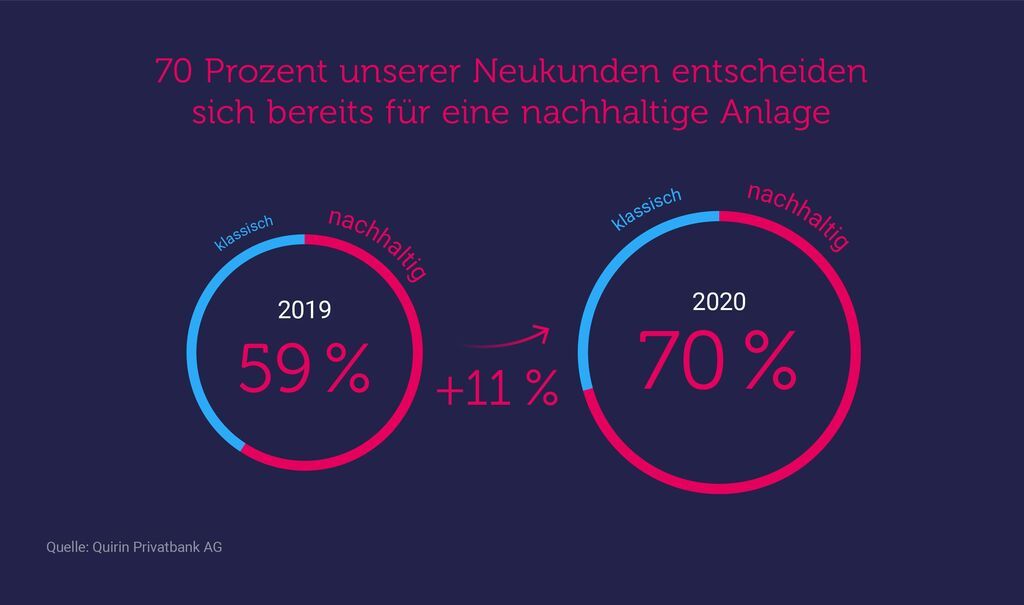
The way our clients behave shows that this concept is sought after and well received. 30% of all money newly invested this year flowed into the sustainable portfolio. And that's despite the fact that the asset management fee is slightly higher than that of the standard portfolio in the "Regular" package. That, incidentally, is because the product selection involves more effort and there are costs for using the ESG data. But with an annual fee of 0.68%, the sustainable portfolio is still among the most affordable offerings on the market.
The bottom line on sustainability:
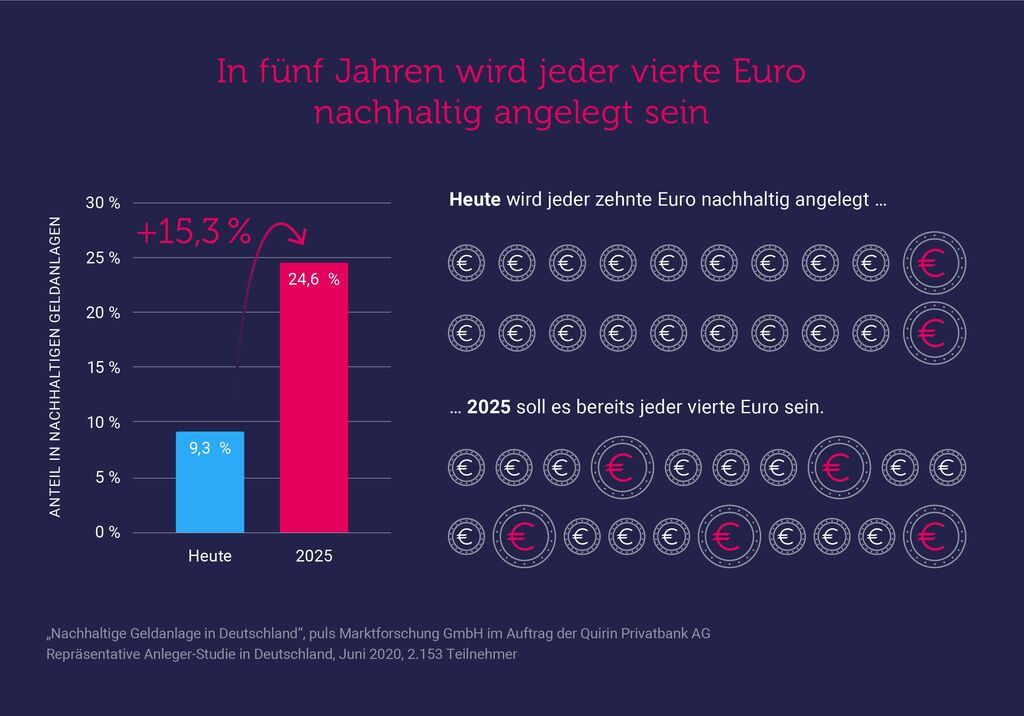
Sustainable investments are often compared to organic products in the supermarket. These are produced sustainably and are therefore rightly more expensive. But sustainability in investing is "produced" differently. If more people knew that they don't have to pay dearly for sustainability when investing, that they need neither give up returns nor accept higher risks, then in five years' time probably not just every fourth euro (as respondents indicated in our study) but perhaps even every second euro would be invested sustainably. And that in turn would be an enormous gain for the environment and society.
Find out here why return and sustainability are not opposites at quirion, and how quirion selects sustainable ETFs.
How sustainable ETFs are selected