
Much ado about nothing?
The media coverage is correspondingly heated. There’s a lot of noise in the press and across the news channels. With an eye to investing, all sorts of considerations are being weighed about how investors should ideally position themselves in the run-up to the US election. Scenarios are played out regarding the election outcome (which industry might benefit especially under which president), or analyses are made of how equity markets have performed in the past under Democratic or Republican leadership.
Our advice here: simply tune out the noise. Because such reflections ignore the fact that a host of other events beyond the election can pulverize the hoped-for effect of these forecast-driven strategies in no time. Investors who make investment decisions solely on the basis of (pre-)election coverage could therefore quickly be caught on the wrong foot.
Think back to the last presidential election in 2016: to describe the consequences of a possible Trump victory for the equity markets, the media at the time used martial terms like “bloodbath” or “worldwide shockwaves.” We know how it turned out: anyone who bid farewell to the stock market back then missed out on quite a lot. Trump’s stock-market record during his term was in fact nothing to be ashamed of (see chart). His corporate tax reform certainly contributed to this.
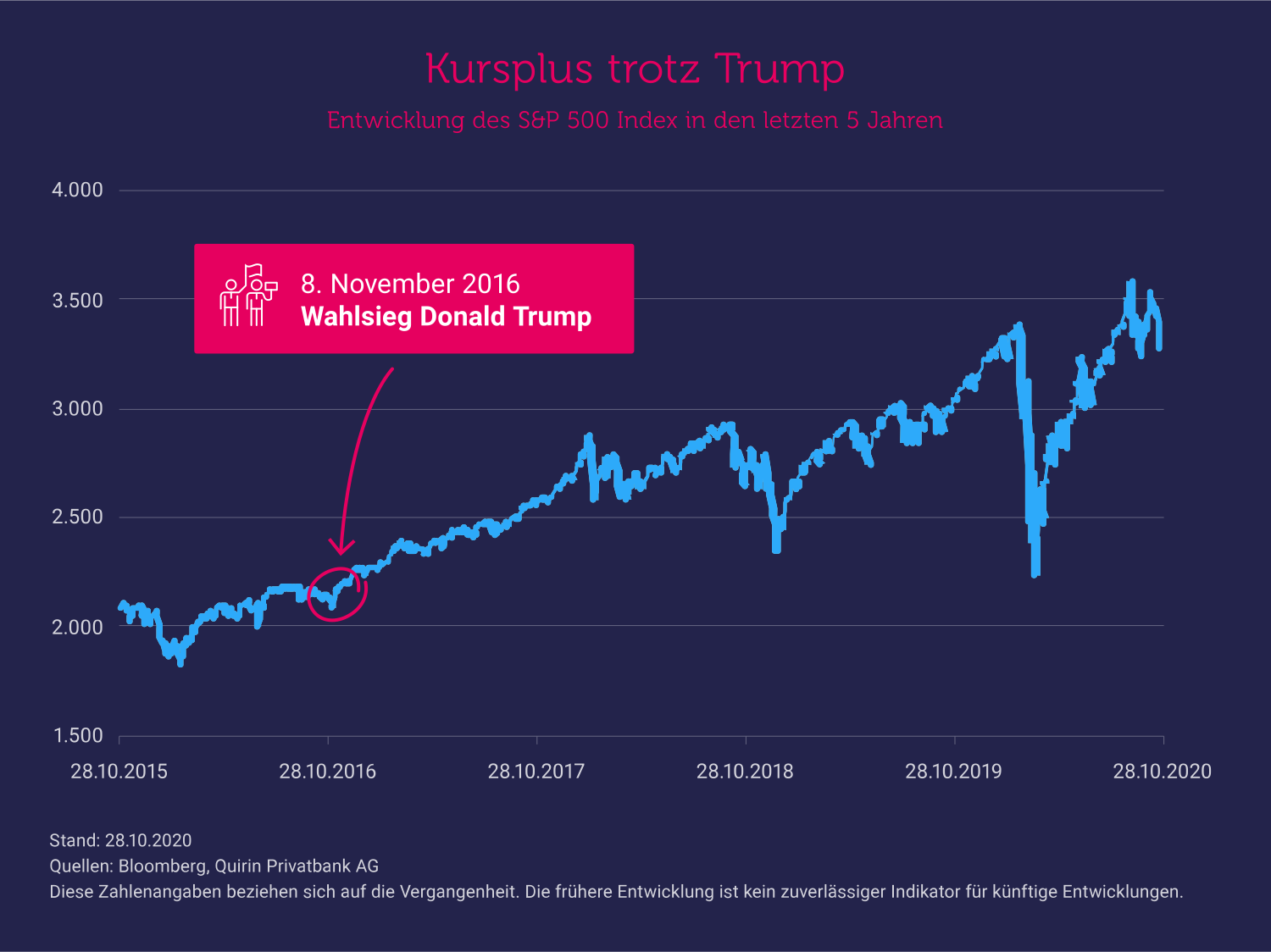
Otherwise, though, the stock-market upswing came about more in spite of Trump than because of him. Just think, for example, of the trade dispute he picked with China and other countries – which the markets were ultimately able to shake off relatively well.
The stock markets shrug their shoulders
Without wishing to trivialize the US election: who ends up winning the race is likely to be almost irrelevant, at least for the stock markets over the medium term – which ultimately comes down to the fact that there are a few important factors likely to shape the equity markets far more strongly, regardless of the election outcome:
- After the election – regardless of the winner – the way is clear for a large-scale stimulus package meant to get the coronavirus-weakened US economy running again. Trump and Biden will certainly set different priorities here, but boosting consumption, which is so important for the economy, is likely to be central for both. This will go down well on the stock market.
- The US Federal Reserve’s extreme low-interest-rate policy will remain extremely expansionary for years to come. A – if not THE – decisive fuel for the equity markets, which already worked powerfully during Trump’s term, thus remains in place.
- “America first” is likely to continue to apply. Because it is endorsed by large parts of the population, a President Biden, too, would take it into account – perhaps with less aggressiveness than Trump. “America first” therefore remains, in any case, a certain drag, but in our view not a lasting stumbling block for the economy and the markets, since even a re-elected Trump would hardly let the situation escalate completely. The collateral damage to the US would be too great.
Who ends up winning the race seems to be relatively immaterial to the stock market anyway. The following chart shows that there is no clear connection between the poll results and the trajectory of the US stock market. Put differently: the market regards neither of the two candidates as particularly advantageous or disadvantageous. You could also say: the stock market doesn’t hand out sympathy points.
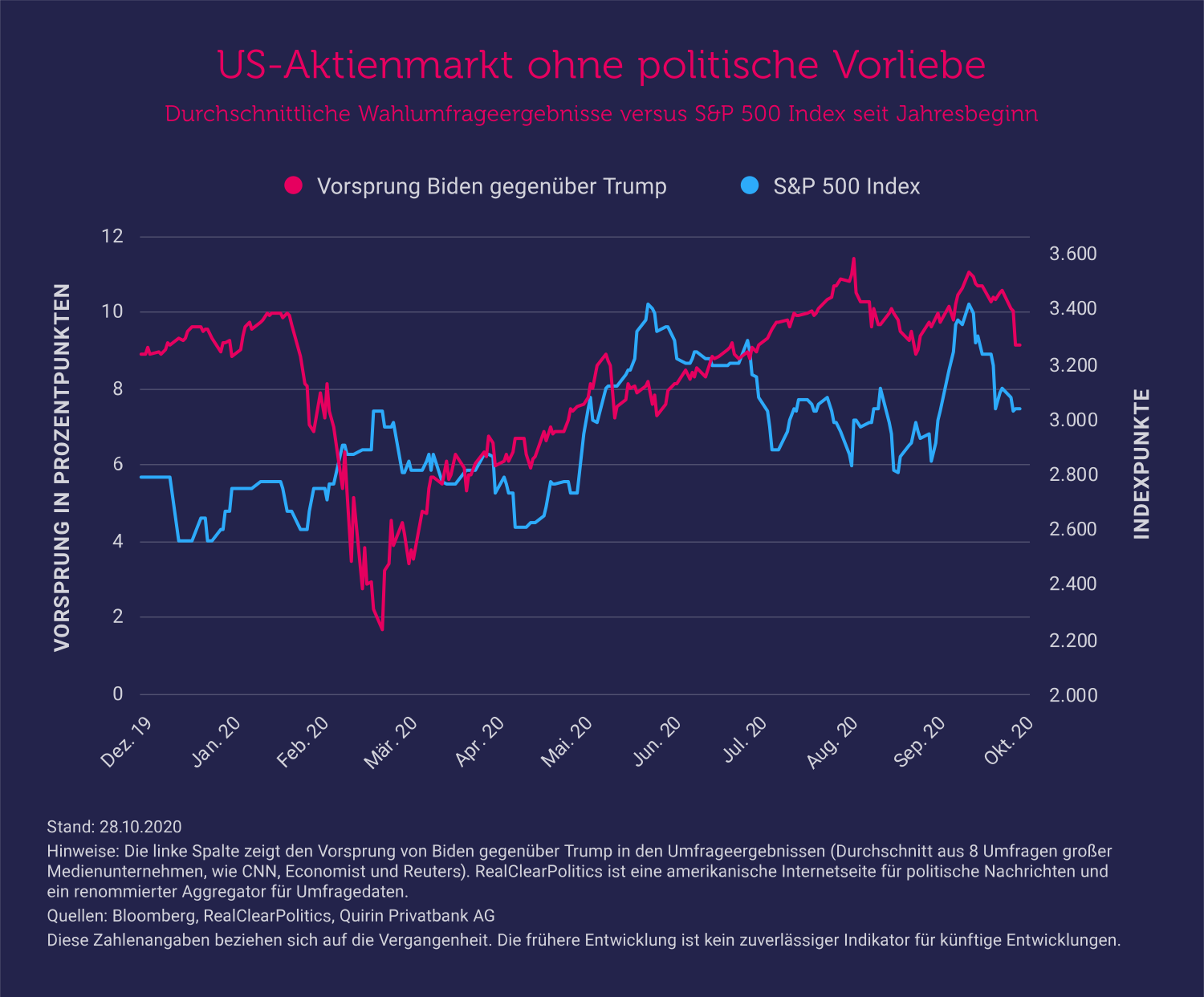
One can take a critical view of this, because there are very good reasons to approach a second Trump term with a great deal of suspicion. But the equity world won’t end with him either. Even if it isn’t entirely free of a certain cynicism: the markets have evidently, in a sense, grown accustomed to his quirks.
The stock markets tremble
One thing we don’t want to leave unmentioned here is the coronavirus crisis, which is intensifying again. It’s understandable that, in the face of the resurging coronavirus pandemic, investor nervousness is rising. The fear of the effects of a second lockdown is also making the rounds on the stock markets and has recently put share prices under greater pressure. All the more reason now to sharpen our focus on the positive aspects. Many negative factors currently clouding the market mood will disappear in the foreseeable future:
- It will soon be settled who will steer the fortunes of the US over the coming four years.
- The financial markets are, for now, awash in liquidity that has to be invested. This, together with the meager interest rates already mentioned, ultimately keeps driving investors back into the strong arms of the equity markets – not least to counter the inflation-driven expropriation of savings.
- By the end of the year, it will be clear how the EU and the UK come to terms with each other in the context of Brexit. The coronavirus crisis should strengthen pragmatism and a solution-oriented approach.
- Not to forget that, sooner or later, a coronavirus vaccine can also be expected – one that will at least ease the consequences of the virus.
All of this should ultimately meet with a positive response on the stock markets. Sharp price setbacks therefore offer favorable buying opportunities on the equity markets, which provide attractive return prospects over the medium to long term.
Conclusions for investors
In the face of the media din and supposedly convincing investment tips in the run-up to the US election, don’t fall into frantic activity. Rash investment decisions that result from it are speculation and have nothing to do with orderly investing. The fickle day-to-day events and the “well-meaning” forecasts must not take the wheel when it comes to your investments. Anyone who consistently anchors their equity allocation to their personal investment goals, their risk tolerance and their individual needs is more successful over the long term – and sleeps better, even on election night.
The current escalation of the coronavirus crisis is naturally causing uncertainty and setbacks on the capital markets around the globe. This could be intensified in the short term if the election outcome is not clear-cut and, as a result, a drawn-out stalemate ensues – one that may ultimately require a court to decide who becomes the 46th president of the United States. We do not assume the civil-war-like conditions that are sometimes painted on the wall. So here too the motto applies: keep calm.
What matters over the long term is that the market-economy order of our economy continues to generate growth in the future and that (innovative) companies earn profits. That is the true driving force behind the return power of broadly diversified equity investments, and it remains intact despite all the adversities.
quirion invests your money in a broadly diversified way on the capital market – across more than 60 countries and in 8,000 companies.
More about quirion’s investment concept