When companies are swapped in and out of stock market indices such as the DAX, it attracts a lot of attention – including from ETF investors, since in a sense it changes the holdings in their portfolio. Here is what index adjustments mean for ETF investors, and why quirion clients can stay completely relaxed.
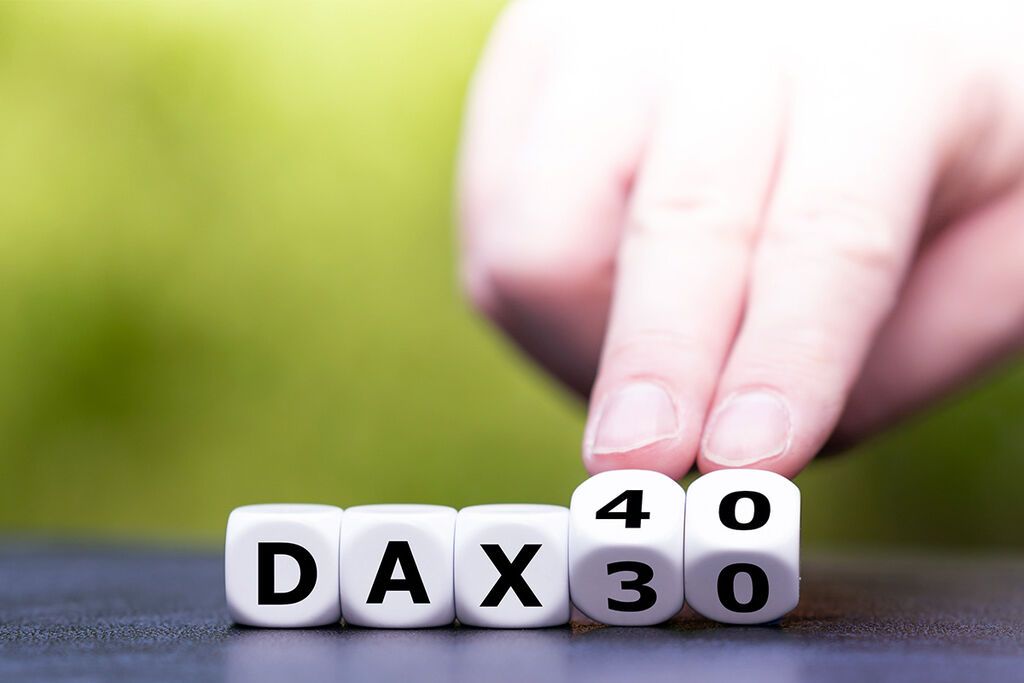
Who is joining? Who is being dropped? Whenever changes are coming to well-known indices like the DAX, there is always plenty of material for headlines and speculation. And so it was once again in the run-up to 3 September: the expansion of the DAX from 30 to 40 companies had been announced – the „crowning finale“ of a reform that also adjusted a whole set of rules for entering and remaining in the index.
At least when it comes to the portfolios at quirion, the „largest DAX reform in history“ was not quite so significant. „Even though the DAX now has ten more index members, the number of companies it tracks is still very small compared with other indices,“ sums up Kai Hattwich, Senior Portfolio Manager at quirion and at Quirin Privatbank. „What’s more, with a weighting of just under ten percent, the top companies have a major influence on how the index performs.“ To be really well suited as an investment, an index should, in the ETF expert’s view, cover a broader slice of the market. „That is one reason why our portfolios do not contain any ETF on the DAX.“
The top holdings in the new DAX
Linde 9.8%
SAP 9.2%
Siemens 7.9%
Allianz 5.6%
Airbus 4.8%
Source: Qontigo, as of 20 September 2021
That said, adjustments to stock market indices are, in principle, an issue for ETF investors. After all, they automatically change the holdings that are meant to bring performance into the portfolio. „Every index is reviewed at regular intervals,“ Hattwich explains. „That is when they check whether the companies in the index are still the ones that meet the defined criteria.“ After all, the index is supposed to reflect what it promises.
Are ETF investors at a disadvantage when things change?
Index providers do not want the adjustments to cause any unusual price distortions. That is why, especially with large indices, they generally announce changes early. This also gives ETF providers time to prepare. But because ETFs are meant to track the indices precisely on every trading day, the ETF changeover can only take effect on the day the new composition comes into force. In the case of the latest DAX change, there were ten trading days between the announcement of the new line-up and the first day of DAX 40 trading. So couldn’t speculative investors who deliberately and quickly bet on the newcomers to an index profit from the ETFs’ „forced position“? „That gets claimed in the media fairly often,“ notes ETF expert Hattwich. „But I have never seen a statistical analysis that actually proves it.“
How exactly the providers switch over individual ETFs depends above all on the type of replication method used. By no means do all of them have to buy or sell the affected holdings. „Even when that is the case, the technical implementation is really irrelevant for investors,“ Hattwich points out. „There is enough lead time and routine to carry out the changes in a way that leaves ETF investors with no disadvantages. For example, many ETF providers hedge themselves in advance through forward transactions in the affected holdings.“
Index changes reflect how markets evolve
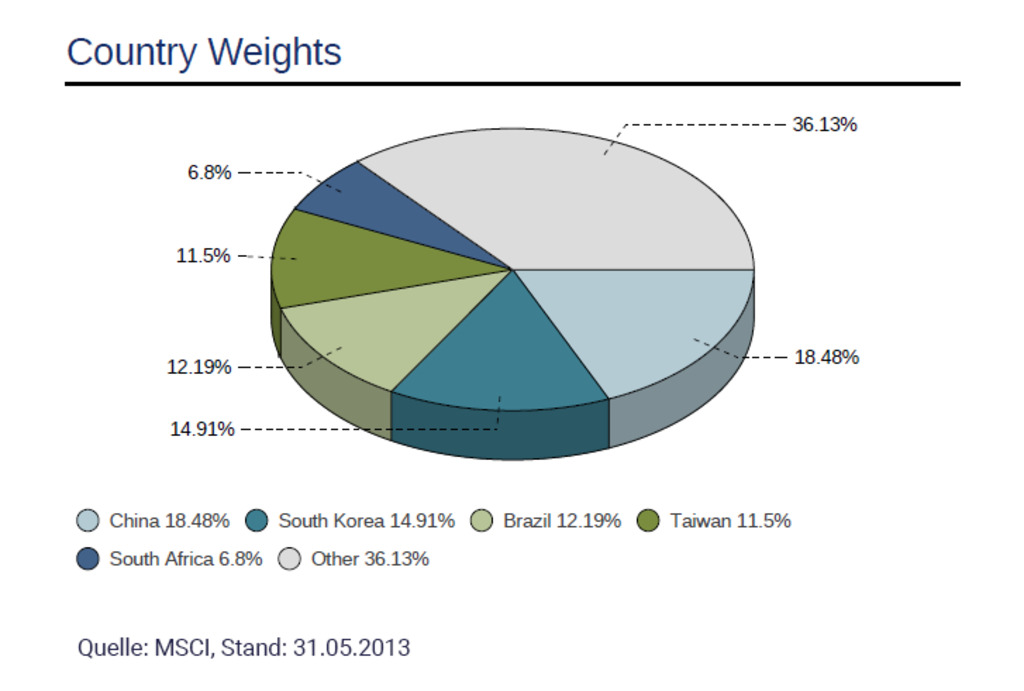
Alongside the regular reviews, structural changes also occur from time to time when markets shift more fundamentally. Take the MSCI Emerging Markets Index, for example: a major change came in 2018 with the inclusion of so-called A shares from China. These are „mainland shares“ denominated in the local currency, the renminbi, and their inclusion considerably expanded the base of potential index candidates. The move reflected the growing importance of the Chinese economy. Today, China’s weighting in the MSCI Emerging Markets stands at around 34 percent. In 2013 it was still below 20 percent, and in 2003 it was just 7 percent. „If investors bet on individual ETFs, it is important for them to take note of such changes and compare them against their own investment profile,“ Hattwich advises.
A comparison of country weightings in the MSCI Emerging Markets Index in 2013 and 2021
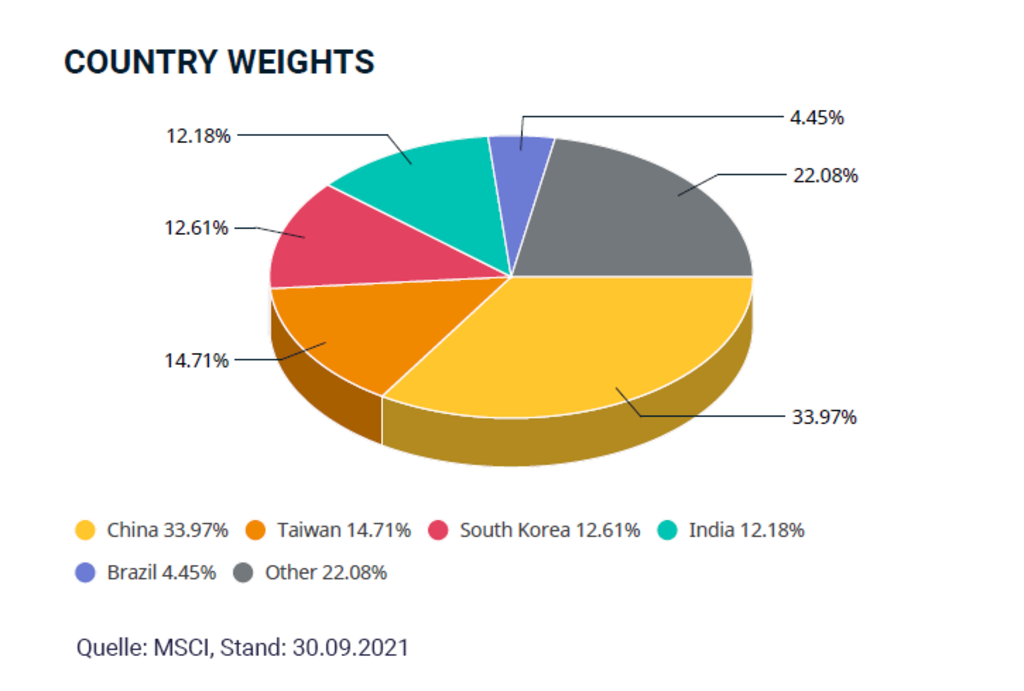
For quirion’s global portfolios, Hattwich and his colleagues keep an eye on these developments. Looking at the overall picture, they watch out for any overlaps. But the fact that markets change and that this shifts, say, country or sector weightings is indeed meant to be reflected in the global portfolios. This is how the evolution of the markets makes its way into the portfolios. „If, for example, the market capitalisation of oil companies shrinks as green energy rises, that affects the indices relevant to us.“ In doing so, the quirion portfolios participate in new trends at an early stage: „The great hopefuls of the future usually start out as small companies,“ Hattwich emphasises. „And unlike many large indices, our portfolios also include these smaller companies, small caps.“
When ETFs switch indices
Anyone investing in ETFs on their own should, in Hattwich’s view, keep an eye not only on larger index adjustments but also on another kind of change: it happens quite often that ETFs swap out the index on which they are based. „Most of the time this affects smaller ETFs, when, for example, they suddenly track a thematic index of semiconductor stocks instead of an index of shares from Taiwan,“ the ETF specialist points out. It also happens that fund companies switch index provider, and the composition of the indices can differ. The notices investors receive in these cases are usually not particularly detailed. When in doubt, the only option is to go looking for information yourself. „For our global portfolios we naturally keep a close watch on these changes,“ Hattwich stresses. „Our clients don’t have to worry about a thing.“
You can find out more about the ETFs in quirion’s portfolios here.