We do not base our investment strategy on forecasts. But it can be useful, from time to time, to take stock of the conditions shaping the investment landscape — if only to keep the often overexcited headlines in the media from making you nervous.
The new year kicked off straight away with fresh records on several equity markets. In both the American S&P 500 and the DAX, a small gain was enough to push the indices to new all-time highs. Prices on these markets have now been at elevated levels for quite some time.
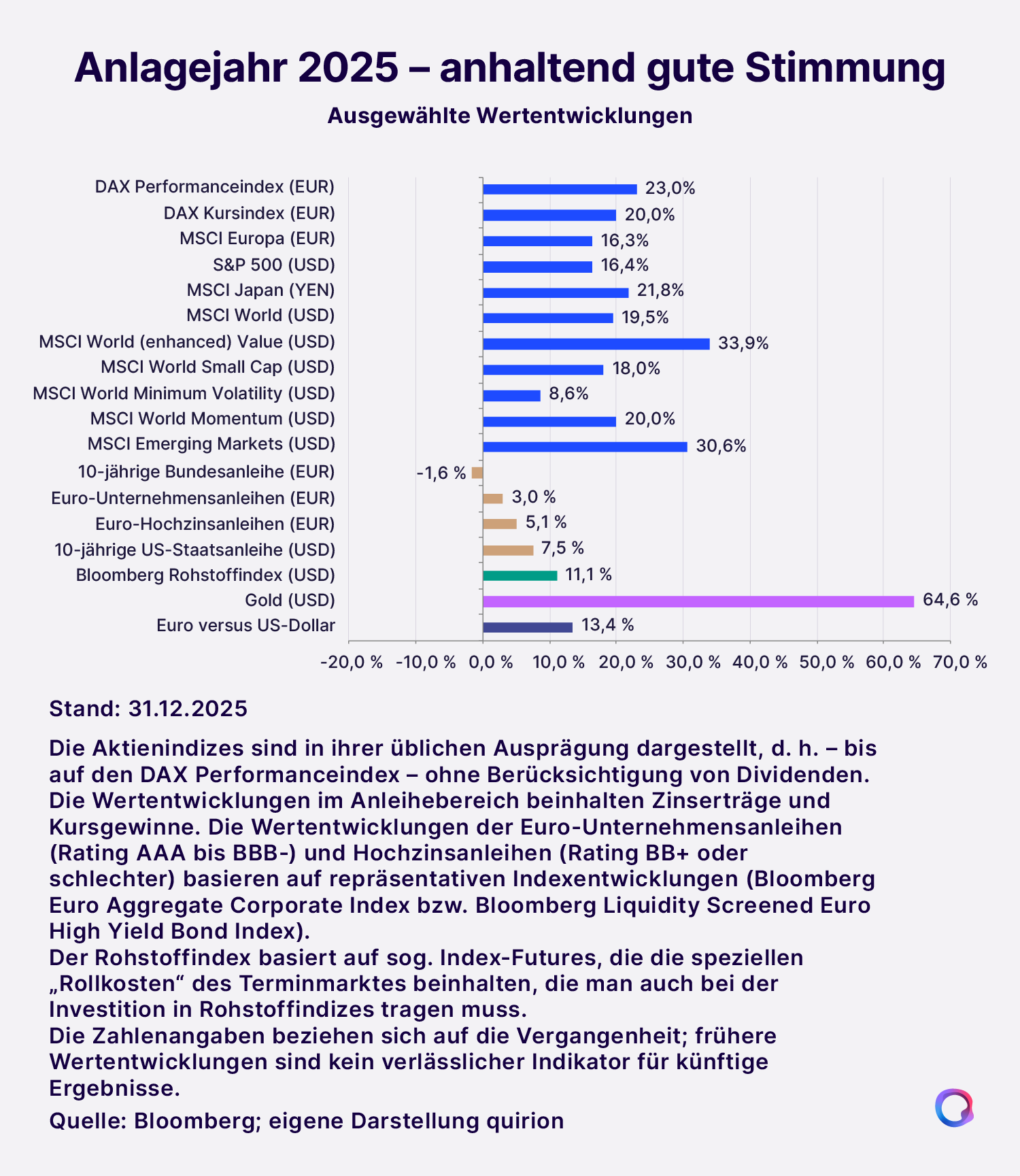
Contrary to what most had expected, the stock markets showed great resilience over the past few months. The uncertainty over US President Donald Trump's mega-tariffs, which had at times triggered severe price turbulence, was quickly overcome. On balance, many stock market indices around the world once again delivered above-average performance in 2025.
Forgoing currency hedging
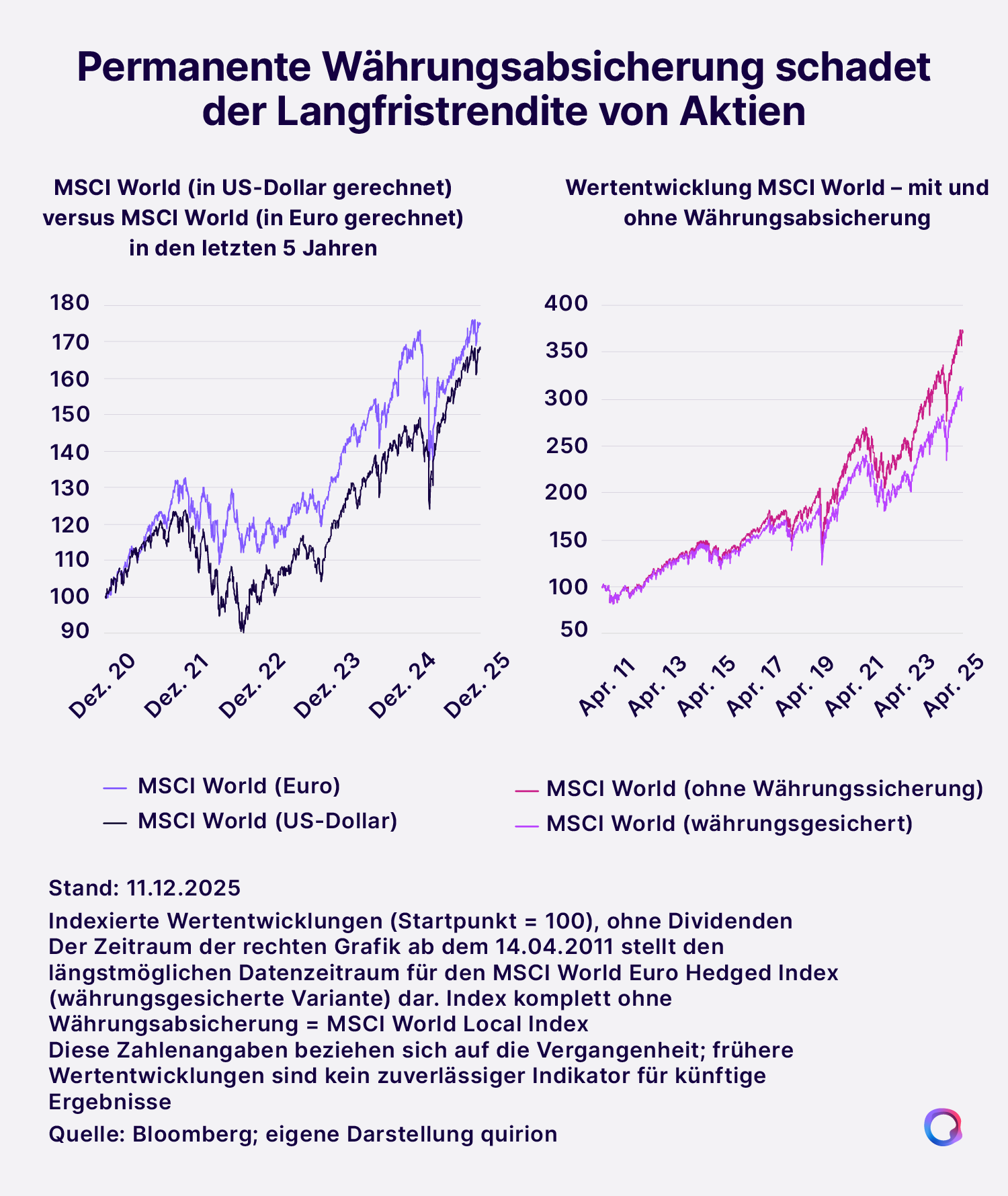
One drop of bitterness for investors in Europe was the weakness of the dollar. It meant that the strength of US equities was not fully reflected in their portfolios. “That said, this does not mean it would be better to hedge a global equity portfolio against currency fluctuations,” says Arndt Kussmann, Head of Investment Communication and Analysis at quirion and Quirin Privatbank. Arguing against it, he says, are the high costs, on the one hand. On the other, in previous years investors have often benefited additionally from the strength of the dollar. “Positive and negative currency effects level out over time. On balance, hedging does not pay off over the long term.”
High valuations, modest economic growth
As for the starting point for the short-term outlook, there is both light and shade. The level of valuations on the equity markets has been quite high for a while now. Relatively strong earnings increases are already priced into many share prices. “This increases the risk of disappointments and price corrections,” Kussmann explains.
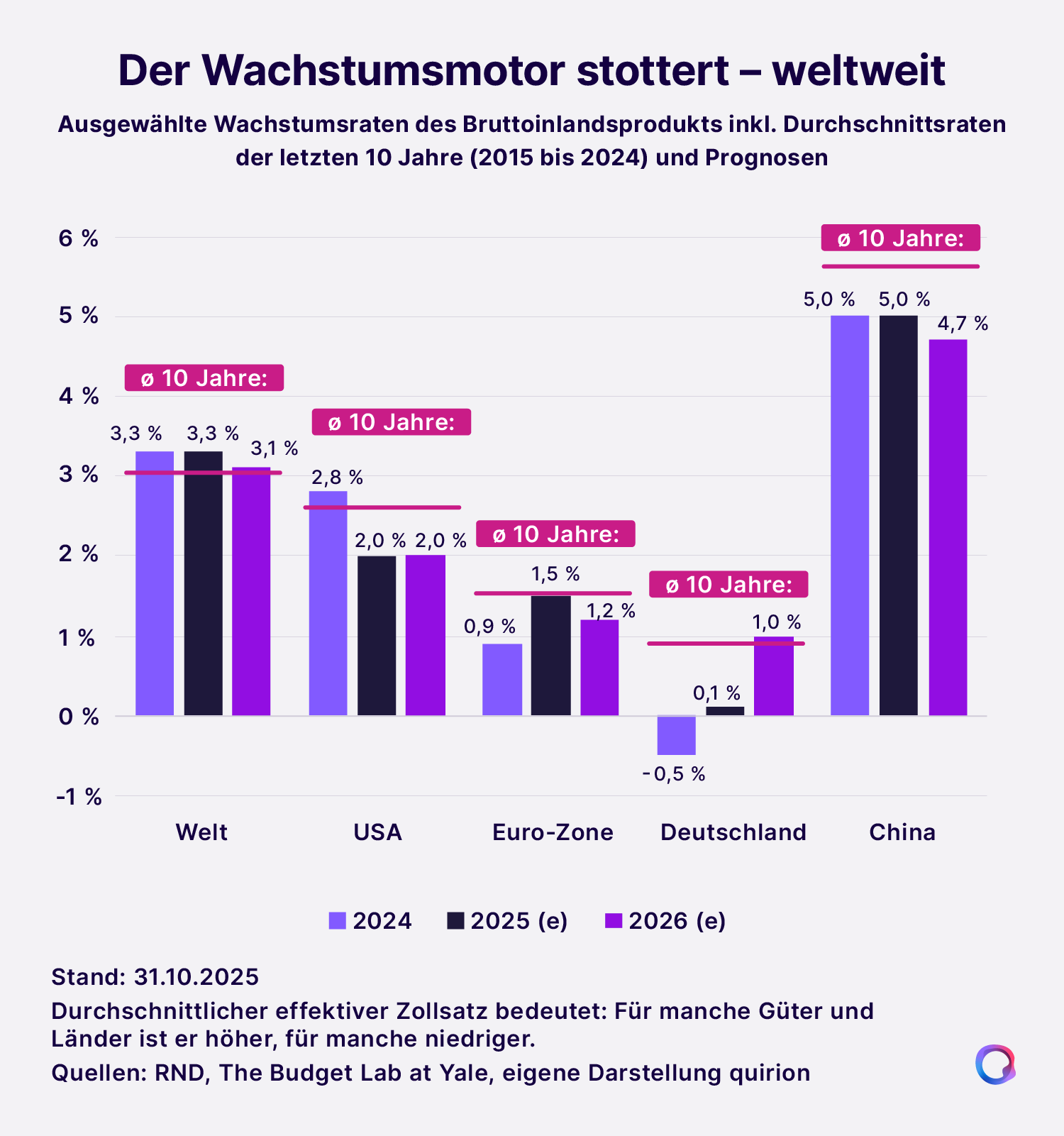
On top of that, growth expectations for the economy are rather modest. “Economic developments in the industrialized nations — above all in Europe and Germany — are running below the ten-year average,” Kussmann notes. That said, in his assessment, the weakness of the industrialized countries and of China is likely to be partly offset by the strength of some emerging markets. “The outlook for the world economy is not exactly dazzling. But at the moment, no serious risk is emanating from this side.”
A shift in US tariff policy?
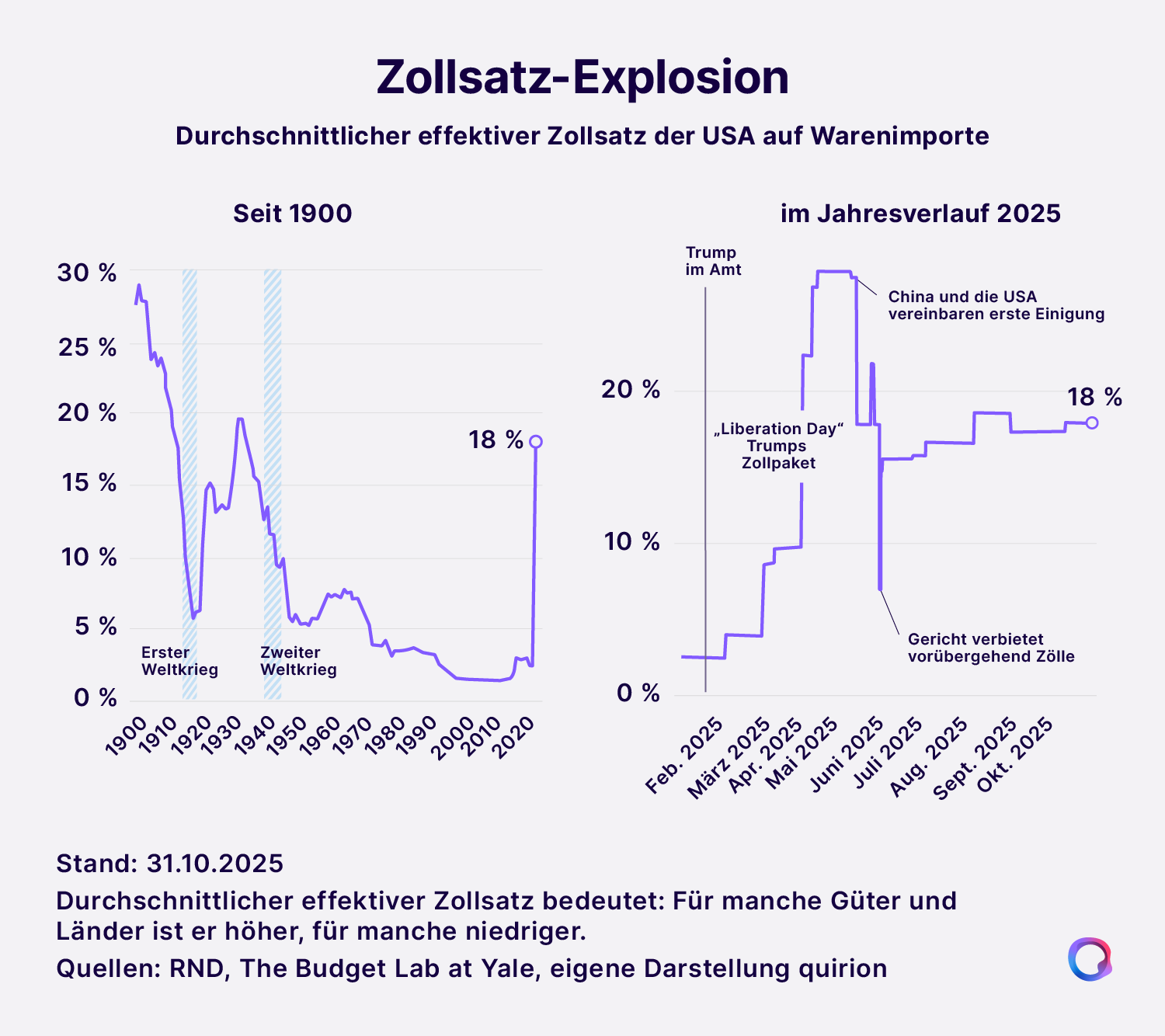
With one of the great flashpoints of 2025 — Trump's tariff policy — Kussmann sees potential for a slight easing. US import tariffs are currently as high as they have been since the 1930s. “For Trump, tariffs are above all a means of applying pressure to push through political goals,” Kussmann notes.
But in the US, the tariffs also increase the danger of rising inflation, which is stubbornly persisting at a high level there anyway. “Rising prices are likely to become one of the big issues ahead of the midterm elections in early November. That could prompt Trump to cut the tariffs, at least in part.”
Keeping an eye on interest rate policy
In addition, the interest rate policy of the US Federal Reserve will be followed especially closely this year. “Inflation that is too high, a slowing economy — and then, from June, a new Chairman at the head of the Fed: the constellation is very complex,” says Kussmann. “So far, the US central bank has held firm against Trump's demands for an overly loose monetary policy. The question is whether that will continue to be the case.”
In Kussmann's view, the European Central Bank has reached the end of the line with its interest rate cuts. “If there are no nasty surprises from inflation or geopolitics, the key rate is likely to remain at its current level for quite some time.”
A wave of issuance on the bond markets
Kussmann expects impetus for the bond market to come, among other things, from a wave of issuance in 2026 and beyond. There is substantial refinancing demand from both governments and companies. In the case of the latter, this is connected above all with the immense investments in the field of artificial intelligence. “In the race for investors' favor, bond issuers will have to offer attractive terms,” Kussmann expects. “That carries the risk of rising yields and, correspondingly, falling prices, especially for longer maturities.”
That said, Kussmann is fundamentally positive about the now noticeably higher level of yields. “The fact that bonds have once again been more rewarding since the interest rate turnaround of 2022 is positive above all for portfolios with high bond allocations.” In quirion's portfolios, bonds serve primarily to cushion the price fluctuations of the equity portion.
Equities are the central source of returns. After all, the trend on the equity markets is directed upward over the long term. “Equities are productive capital with which value is created,” Kussmann underlines. “No other asset class can point to such a fundamental link with economic growth.”
Staying invested for the long term
For the investment year 2026, it will once again be important not to get nervous during short-term fluctuations. “The next crash will most certainly come. It's just that no one knows exactly when. As a rule, though, not when it is being announced at great length in the media,” Kussmann stresses.
In any case, anyone who wants to reach their investment goals should not rely on shaky forecasts. No one knows the future. The developments of the past year, he says, have made it strikingly clear how quickly the tide can turn one way or the other. Surprises can occur at any time. An essential factor for investment success therefore remains staying true to a well-founded investment strategy that steers clear of speculation. “The most sensible way to invest is a diversified global portfolio that is aligned with your personal goals and in which you stay invested for the long term.”
You can find our detailed market outlook right here.