Whether in working life or in old age, there are often considerable differences between the incomes of women and men. That's precisely why it makes sense for women to use the return opportunities of the capital markets to build a financial cushion.
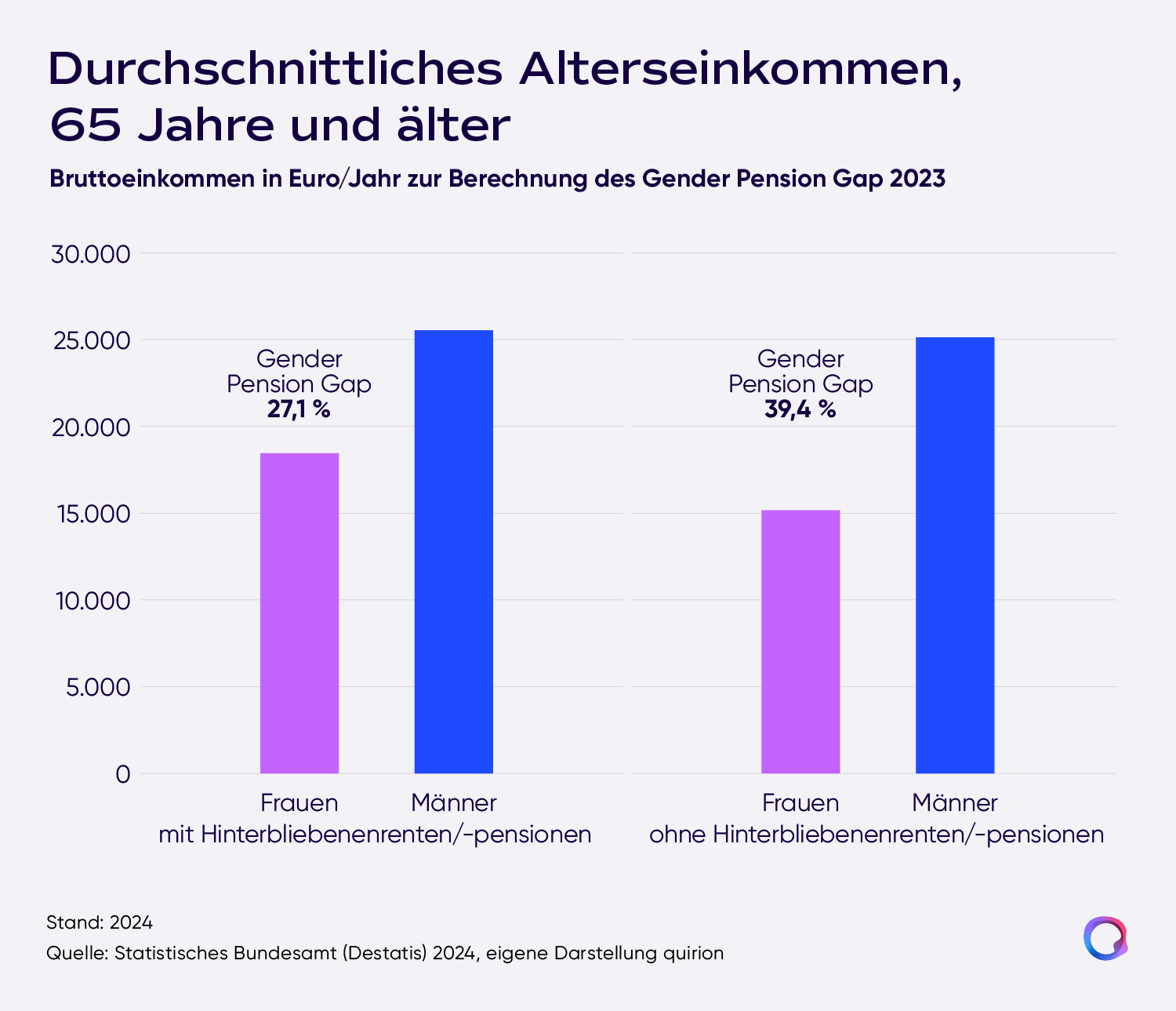
The income differences between women and men are still substantial. This is regularly documented, for instance, by the German Federal Statistical Office's "gender pay gap". According to it, women in Germany earn an average of 18 percent less per hour than men. The gap is even more pronounced in the "gender pension gap". Excluding survivors' pensions, the average retirement income of women aged 65 and over is around 40 percent lower than that of men.
One of the reasons for the differences: interrupted employment histories. In the statistics, this shows up, for example, in the fact that women's average gross hourly earnings barely rise from around the age of 30 — the average age at the birth of the first child. For men, they climb almost steadily with increasing age. A clear indication that, when it comes to childcare, it is still usually women who put their careers on hold. The home care of elderly relatives, too, is predominantly carried out by women. According to a survey by the AOK's Scientific Institute last year, this is the case in just under two-thirds of instances.
Tapping into return potential
Taking care of building wealth early on — for private retirement provision, for example — makes sense for everyone. But given lower average incomes and a generally higher life expectancy, it is particularly important for women. Yet many don't fully tap the return potential of the capital markets for this. According to a study by Quirin Privatbank, for instance, women more often than men still use a classic savings account. And when they do invest in the capital markets, women turn more often than men to actively managed funds rather than ETFs.
The interest on savings accounts, however, remains meagre. According to Bundesbank figures, the effective interest rate for new deposits with a three-month notice period averaged just 0.74 percent in March 2024. Actively managed funds, in turn, are usually far more expensive than ETFs, which needlessly weighs on investment results. According to a study by the European securities regulator ESMA, the average costs of actively managed equity funds between 2017 and 2021 came to 1.7 percent per year. For ETFs, they were only 0.43 percent. In terms of average performance, the active funds still lagged behind, with a gain of 9.9 percent versus 11.9 percent for ETFs.
A worry-free, all-in-one offering
And yet there is a simple way to benefit efficiently from the return opportunities of the capital markets, without having to grapple much with the details of product selection yourself — namely, within a digital wealth management service, in quirion's global ETF portfolio. The goal of both the classic and the sustainable strategy is to achieve the best possible balance of return opportunities and risks through a special combination of low-cost ETFs. And that's true for the widest range of personal risk appetites. Depending on your individual risk profile, bonds are added to the mix in order to dampen the price fluctuations of the equity portion.
Investors themselves don't have to worry about a thing. quirion's experts take care of that. For example, they regularly rebalance value fluctuations so that the portfolios keep matching the respective risk profile over the long term. They also check from time to time whether there are ETFs on the market that are cheaper or better suited to the objectives. With an ETF Savings Plan Plus, all these benefits of genuine wealth management are available from as little as €25 a month. And with that, the chance to build a financial cushion over the long term, even in small steps.