The idea that a limited selection of stocks can deliver better long-term performance than the broad market is a myth. Even professionals usually have no success with it. 5 reasons that speak against active stock picking.
1) Because it resembles a game of chance
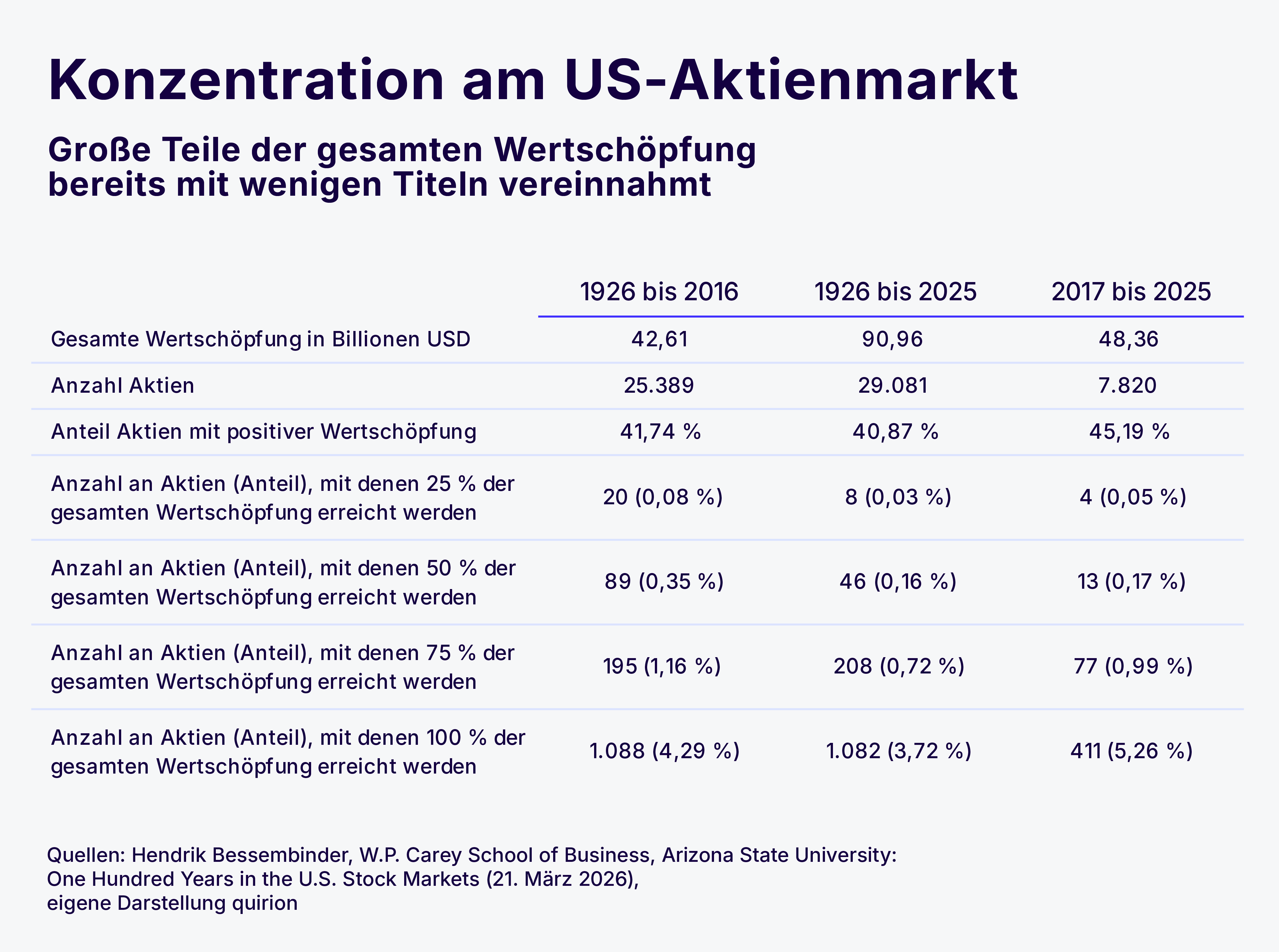
On the stock exchanges, it is usually only a few stocks that deliver a large part of the positive performance. This is shown, for example, by various studies by the US economist Hendrik Bessembinder, who has examined the American stock market several times over different periods. According to his research, in the years 1926 to 2016 just 89 out of a total of 25,389 stocks generated 50 percent of the entire value created. In the period up to 2025, it was as few as 46 out of a total of 29,081 stocks.
But does that mean you should look for the potential value drivers before investing? "The idea may seem obvious, but it is a fallacy," says Philipp Dobbert, head of asset management at quirion and at Quirin Privatbank. "With luck, you can land a direct hit now and then." But such hits cannot be repeated systematically, he says. If only because there are so many more relative losers than winners – a bet with unfavorable odds.
2) Because even professionals fail at it
The main reason why even professionals fail with targeted stock picking: "Despite all the expertise, nobody can see into the future, and that includes fund managers," Dobbert explains. "Which stocks are among the long-term winners is something you only ever know in hindsight."
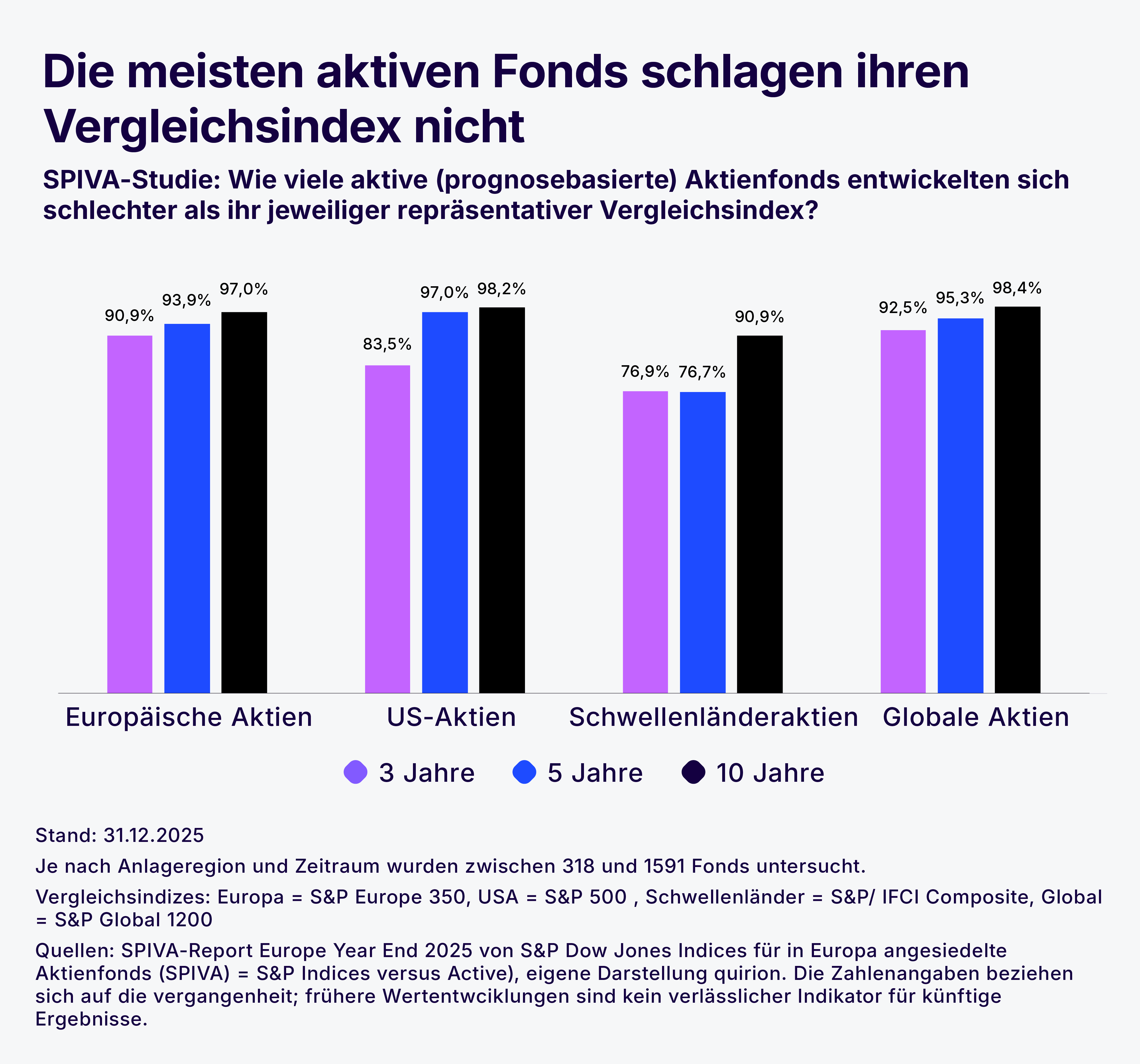
That it hardly ever succeeds to "get it right" with a stock selection systematically and over the long term can be seen in comparisons of the performance of active funds with stock market indices. As in a study by S&P Global from March 2026: according to it, 97 percent of active funds on European stocks failed to deliver better performance than a comparable index over a ten-year period ending in late 2025. For global stocks, the figure was as high as 98.4 percent.
3) Because it costs too much
Trying to beat the market therefore fails in most cases. And that costs returns. Whether through the attempt to make the "right" stock selection. Or through the attempt to catch particularly favorable timing for getting in and out. "For investors, it is precisely re-entry that is very often a problem," Dobbert notes. Return opportunities are quickly missed.
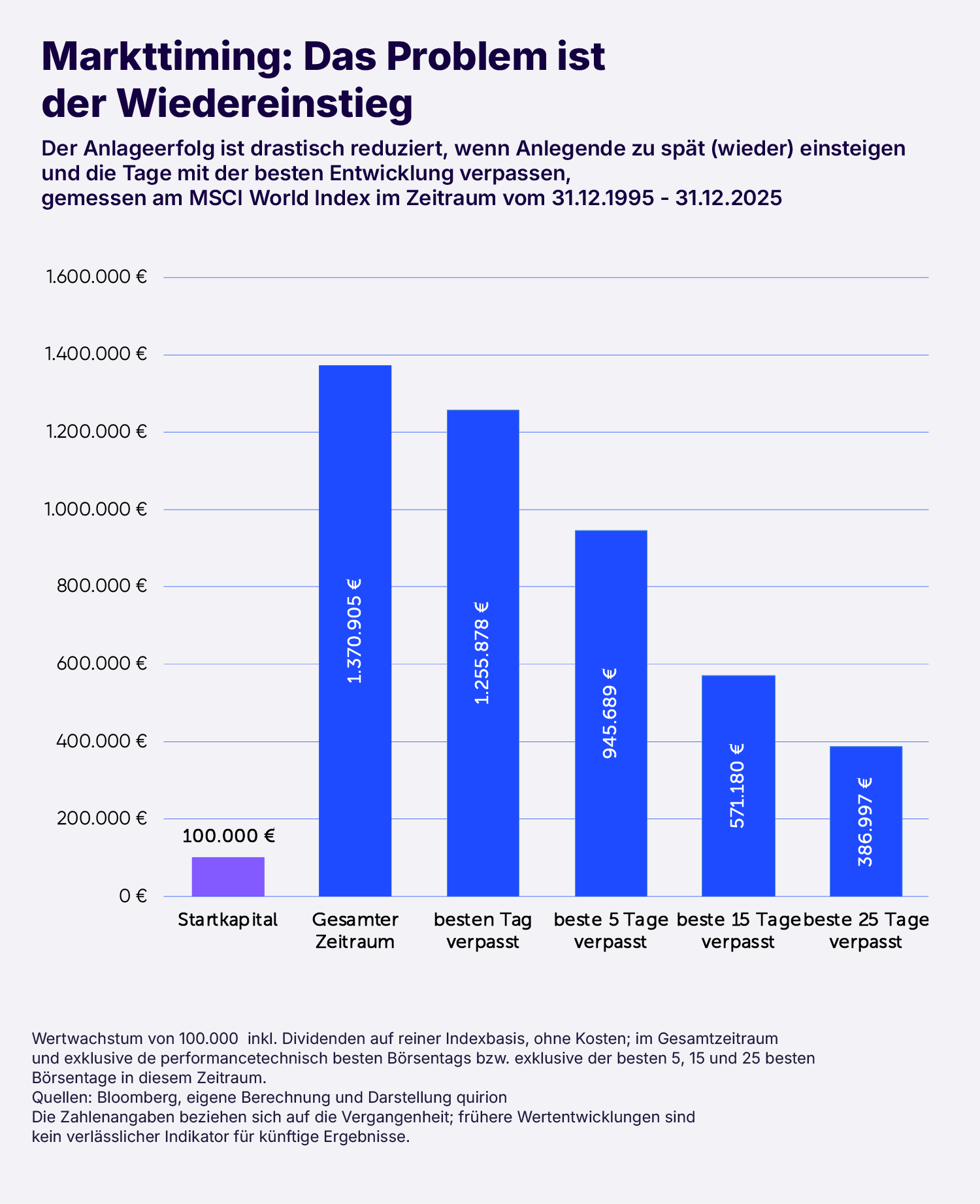
On top of that: anyone who relies on classic active funds pays extra. This is shown, for example, by a study published in March 2026 by the European securities regulator ESMA. According to it, classic active equity funds cost an average of 1.9 percent per year in the period between 2020 and 2024. For ETFs, the average costs were just 0.5 percent.
4) Because unnecessary risks can be avoided
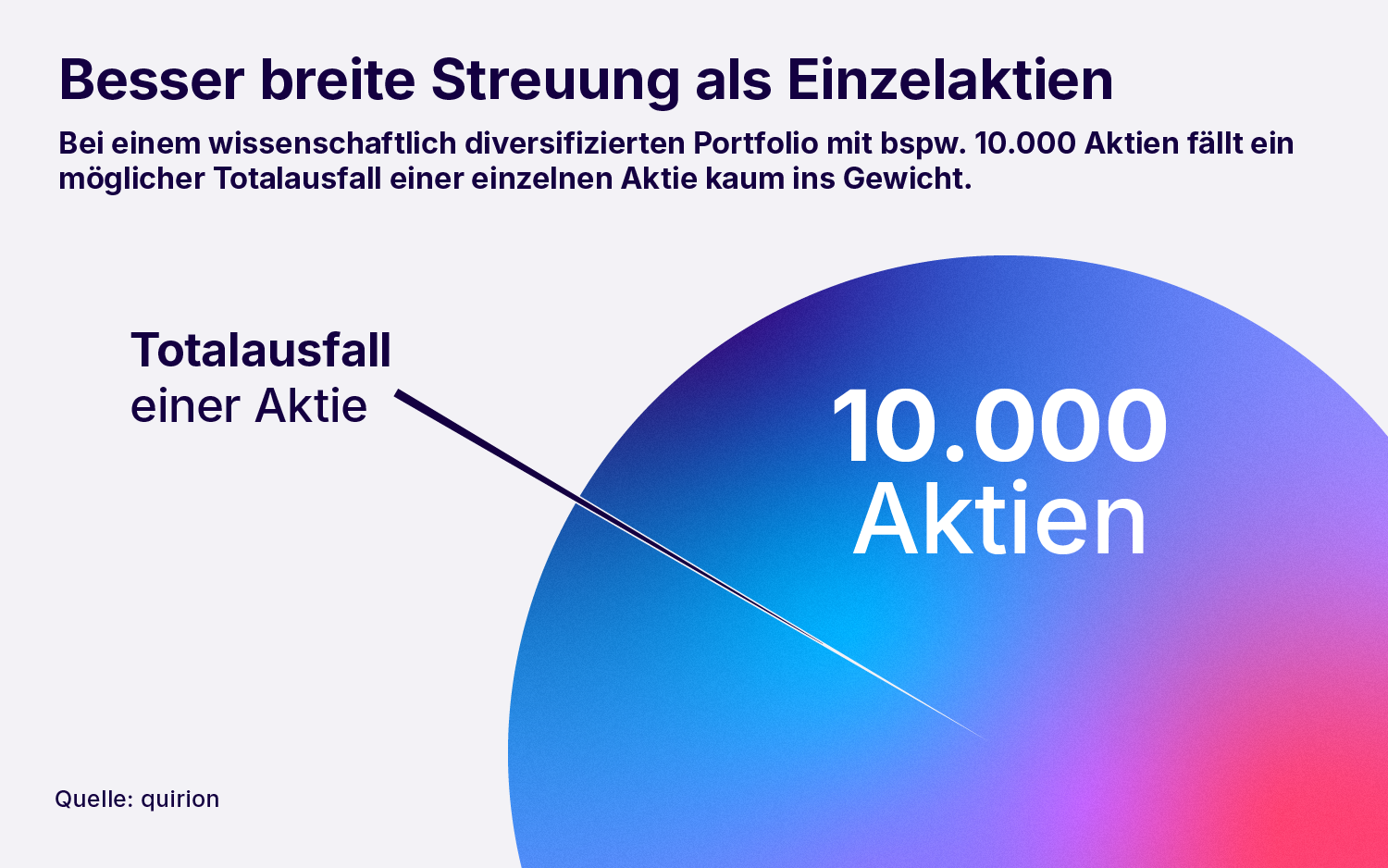
If you want to avoid the high costs of classic active funds, you use low-cost ETFs. And if you position your portfolio as broadly as possible, you can avoid many of the risks you take on with a more focused stock selection. With a diversified global portfolio, the balance of return opportunities and risks can be optimized. The risks of individual stocks barely carry any weight in it anymore.
However, selecting and combining ETFs for such a global portfolio does not take care of itself. You really have to look very closely. Not least because the range of products has become extremely diverse: so-called active ETFs, for example, aim to beat their market instead of tracking it. That turns the original idea of index funds into its opposite.
5) Because there are convenient and effective alternatives
With quirion's global ETF portfolio, professionals take care of diversification based on scientific criteria. The aim is to track the global stock market efficiently. It currently gives investors a stake in more than 10,000 stocks from more than 70 countries. Depending on your personal risk profile and individual risk appetite, bonds are also added to the mix. Because a pure equity portfolio fluctuates more than a mixed portfolio and is not suitable for every investment goal.
From an effective investment strategy to product selection to regular rebalancing: "With our digital asset management, all of these services are included," Dobbert underlines. Thanks to the use of ETFs, investing nevertheless remains very low-cost, he says. "And the whole thing is also available as a savings plan, from savings rates of just 25 euros a month."
You can find out more about our savings plan here.