With savings plans, investors can build wealth over the long term. Five aspects that matter for success.
1) The return opportunities
When it comes to "saving," many people think first of "interest", especially since interest rates turned around. But for quite a few interest savers, returns remain meager. That's shown by an analysis from the comparison portal Verivox from the beginning of March. According to it, out of a total of 758 credit institutions evaluated, more than a fifth still pay no interest, or only low interest of up to a maximum of 0.25 percent, on overnight deposits. Anyone who invested 10,000 euros in overnight deposits at banks operating nationwide received, according to the analysis, an average of 1.75 percent per year, even though the ECB's key deposit rate has now stood at 4.0 percent since September 2023.
Fixed-term deposits offer somewhat higher interest than overnight deposits, and the bond market offers higher still. But anyone who wants to build wealth over the long term can hardly get around the return opportunities of the equity markets. In its current "Global Investment Returns Yearbook," UBS, in collaboration with the London Business School, looked back over 124 years of capital markets. One finding: in all 35 equity markets examined in the study, the return over the historical average was higher than for bonds and higher than inflation.
2) The long-term outlook
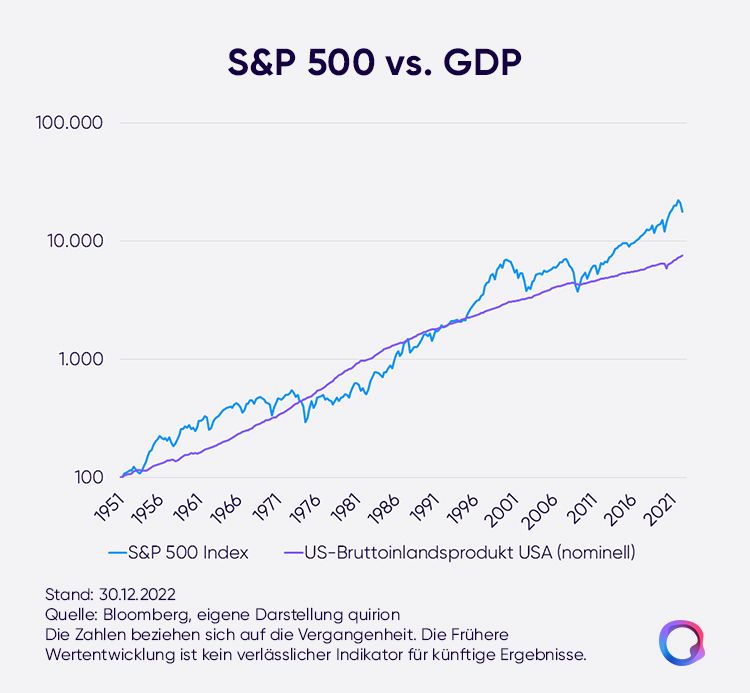
There is another reason that speaks in favor of savings plans that give investors at least a partial share in the return opportunities of the equity markets. True, there are savings plans for all sorts of things, including gold or cryptocurrencies. But what is decisive for building wealth is a very fundamental relationship that other asset classes don't have: equities give you a stake in companies. The equity markets and the global economy are therefore closely intertwined. Over the long term, prices tend to trend upward, because the market economy is fundamentally geared toward growth.
3) The systematic nature of the investment strategy
Building wealth over the long term calls for a systematic investment strategy. The reasoning: individual companies can fail, and individual industries or regions can fall into crisis over longer periods. But no one can look into the future. That's why the attempt to filter out today's winners of tomorrow and the day after usually goes wrong.
You counter such risks with a savings plan on a globally diversified portfolio that is as broad as possible, like the ETF Savings Plan Plus on the global portfolio from quirion. The goal is the best possible ratio of return opportunities to risks. To achieve this, quirion draws on insights from capital-market research. By using ETFs, the investment stays cost-efficient. In the process, the experts regularly check whether there are products on the market that are cheaper or better suited to the goals.
4) Your own profile
What applies to investing quite generally also applies to savings plans: a pure equity investment is not optimal for every investor. Depending on your personal appetite for risk and your investment horizon, quirion adds bonds to dampen the price fluctuations of the equity portion. That's because bond prices usually move far less strongly than those of equities. What's more, ongoing price changes shift the weightings within the portfolio over time. So that your portfolio remains appropriate to your personal profile, quirion regularly evens out these shifts. This is called rebalancing.
5) Continuity
Investors often act on gut feeling. The price fluctuations of the markets stir emotions. That's perfectly natural. For building wealth over the long term, however, continuity is important. With savings plans, the regular contributions make it easier to stay invested.
The barriers to getting started are low at quirion: the ETF Savings Plan Plus is available from just 25 euros a month. Investors can increase or reduce the savings rate, and one-off payments are possible at any time too. The ETF Savings Plan Plus includes the services of professional wealth management. Investors can benefit from return opportunities but don't have to worry about anything else themselves.