When they hear the word “ETF,” many people think of very specific product characteristics. The range on offer, however, keeps growing. This is making it increasingly difficult for investors to assess the opportunities and risks of individual products. Here's what investment professionals pay attention to when making their selection.
Bringing the performance of a well-known stock index into your portfolio: that's the idea most investors probably associate with ETFs. Instead of having to select and trade individual stocks, you simply track an index. It's transparent, and you invest cheaply in many securities in one go. This basic idea is what made “Exchange Traded Funds” popular.
Their popularity can be quantified. According to data from the research house ETFGI, around 11.4 trillion US dollars were invested in ETFs worldwide at the end of 2023, a new record. Ten years earlier, the figure was just 2.3 trillion US dollars. Along with demand, however, the range of products has also grown strongly. Worldwide, there were around 10,300 different ETFs in December 2023. Their number has more than quadrupled since 2010.
And now on Bitcoin, too?
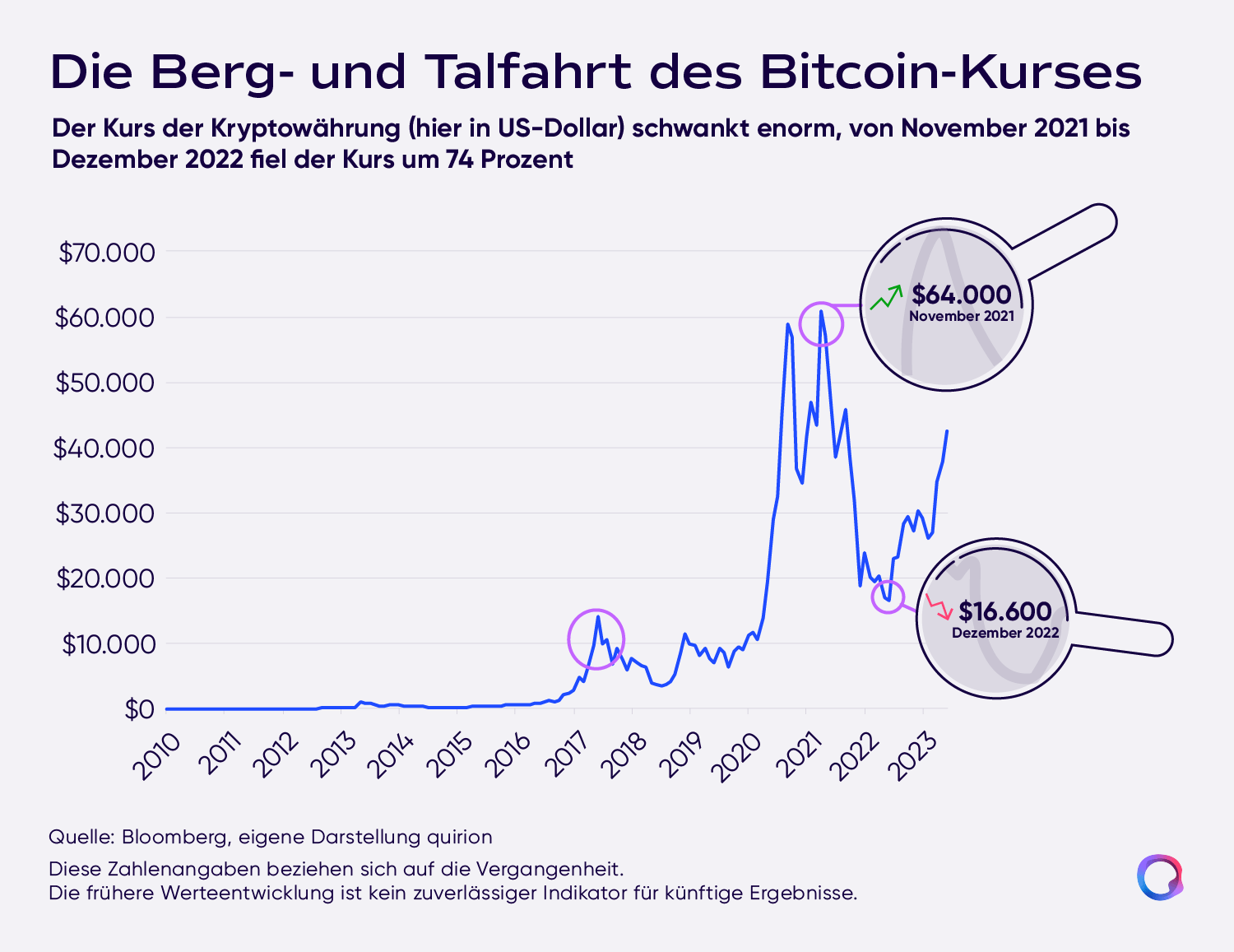
One expansion of the product range in the US recently caused a particular stir: in January, the US securities regulator approved “Exchange Traded Products” on Bitcoin that are allowed to invest directly in the cryptocurrency. But these products have little in common with classic index funds, which at least bring a certain degree of diversification. Like ETPs on commodities, they concentrate on the performance of a single “asset,” in this case Bitcoin. And its price swings are dizzying. In any case, SEC Chair Gary Gensler paired his statement on the product approval with a warning about the “countless risks” associated with Bitcoin and products whose value is tied to cryptocurrencies. He urged investors to exercise caution.
Confusing variety
The label “ETF” alone has long since ceased to tell you anything about a product's characteristics. So-called active ETFs, for example, aim to outperform “their” index rather than track it. This turns the original idea of index funds into its exact opposite. Other ETFs do refer to a blue-chip index such as the S&P 500. But by using futures market transactions, they are also meant to keep the risk of losses within a certain range. Such offerings don't make things any simpler, more transparent, or cheaper.
New niche products are constantly being thrown onto the market. And even setting aside the specific opportunities and risks, a long-term perspective is not guaranteed. The “Rize Pet Care” is one example. This thematic ETF was launched in 2022, specializing in stocks from the pet food segment. By the end of 2023, it had already been closed again.
ETFs for a core investment
Anyone looking to build wealth over the long term should not head straight for lists of product offerings. First, it's important to attend to an investment strategy that suits your own profile. If return opportunities and risks are to be in the best possible balance, broad diversification is advisable in any case. And for that, in turn, ETFs can be an ideal instrument.
When it comes to selecting products, the details then matter – and not only for the more exotic variants. Because there are also differences between ETFs on large blue-chip indices. Here, product competition is definitely an advantage: “New ETFs keep coming onto the market that let us implement our investment strategy even better or more cheaply,” notes Kai Hattwich, Lead Portfolio Manager at Quirin Privatbank and at quirion.
For core investments such as the global portfolio, quirion deliberately limits itself – in both the classic and the sustainable variant – to the asset classes of equities and bonds, that is, to the most liquid markets for investing. Equities are meant to contribute the lion's share of the return opportunities. That's because equities give you a stake in companies and thus – unlike Bitcoin, for example – in productive capital. Because the economy is geared toward growth over the long term, so are the equity markets. “There's no other asset class where you find this relationship in the same way,” Hattwich notes. Bonds, by contrast, are meant above all to cushion the price swings of the equity portion within the portfolios. “And this asset class does that better than almost any other.”
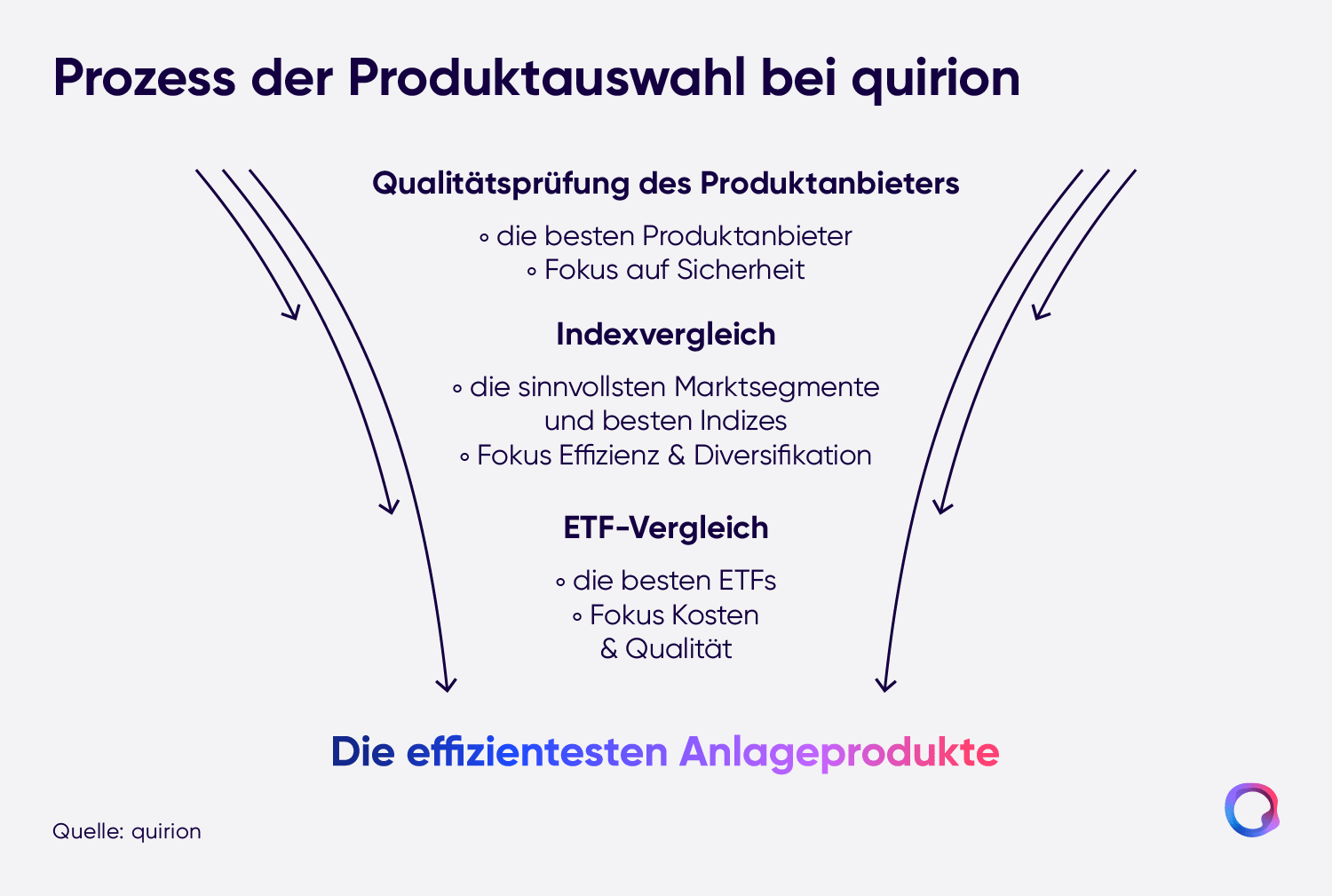
Before ETFs make it into quirion's portfolios, they go through a strict filtering process. This includes a quality check of the product providers as well as a very precise comparison of indices and products. Investors themselves don't have to worry about a thing. “Our investment strategy is based on the current state of capital market research,” Hattwich explains. “In selecting products, we take relevant return factors into account, along with the best alternatives available on the market in each case.”