Investing an amount in one go, splitting it into several tranches, setting up a savings plan: there are good reasons for all three options. What they are – and what the controversial cost-average effect is all about.
Investors find themselves in this situation time and again: they want to invest money, but right now everyone is talking about overvalued stocks or growing risks. Perhaps there have already been sharper fluctuations. Now they wonder whether it wouldn't be better to wait a while longer. “Never catch a falling knife”: this stock market adage has been around for a long time. The fear of having to swallow paper losses right after getting in is widespread.
But how long a given trend will last is never certain at any point. That is why the media more or less constantly debate whether the opportunities or the risks currently prevail. The problem: “No one can see into the future. No one knows how prices will move in six months, three weeks, or two hours – not even the experts,” notes Philipp Dobbert, head of asset management at quirion and Quirin Privatbank.
Prices fluctuate upwards
When investing, acting with foresight therefore precisely does not mean aiming for optimal moments to get in and out. Or trying to identify tomorrow's winning stocks today. Both are pure speculation and highly risky.
For the question of when to invest how much money, another insight is absolutely central: over the long term and on average, the trend in the stock markets points upwards. Even if prices fluctuate more sharply in between.
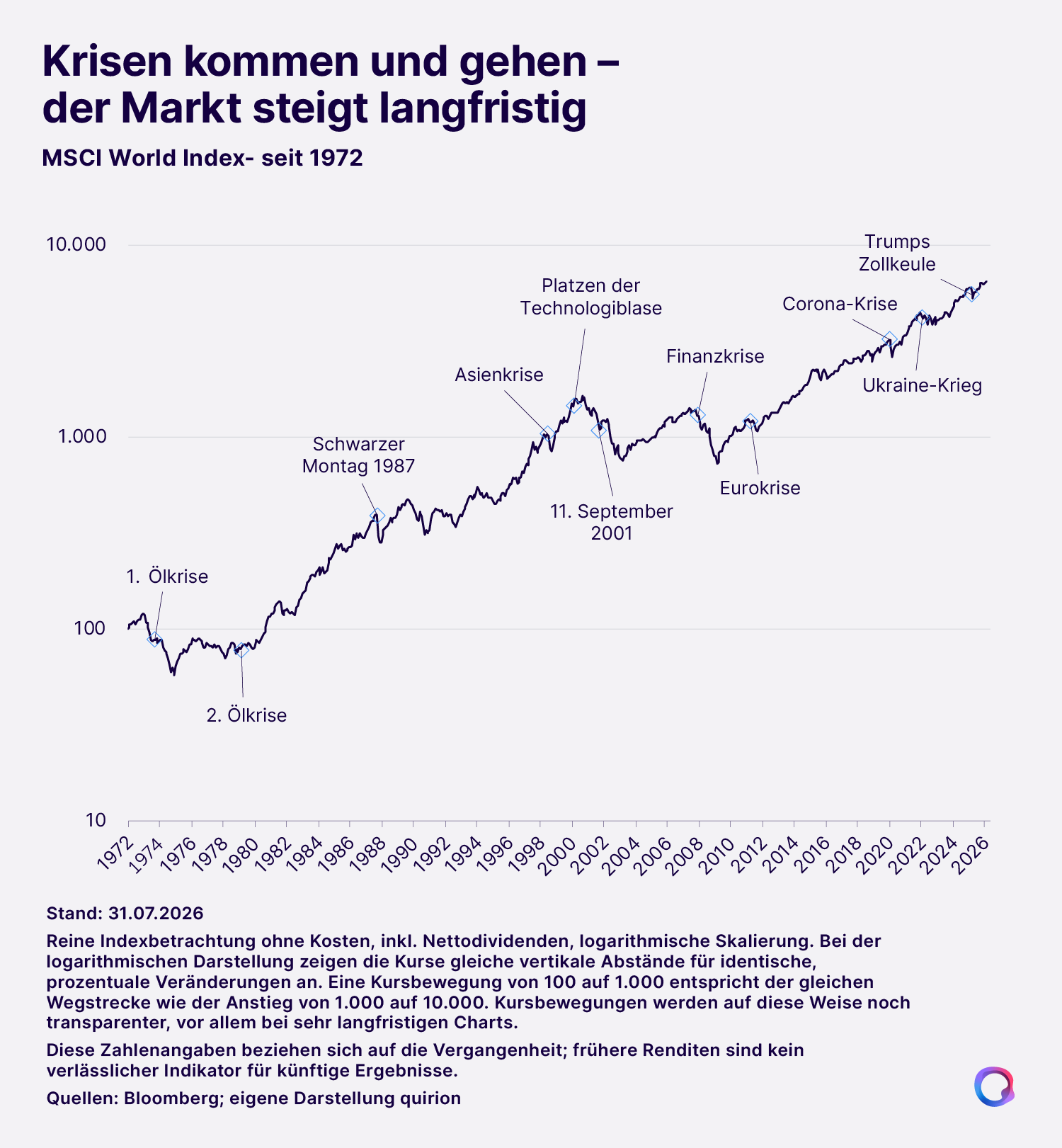
“Behind the tendency of price levels to rise lies a fundamental economic relationship,” Dobbert explains. “Stocks give you a stake in companies and thus in the economy.” The economy, in turn, is fundamentally geared towards growth. “Investors benefit from this with a portfolio that is as broadly diversified as possible and in which they stay invested as consistently as possible.”
The lump sum has the edge
From this, you can also derive the answer to the question of whether it is better to invest in one go or bit by bit: “Assuming a broadly diversified portfolio and a long investment horizon, the lump sum is usually superior,” Dobbert explains.
But what about the so-called cost-average effect that is so often pointed to? The argument: if you split up the investment and, for example, invest a fixed amount regularly, you buy more units when they are comparatively cheap. And fewer units when they are comparatively expensive.
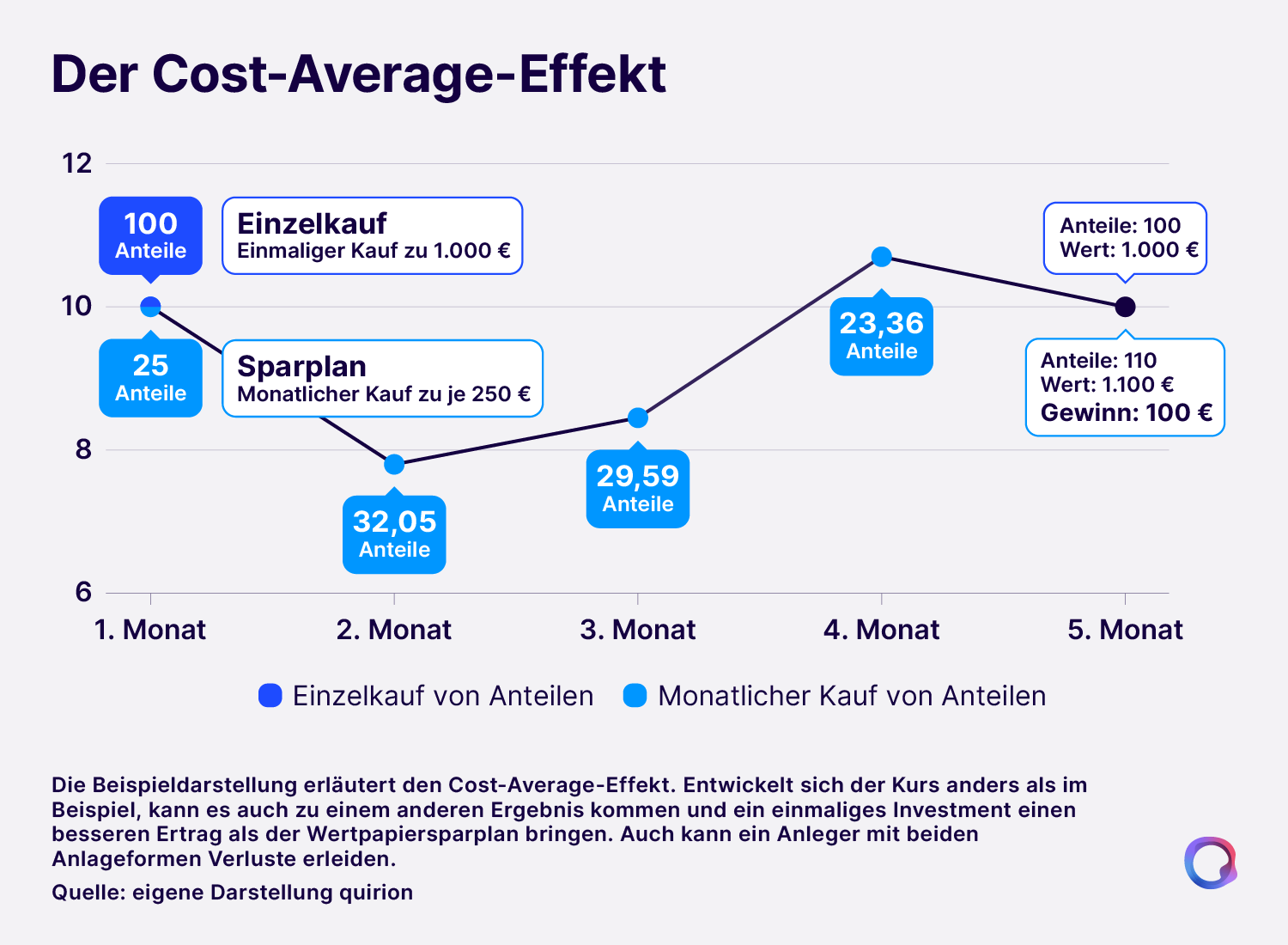
That sounds logical and appealing. “However, that does not mean the effect leads to higher returns over the long term,” Dobbert stresses. “Prices in the stock market do fluctuate, sometimes sharply.” But over the long term and on average, the trend points upwards. “And that is why the probability is very high that, with a long-term investment, higher prices will have to be paid for the units at later points in time.”
Numerous studies bear this out, for example one from 1993, one from 2002, and one from 2012.
Arguments for the “salami tactic”
Imagine you invest a larger sum of money – and shortly afterwards prices plunge: would you immediately question the investment? “If you are not entirely sure about that, it can make psychological sense to split larger investment amounts into instalments and stretch the investment over a longer period,” Dobbert recommends. “That can prevent you from panicking and turning a temporary dip into a real loss.” You should set fixed payment dates, he says, and not take your cue from prices. To avoid risky speculation.
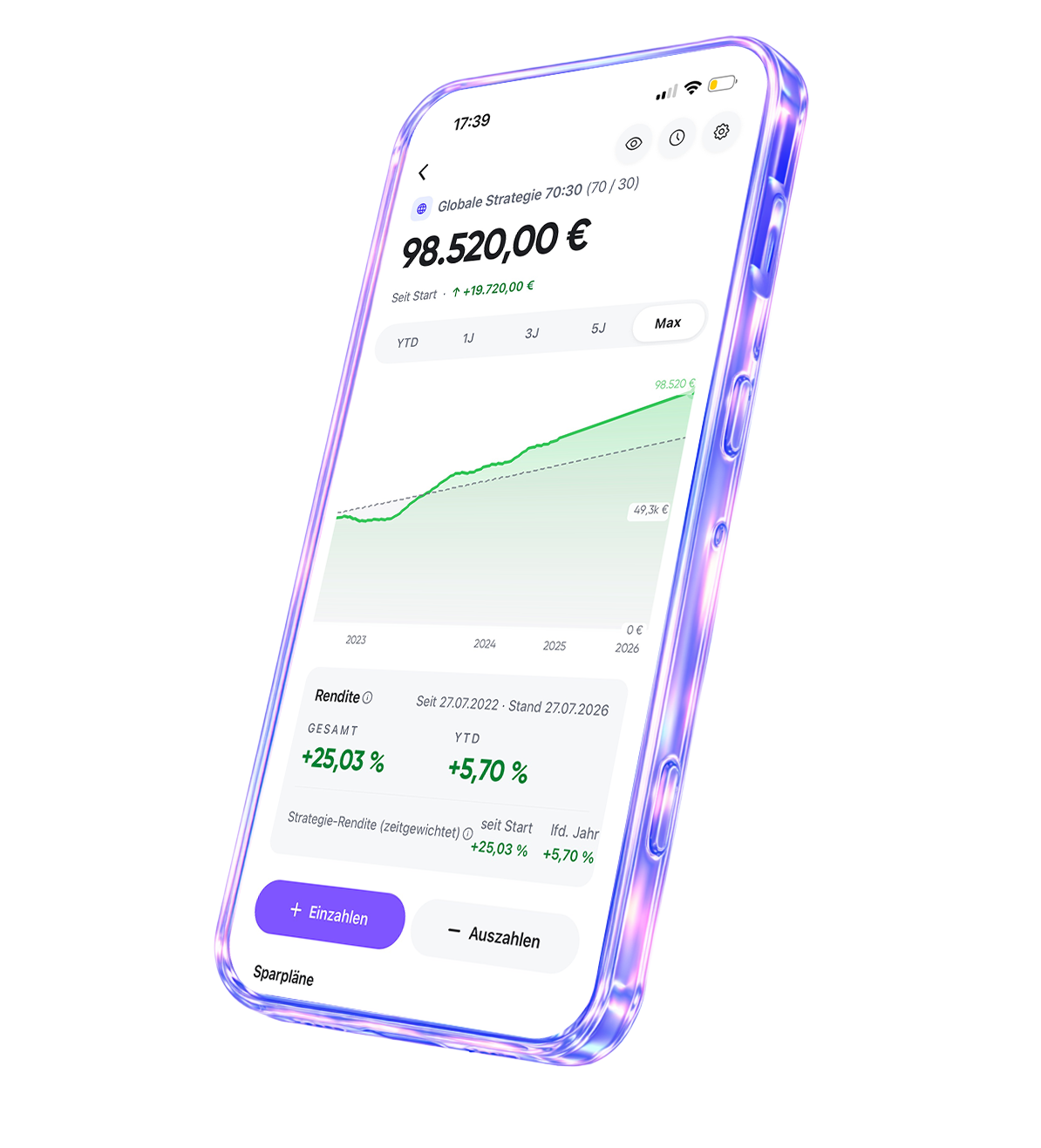
Savings plans, in turn, are not about an alternative to the lump sum in the first place. “They are an instrument for building wealth,” Dobbert emphasizes. Anyone who immediately invests part of their income broadly diversified in the stock market via an ETF savings plan puts it to work at the earliest possible moment. “That makes far more sense than hoarding the money in a current account. And only starting to think about investing once a larger sum has piled up there.” What's more, with an ETF savings plan you automatically avoid one of the most common investment mistakes: the risky attempt at market timing.
A scientifically grounded strategy
With quirion's global ETF portfolio, the investment strategists do without any market timing and, as a general principle, follow no forecasts. Instead, they rely on scientifically grounded diversification. The portfolio gives you a stake in around 10,000 stocks. Depending on your personal risk profile and individual investment horizon, quirion also adds bonds to the mix. That can further cushion the fluctuations of the equity portion.
With this portfolio, the right time to invest is “always now”. Whether as a lump sum. Or via a savings plan. And at quirion, that is available from savings rates of just 25 euros a month.
You can find out more about our ETF savings plan here.