
In some situations, it's hard to keep your cool. When it comes to investing in the stock market, however, composure is actually always the better strategy. Provided your portfolio is broadly enough diversified.
Right now, a look at their portfolio probably puts only a few people in a good mood. Those most on edge are likely the ones who entered the markets at the peak in late 2021 and had hoped for something different, given the above-average performance of the preceding years. Over the course of the year, many stock markets around the world have already reached the dubious status of a bear market, including the usually so strong US market. We speak of a bear market when prices fall by 20 percent or more from the previous high. Despite periods of recovery, prices have tended to keep giving way.
There are many reasons for this: the still-raging coronavirus pandemic, the war in Ukraine and the supply-chain problems associated with both. Inflation, the turnaround in key interest rates and now the growing concerns about the economy. On top of that, a looming energy crisis in Europe. The optimism seems to have evaporated for the time being, at any rate. Investors are asking themselves what happens next and what they should do.
When will things pick up again?
The honest answer to the question of what comes next is: nobody knows. Stock market history shows that trends can turn faster than most people expect. As in 2020, when prices collapsed because of the emerging coronavirus pandemic but quickly recovered. But it doesn't always happen that fast. A period of weakness on the markets can also last longer.
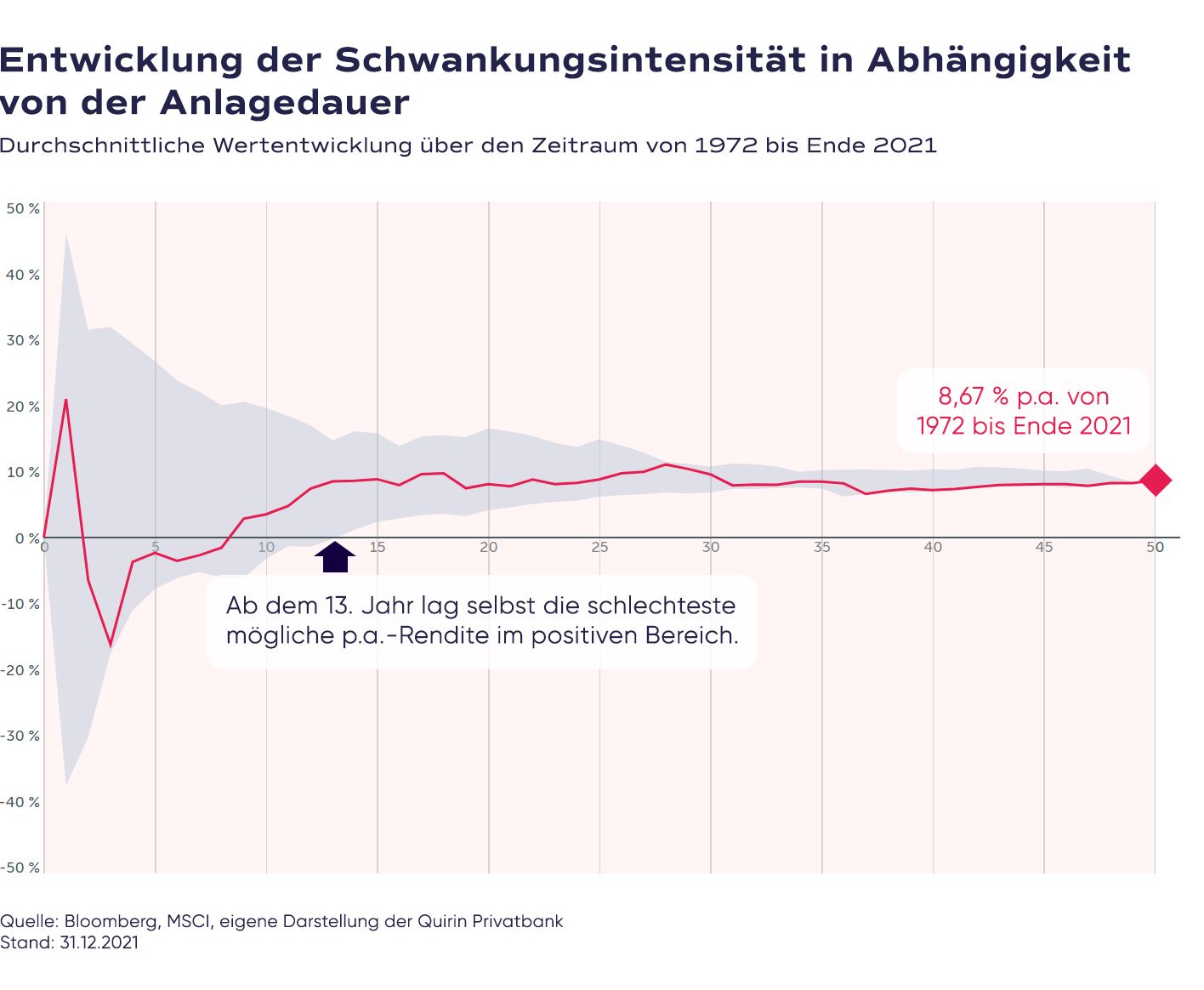
That's why a long-term investment horizon is so important when it comes to investing. The average annual return of the MSCI World, for example, was a good eight percent between 1970 and the end of 2021. Of course, this return wasn't achieved in every single year. In some years it was deep in the red, in others twice as high in the black. On average, however, the larger price swings even out.
A distorted perception
Keeping such long-term developments in view isn't always easy. Reacting quickly to immediate dangers: in everyday life that's both natural and useful. When it comes to investing, however, the obvious response often leads you down the wrong path. Take, for instance, the tendency to rate current developments as especially relevant. In "behavioral finance," this phenomenon is known as "recency bias." It refers to the tendency to attach the greatest importance to the most recent experiences and events and to overestimate them. When dramatic headlines and gloomy future scenarios dominate, many investors therefore feel pressured to act.
Looking at the news cycle and at short-term trends is a poor starting point for an investment strategy. That's because arguments for prices soon rising or falling can be found at any given moment. But constantly moving in and out on a hunch can get pretty expensive. If positions are in the red, exiting means a real loss. And even if the exit goes smoothly, the next question is when to get back in. Because this usually happens too late, a lot of return is often missed out on.
What is the right strategy?
An investment strategy for building wealth systematically should rest on a more solid foundation than guesses about what will probably happen next. It is a historical and economic fact that, over the long term, stock markets go up. Neither financial crises nor wars have ever changed that.
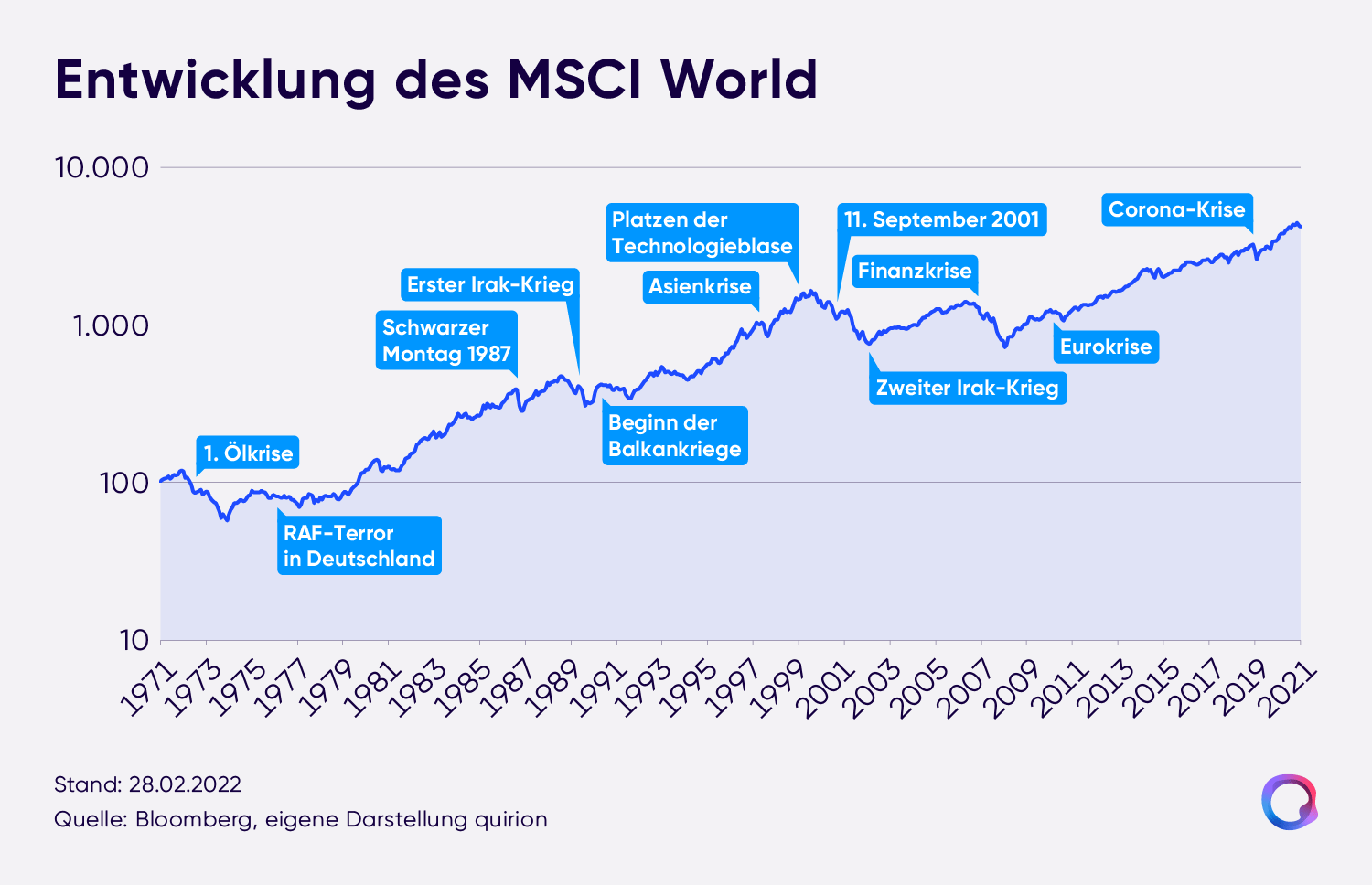
There is a good reason why stock prices rise over the long term: the stock markets are based on the development of the global economy. True, this moves in economic cycles. But in the long run it is geared toward growth. That is the principle of the market economy. Part of this is also the fact that it isn't known in advance which companies will be among the winners in the future.
quirion's investment strategy, in turn, is built on this: capturing the long-term return of the world's stock markets in as broadly diversified a way as possible, while staying invested for the long haul. Because capital market research has shown time and again that when it comes to investing, method and discipline simply pay off more than frantic activity.
Why we rely on method rather than the crystal ball, read here.