Robo-advisors, or the concept of digital wealth management, are still relatively new. Many savers and investors are therefore still unsure whether to entrust their money to these online platforms. The specialist press, too, initially viewed the trend critically - and put the growing number of providers in this field through a stress test. It quickly became clear that the doubts are unfounded. As early as the ETF magazine test, quirion impressed above all in the service and pricing categories and took the overall win.
The principle: investors determine their risk class and invest in a low-cost portfolio of equities and bonds. That's it - the technology and the management take care of the rest in the background.
Share
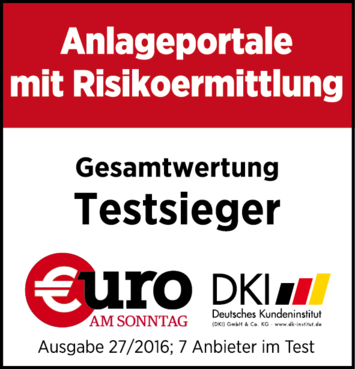
The finance magazine "Euro am Sonntag" has now also taken a look at the new service providers that aim to make traditional in-branch investment advice obsolete. The first online brokers showed back in the 1990s that the intelligent use of technology can be a success in the banking sector. But instead of DIY securities trading, digital wealth managers like quirion focus on long-term wealth building. The principle: investors determine their risk class and invest in a low-cost portfolio of equities and bonds. That's it - the technology and the management take care of the rest in the background.
Who offers the most?
And yet there are qualitative differences, as the latest test by "Euro am Sonntag" shows. To find out which platform offers the best deal, the editorial team joined forces with the German Customer Institute (DKI) to compare the platforms, first splitting them into two groups: platforms that determine your risk profile using a questionnaire (like quirion), and providers without this service.
The testers then analysed how extensive each offering is and what costs are involved. These "offering and services" accounted for 50 percent of the overall score. In the "advice and information" category, they tested how the robo-advisors inform their users about themselves and their investment process. This category made up 30 percent of the overall result. The remaining 20 percent of the points came from the "service" segment.
A close race
In the overall assessment, quirion achieved the best result with 89 points ("very good"). That said, the field is tightly packed. Only 0.2 points separate second place, and just 0.9 points third. The last-placed provider scored barely 12 points less and still earned a "good" rating. "We see the tight rankings as an advantage," says Anna Voronina, head of quirion. "They show that digital wealth managers have arrived in the market and offer investors a sensible and, above all, low-cost alternative to conventional investing. At the same time, the competition pushes us to keep getting better and to expand our offering."
"Anyone looking to invest money should at least take a look at robo-advisors," Monika Müller tells "Euro am Sonntag". The psychologist specialises in financial decisions and advises banks, wealth managers and private clients. In her view, investment platforms like quirion have an enormous advantage: "Clients can ask themselves the questions calmly and without pressure from an advisor: What do I want? How much loss can I tolerate?"