
You come across news about the stock markets all the time. Here are 7 buzzwords every investor should know — if only to avoid being led astray.
1) All-time high
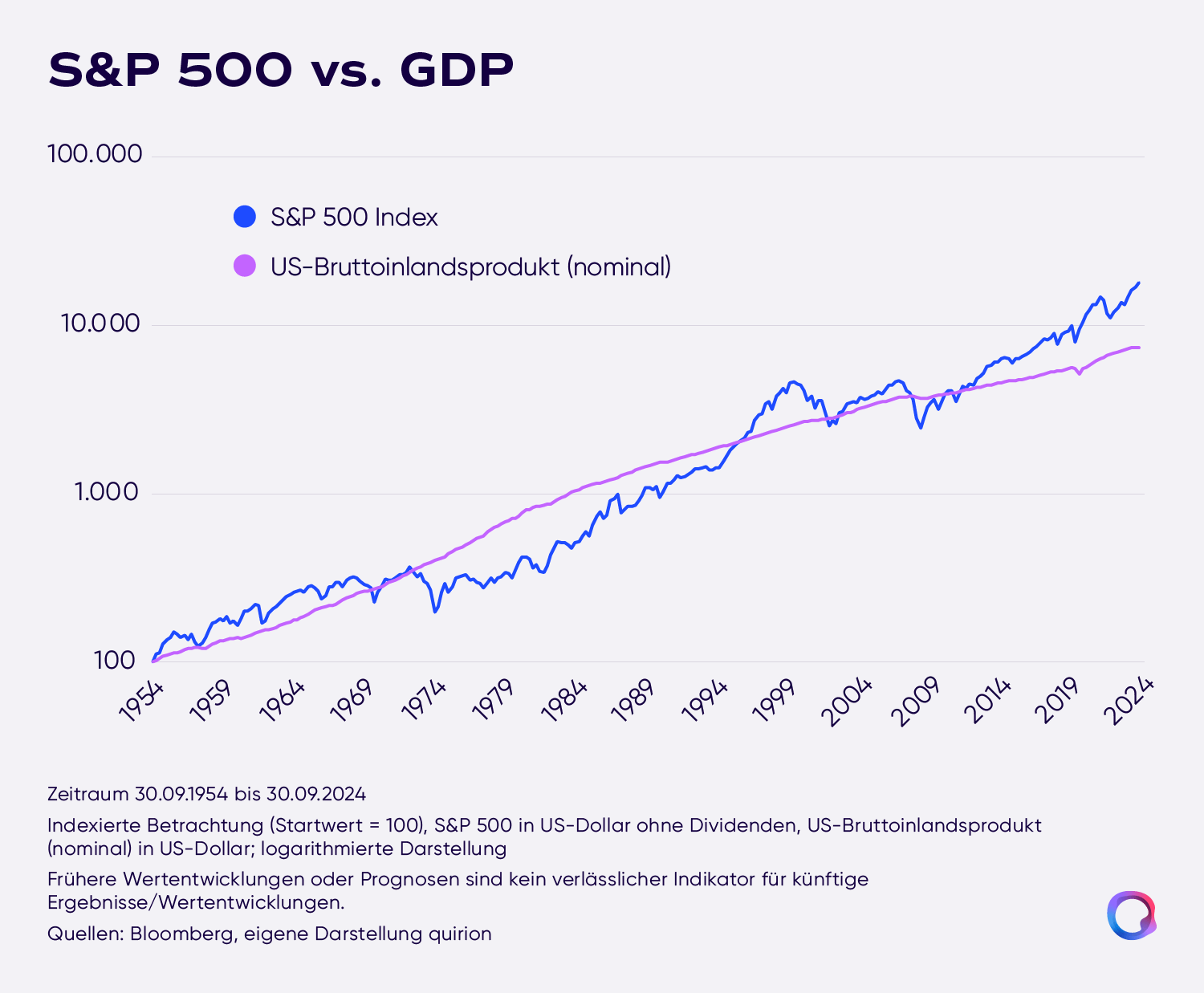
Superlatives make headlines. The stock markets get their moment in the media spotlight precisely when a major index climbs to a new record. „All-time high“ — it sounds as if history is being written right before our eyes. And we know from other areas of life that world records are not set every day. Yet stock markets reaching new highs is actually pretty normal. The US index S&P 500, for example, hit such an all-time high roughly 50 times between January and mid-November of this year. Over the long term and on average, stock markets rise because shares give you a stake in companies and thus in the economy. And the economy, in turn, is geared toward growth.
2) Market correction
Naturally, the stock markets also attract special attention when prices fall more sharply for a change. Then there is quick talk of a „crash“ or a „market earthquake“. But what happens during a market correction is nothing unusual either. Prices reflect investors’ expectations. Expectations can be disappointed. When that happens, the price level can shift abruptly downward for a while. Such weak phases are usually over again after some time.
3) Diversification
Diversification is the opposite of concentration. It brings variety into your portfolio. The idea behind it: if you put everything into a single stock and that company runs into trouble, you can lose everything. If a portfolio consists of 500 stocks, one company failing carries far less weight. But systematic diversification is not just about the number of stocks. Concentrating on individual sectors or countries also carries risks that can be reduced by spreading your investments. quirion’s global ETF portfolio gives you a stake in around 8,000 stocks from the most diverse sectors across more than 70 countries. That way you benefit from the return opportunities while largely avoiding unnecessary risks.
4) Market capitalization
The number of shares multiplied by the share price: that is a company’s market capitalization, or its stock market value. Most stock indices use this to weight their individual stocks. And so does quirion’s global ETF portfolio, which targets the long-term return opportunities of the global equity market. Market capitalization is constantly on the move along with prices. So when market participants’ expectations for a stock change, that is reflected in the portfolio. The portfolio therefore always stays right on top of what is happening in the markets.
5) Stock picking
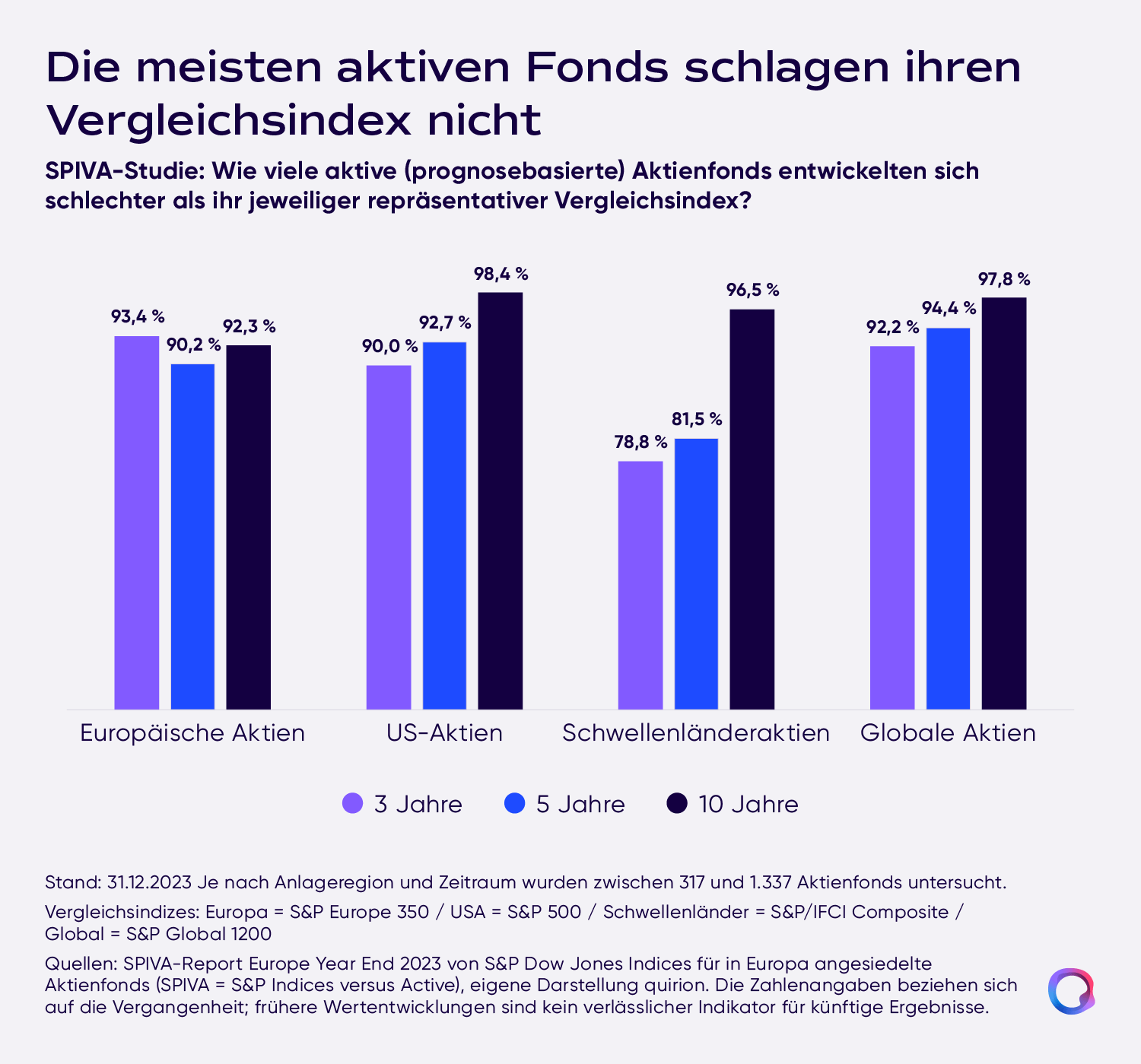
When someone is „picky“, they settle for nothing but the best. That doesn’t sound so bad at first. But it doesn’t work when it comes to investing in stocks. Instead of aiming for the market return, „stock picking“ is the attempt to beat it by deliberately selecting individual stocks. To do that, though, you would need to know in advance how prices will develop in the future. And nobody knows that. You might get lucky once, but you can’t repeat it systematically. Not even the professionals can, as comparisons of the performance of traditional actively managed funds with the returns of stock indices keep confirming.
6) Market timing
What holds true for selection applies just as much to attempts to optimize your timing. Getting in at the bottom, getting out at the top: it would be pure luck if that always worked. It can happen once in a while, but you can’t count on it. Most people who get out fail at getting back in. Return opportunities are quickly missed. That is why it is better to stay invested for the long haul within a long-term investment horizon. And with a suitably broadly diversified portfolio, the best time to get in is „always now“.
7) Rebalancing
The prices of the securities in a portfolio are constantly on the move. As a result, the weightings of the securities shift, and so does the balance between return opportunities and risks. For the portfolio to keep matching your personal investment horizon and your individual risk appetite over time, the effects of these price fluctuations therefore have to be regularly rebalanced. In concrete terms, that means securities whose weighting has grown too heavy are partly sold. And, conversely, positions whose weighting has become too light are topped up. This balancing out of price fluctuations is called rebalancing. With digital asset management in quirion’s ETF portfolios, it is included.