Inflation rates are rising all over the world. Central banks are pushing back with large key-interest-rate hikes. Seven questions and answers about inflation – and about the protective function of different types of investment.
High inflation – how does it come about?
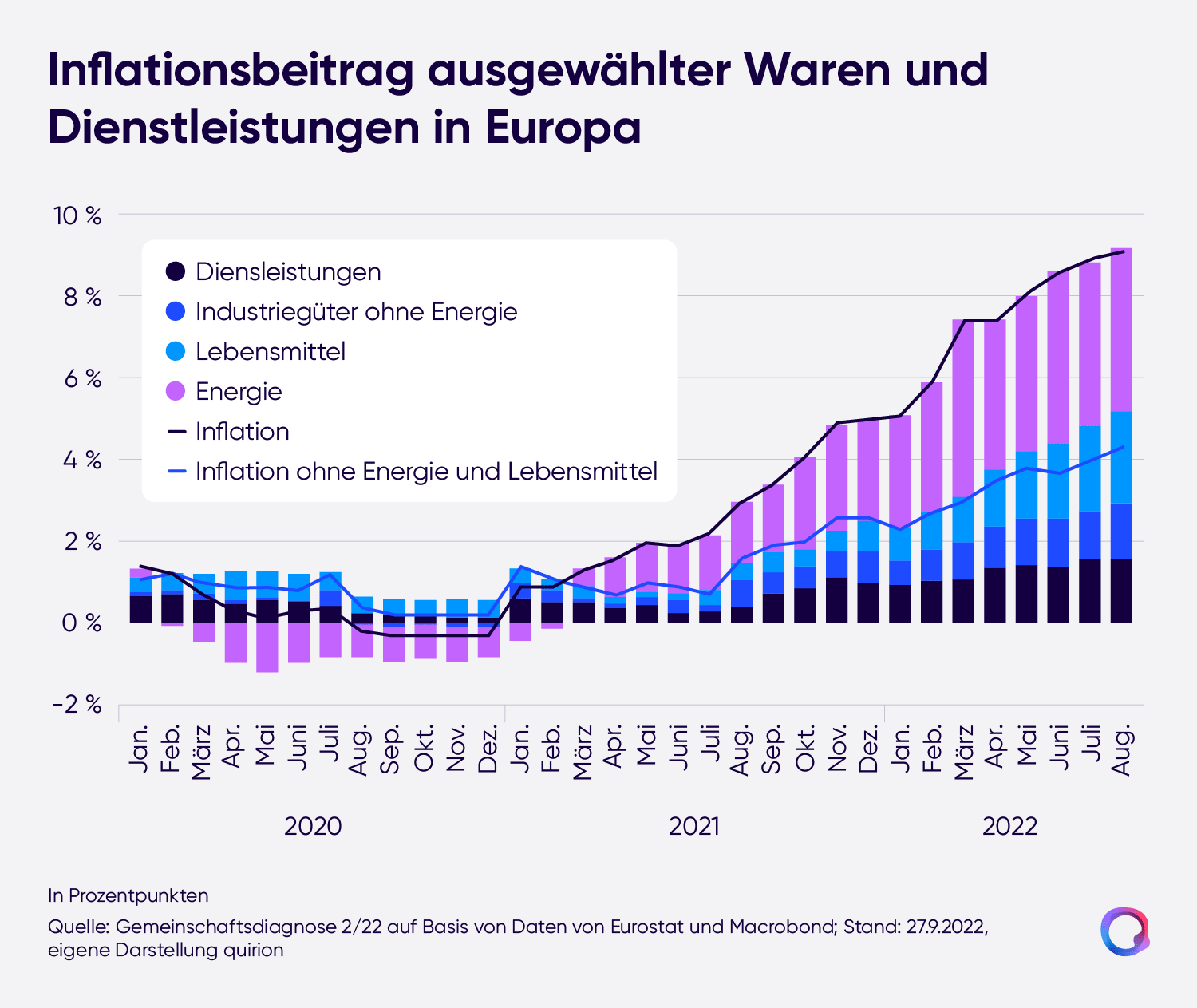
A rise of around ten percent in November: inflation rates have now been climbing since the start of last year. Energy and food in particular have become substantially more expensive in Germany, as in many other countries. Initially this was down to catch-up effects in the wake of the coronavirus pandemic. The economy picked up, strong demand met limited supply and considerable problems in the supply chains. With the outbreak of the war in Ukraine and drastic price increases, especially for gas and oil, the situation has worsened considerably. In their latest joint diagnosis, major economic research institutes expect the inflation rate to gradually return to the two-percent mark only in 2024.
What does inflation mean for your investments?
A rising price level eats away at the purchasing power of the assets you have saved. In the short term, there is no magic formula against it. Over the long run, however, the effects can be strongly cushioned with the right investment strategy. „The goal has to be achieving, with a high probability, a positive real return over the long-term average,“ explains Philipp Dobbert, chief economist of quirion and Quirin Privatbank. „The more solid the link between economic value creation and the performance of the chosen investment, the higher that probability is.“
How do stocks protect you?
Sharply rising inflation rates weigh on the stock markets at first – above all because central banks respond with steep key-interest-rate hikes. That is because it slows economic development. And not all companies can immediately pass on higher costs for raw materials or intermediate products one to one.
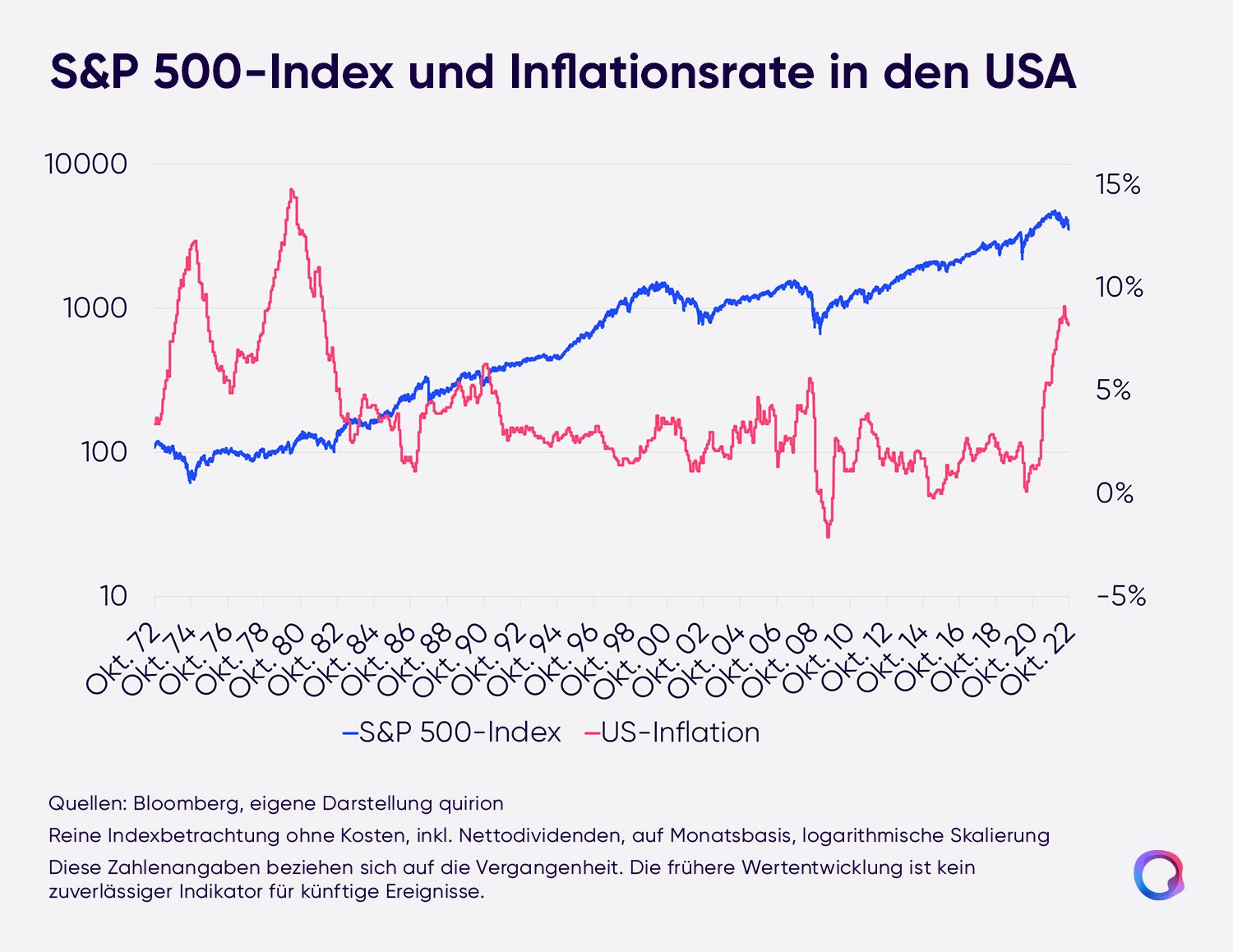
With investing, though, it is the long-term perspective that counts. With stocks, investors are deliberately betting on the economy's value creation. When the price level there rises, that is reflected sooner or later in revenues and profits. „There is no other asset class that can show such a close link,“ Dobbert underlines. What matters here: „The principle does not apply to every single company, but to the broad market. So over the long term, inflation protection with stocks works with a portfolio that is as broadly based as possible.“
What happens to bonds?
Because central banks respond to inflation with large interest-rate steps, investors now receive higher interest on new bonds. That makes older bonds less attractive. They come under pressure and are increasingly sold off. This is why there is unusually heavy movement in the bond market this year. „While older bonds are recording sharp declines, bond prices generally still fluctuate less strongly than those of stocks,“ Dobbert points out. „Bonds therefore remain our tool of choice for limiting the fluctuations of equity portfolios to a level appropriate for the investor.“
Does gold offer more solid inflation protection than stocks?
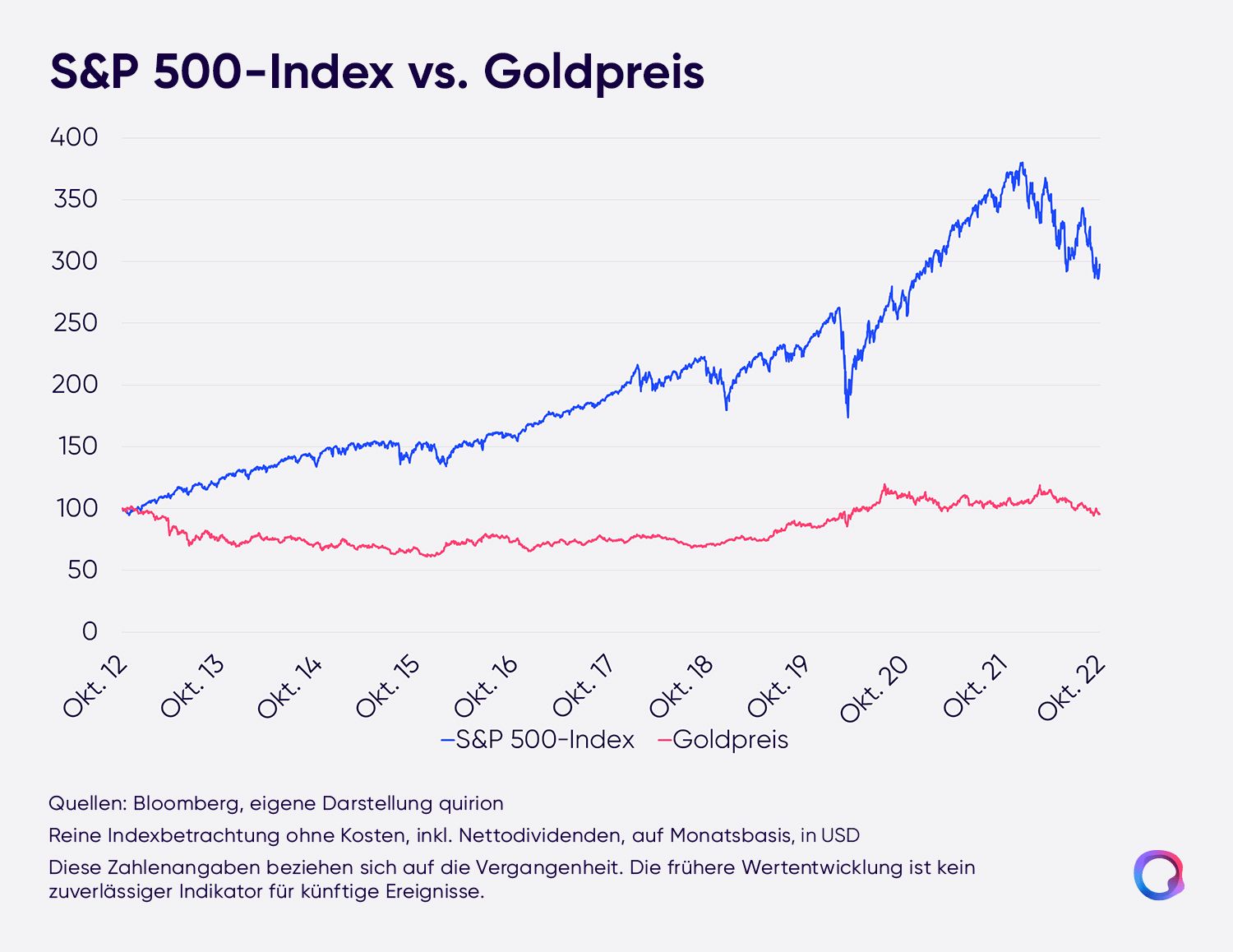
The global economy is geared toward growth: that is the foundation on which stock prices rise over the long term. „With gold, which is often said to have a protective function against inflation, there is no such link,“ economist Dobbert explains. What is more, the precious metal generates neither interest nor dividends. „The return comparison of recent years, at any rate, comes out clearly in favor of the stock markets.“
What about real estate?
When interest rates rise along with inflation, financing real estate becomes more expensive. That weighs on the property market. On the other hand: if rents are tied to the inflation rate, property owners can book rising income. Over the historical average, the price trend for real estate also points upward, especially for residential property. „Here, too, there is a link between value creation and price development,“ Dobbert notes. „However, it is far less pronounced than with stocks.“ On top of that, diversifying a portfolio with real estate is much harder to achieve, which considerably increases the risk.
So where does inflation go from here?
General price development depends on many influences. A forecast is therefore, as in so many cases, fraught with considerable uncertainty. The economist Dobbert would rather point to a basic principle of the market economy: „Prices are what reacts fastest and most forcefully to changing circumstances.“ And that is how it has to be, he says, because only this way do shortages or oversupplies become immediately apparent. „This was also evident when the coronavirus pandemic spread in 2020: prices fell immediately and the inflation rate was negative for a time.“ Whether on the supply or the demand side: „Market participants adjust their behavior gradually, even if this process can be painful.“
Trust in such mechanisms and in the growth of the global economy is the basis of quirion's investment strategy. The composition of the global portfolios rests on scientific and empirical findings. „Those include investing in the stock market as broadly diversified as possible,“ Dobbert stresses. „In terms of the return-risk profile, that is what protects your assets most efficiently against the effects of inflation over the long term.“