The ETF market is booming. New products are constantly being thrown onto the market. We look at 5 concepts and say what to make of them.
1) Stocks with a “moat”
When stock market prices run hot and the risks move into the foreground, they are especially sought after: stocks of companies whose outstanding business model has built a kind of protective wall against the competition, making them exceptionally successful over the long term. Investing legend Warren Buffett popularized the term “economic moat” for this. And this is also the concept pursued by various moat ETFs.
The problem: such companies are extraordinarily rare. According to a study by economist Hendrik Bessembinder, in the US stock market between 1926 and 2025, just 46 out of a total of 29,081 stocks generated 50 percent of the entire value creation. No one can know in advance which will prove to be the winners of the future. Looking at past successes doesn't get you very far. Markets and competitive situations can change too quickly. So you can only guess, which is extremely risky. The notion of a “protective wall” thus quickly leads you astray. What lies behind it is in fact a highly speculative investment.
2) The hope of regular income
For many, a product carrying the buzzword “Income” in its name is an eye-catcher. Yet with such ETFs, you should look very closely, for several reasons. Extremely different strategies can be hiding behind them. Some of the products concentrate on stocks with high dividends or dividend yields. Others rely on interest income or real estate earnings. Still others use complex derivatives strategies.
For some, the prospect of regular income sounds more tangible than the supposedly vague hope of future price gains. But if earnings are not reinvested, the compound interest effect goes unused. And that is a central building block in building wealth.
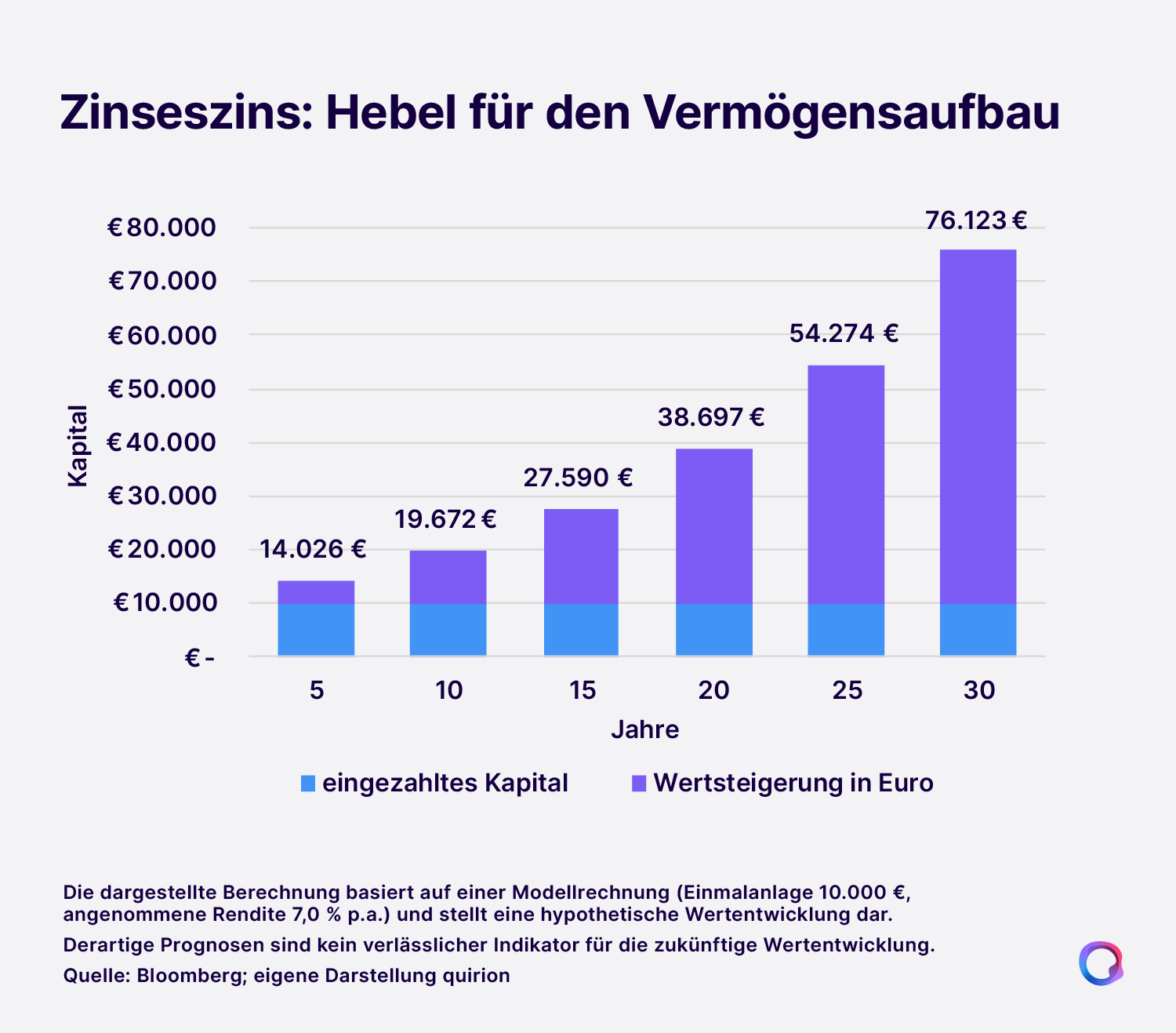
If you want to use the compound interest effect effectively, the stock markets offer particular return opportunities, especially over the long term. According to the “Global Investment Returns Yearbook 2026” by UBS and London Business School, stocks outperformed bonds and money market instruments in 21 countries studied between 1900 and 2026.
3) The global economy in your portfolio
To reduce the risks of investing in the stock market, there is one way above all: broad diversification across different sectors and countries. Ideally all over the world. There are various approaches to bringing the world into your portfolio. The usual one is to weight stocks according to their current market value – the so-called market capitalization. But there are now also ETFs that instead weight countries by the size of their gross domestic product (GDP). The argument: this covers the global economy “more realistically” and reduces dependence on the US market. The GDP orientation shifts the investment focus – in particular towards China and India.
But in the global stock market, the picture is different from the GDP comparison. The importance of emerging markets has grown there too, but not nearly as much. In the global stock market, the USA has an outsized weight of around 60 percent. China reaches only about 3 percent. With a GDP-oriented ETF, you are in a sense speculating that the balance in the global stock market will change – a bold bet. Because no one can reliably beat the market. Positioning yourself against it costs returns in the vast majority of cases.
4) Return factors: it all depends on the purpose
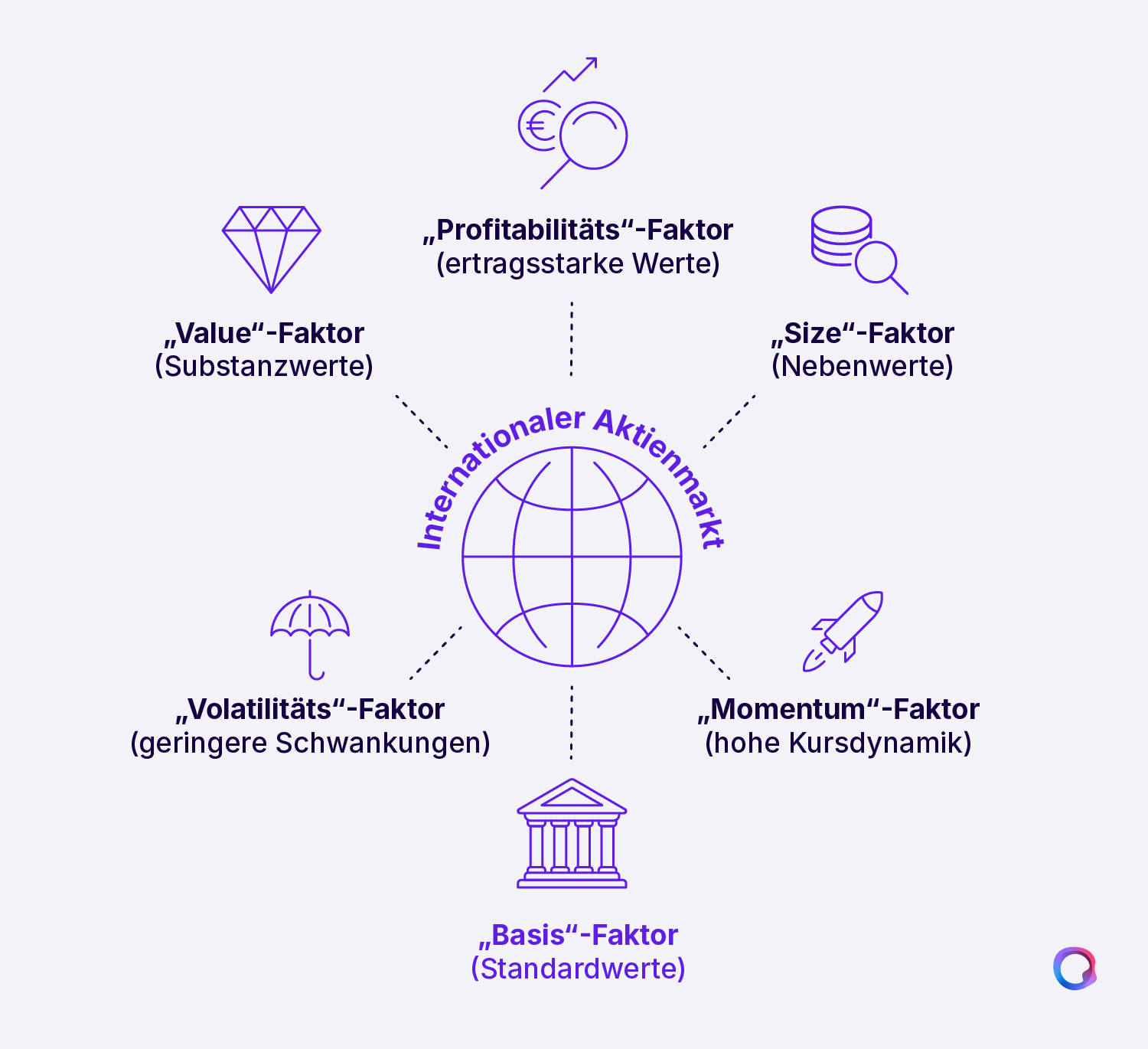
Every stock has a set of characteristics that decisively influence return opportunities and risks. Alongside the level of market capitalization, these include, for example, volatility or price momentum. So-called factor ETFs are products oriented towards such characteristics. How useful these instruments are for investing depends on their role in the portfolio.
Anyone who wants to use them to beat the broad market exposes themselves to high risks with such speculation. We at quirion use factor ETFs as well – but exclusively to increase the degree of diversification. Importantly: whatever a factor ETF is called, it always reflects several factors at the same time. That is why we pay close attention to whether the combination of products really brings the intended factor weighting into the portfolio.
5) With a buffer for more security
The “innovations” in the ETF market also include so-called buffer ETFs. Their principle is well known from the world of certificates. It involves a buffer built in via derivatives that is meant to limit losses. The principle: investors participate in the performance of a stock index, such as the American S&P 500. Options offset losses up to a certain threshold. In return, participation in the upside is capped.
Whether through higher fees or forgone returns: such hedges cost a lot of money. Other strategies make far more sense for limiting risk. One is a long investment horizon. Over the long term, price fluctuations usually balance out – and that way you don't miss out on return opportunities. In addition, bonds in a portfolio can limit the fluctuations of the equity portion.
Conclusion: for building wealth in the stock market, broad diversification and a long-term investment horizon are especially important. The more concentrated a portfolio is, the greater the risks. Our global ETF portfolio is diversified on a scientific basis and gives you a stake in over 10,000 stocks. Depending on your investment horizon and risk profile, we also add bonds to the mix.
You can find out more about our investment concept here.