Even if the war in Ukraine is currently the dominant topic on the stock exchanges: the question of which stocks are favored and why is preoccupying the markets especially again right now, for other reasons too.
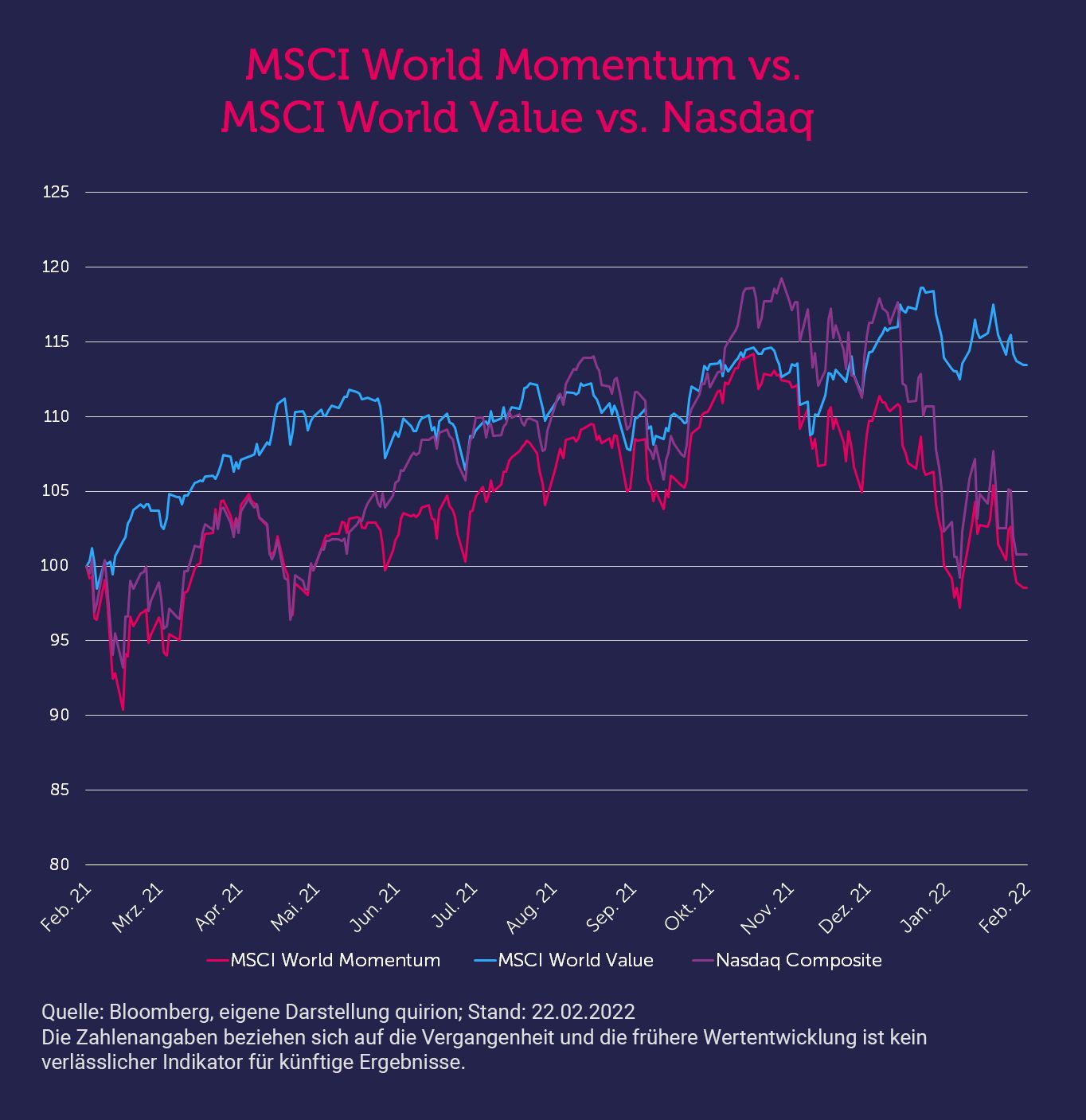
Which sectors are among the favorites in the equity markets? In the more recent past, the answer to that question usually had something to do with tech stocks. That's why it caused a stir in the first weeks of 2022 when these stocks came under particular pressure. And so-called value stocks slipped into the role of the favorites. A key reason for this "change of heart" in the markets: speculation about a supposedly imminent major interest-rate turnaround.
What do interest rates have to do with prices, especially with those of growth stocks from the technology sector? "They are an important variable in the calculations used for valuation," explains Philipp Dobbert, Chief Economist and Deputy Head of Investment Management at quirion. "High valuations of growth stocks are justified by the fact that the companies are expected to generate very high profits in the future." To gauge their present value, those profits are discounted. "When interest rates rise, the present value falls too, even if nothing changes about the profit expectations themselves." The interest-rate effect, he says, is all the greater the further into the future the profits are projected.
The capital market rate as a policy-rate radar
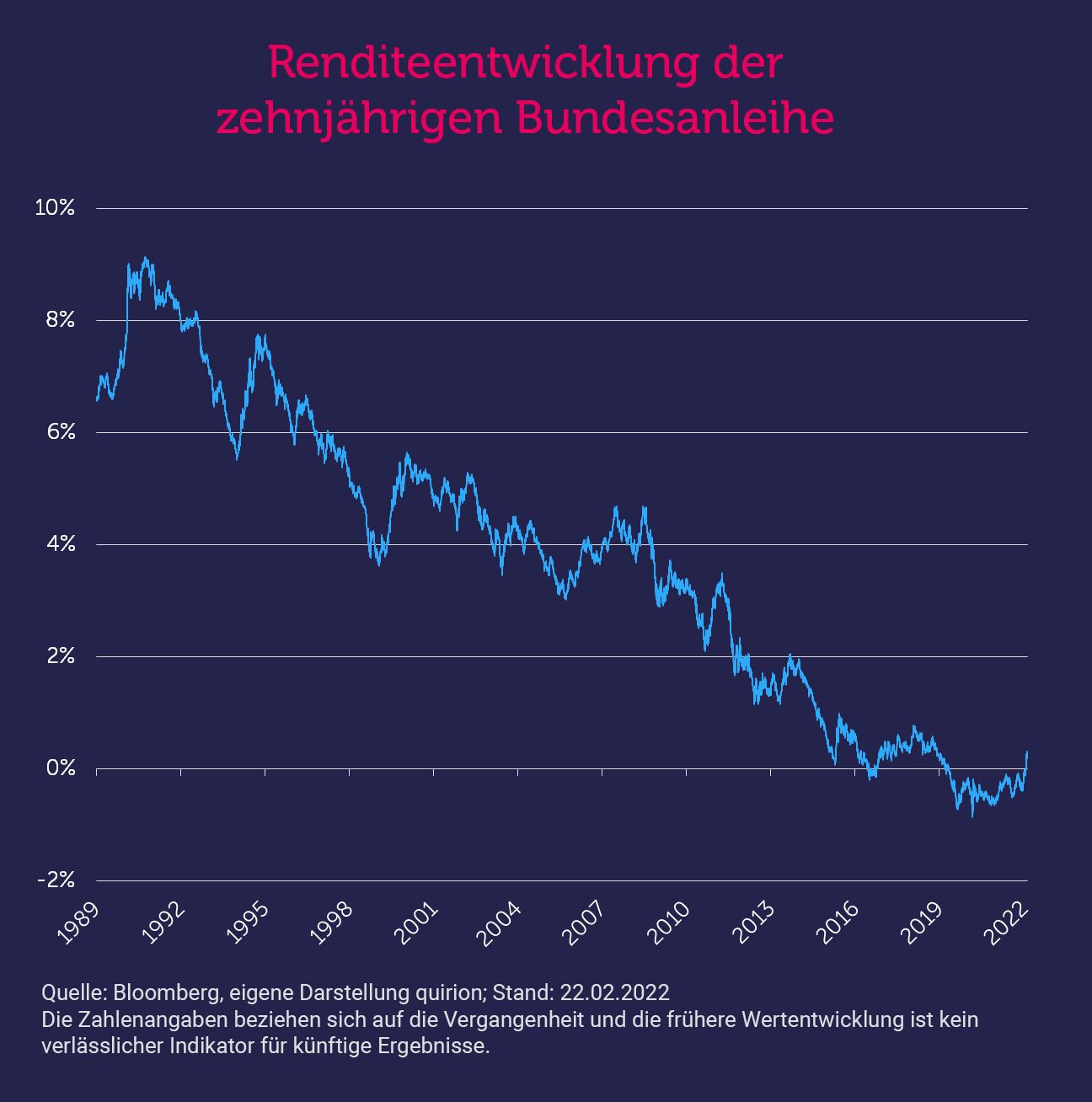
The interest rates that come into play in calculations like these are the so-called capital market rates. By this we mean the yields on key government bonds, for example the ten-year US Treasury or the German Bund. Many people use their yields as a "policy-rate radar" - so they reflect the market's interest-rate expectations. But even if something is now moving there: "When you follow the news, you sometimes get the impression there have never been interest rates before - when in fact we are only very slowly on a path that could lead to a normalization," observes economist Dobbert.
Do prices of growth stocks fall for as long as interest rates rise? "Not at all," Dobbert reassures. "As long as interest-rate expectations aren't actually changing, that factor is already priced in - until there's another reason for a revaluation." The constant assessing and revaluing, he says, is one reason for the daily ups and downs of prices. That also applies to the stocks that have recently been in stronger demand again, namely "value" stocks.
Value gets more appreciation
"Value" stocks are understood to be those that, for example, have a favorable price-to-book ratio - stocks whose substance would therefore theoretically justify a higher share price. The market currently seems to appreciate this factor more. As often happens when the valuations of growth stocks begin to wobble.
"We took a close look at the factors in the markets a long time ago and aligned the portfolios accordingly," Dobbert explains. "Value," he says, is one of a total of five return factors in the equity markets that play a role in the model portfolios. "It's important to understand that with these factors, too, we don't attempt any timing." quirion's investment strategy remains free of forecasts; it doesn't go hunting for the right moment to enter or exit. "Attempts at timing hurt performance, as capital market research demonstrates again and again." Because there are constantly movements that no one anticipated beforehand. "Investment discipline is certainly no easy exercise, especially during market turbulence," Dobbert observes. It's very human to sometimes feel pushed to act. "But when it comes to investing, knee-jerk activism is simply harmful."
A wide net for returns
So what would be an occasion to change something in the portfolios? Dobbert and his team put their trust in strategic risk management, not tactical. "We neither frantically ramp equity ratios up or down, nor do we set any kind of price limits." In strategic risk management, low-volatility bonds are used to cushion movements in stock prices. "That works. It proved its worth, for example, when prices collapsed at the start of the coronavirus crisis."
Strategic risk management also includes rebalancing. "Market movements constantly shift the weightings in the portfolios, which is why we regularly adjust them to the target risk profiles." It is also checked regularly whether the weighting of the factors is still right. After all, those change too through the constant price movements. Ultimately, then, changes are always about ensuring that the desired ratio of return to risk matches the target picture. The risk profile is oriented toward the investors and doesn't shift with the swings of the markets. For "catching" the return, the net is cast wide through the diversification in the globally positioned ETF portfolios. "We believe in the global economy," Dobbert underscores. "And that it will continue to grow over the long term is a pretty robust forecast."
An assessment of the impact of the Ukraine war on the markets can be found here.