Chip makers' stocks stood out with their performance for a long time. But with high expectations and valuations comes a growing risk of disappointments and setbacks. How to profit from return opportunities over the long term without taking unnecessary risks.
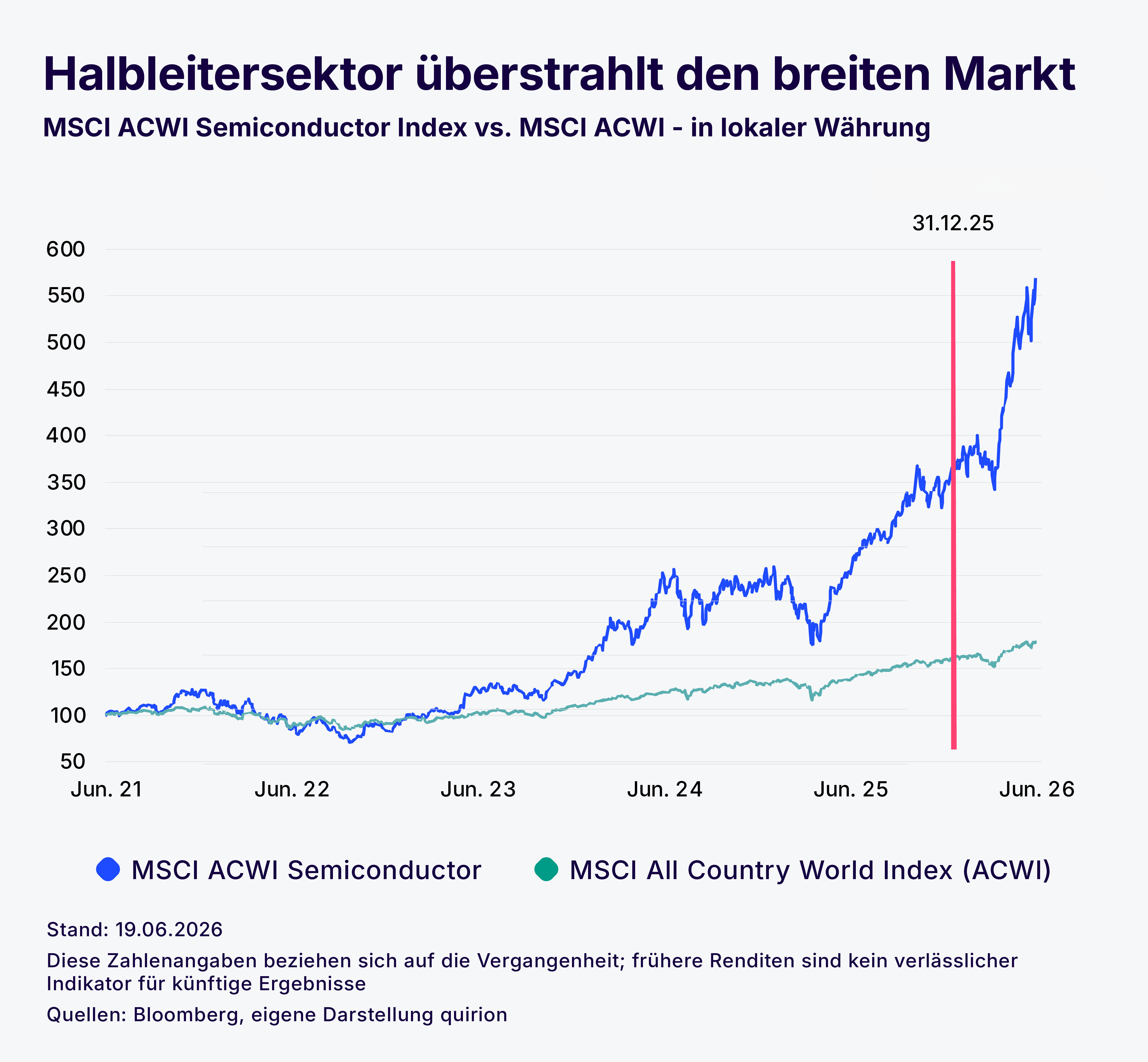
There are not that many stocks in the world that tip the scales at a market value of over one trillion US dollars. At the beginning of May there were 12, by mid-June already 15. The chip sector, with Samsung, Micron Technology, and SK Hynix, accounted for a large share of the newcomers. Over this period, chip developer Nvidia pushed its market capitalization well beyond the five-trillion-dollar mark and once again considerably widened its lead as the stock market's number one heavyweight. The only company to drop out of the group of trillion-dollar companies in this period was Walmart, a retail chain.
The boom in semiconductor stocks is closely tied to the spread of artificial intelligence (AI). The massive build-out of AI infrastructure is meeting a limited supply of chips. AI data centers need processors, memory modules, and network components on a very large scale. That fuels speculation, and with it share prices. Expectations are high.
Ambitious expectations
As always when particularly high expectations are priced in, vulnerability to disappointment grows. That could be observed again in June. Broadcom, another chip maker from the trillion-dollar club of stock market heavyweights, presented its results. The company delivered impressive figures for the second quarter, both in revenue and in profit. But the outlook for the third quarter came in weaker than many analysts had forecast. A slump in the share price followed, dragging down the entire sector with it. And, because of the sector's heavy weighting on the stock market, pushing down the market as a whole.
A short time later, it was semiconductor producer SK Hynix to which a slide in chip stocks was attributed. Media reported that the company intended to shift its focus more towards producing more conventional chips. That fed doubts about future earnings momentum – at SK Hynix, but at other companies too. Quite a few people are wondering whether semiconductor stocks still have room to rise or whether other stocks will soon move back into the spotlight.
The market rotates
Whether individual sectors or individual regions: the favorites on the markets change every so often. Emerging markets were already considered “out of fashion” before they made an impressive comeback last year of all years, when Trump's tariff club dominated the headlines.
This year, too, there have already been several “rotations.” At the start of the year, for example, the so-called “AI Scare Trade” made the rounds on Wall Street. Speculation spread that AI could undermine numerous business models. For a while, companies from the consumer staples sector, which are otherwise considered rather “boring,” were therefore in demand, among others. That wave was quickly replaced by a new one.
The “trendier” the investment, the riskier it is
Big price jumps make headlines. Many people then wonder whether and how they can profit from such trends. But anyone who relies on short-term trends puts long-term wealth building at risk.
The semiconductor sector, for example, is known for its cyclical ups and downs. When supply is tight, prices rise. Increasing production capacity can take years. Once the bottleneck is resolved, oversupply quickly follows. In this context, there is often talk of a “pork cycle.” This is the term used when supply cannot be adjusted to current demand at short notice. The economist Arthur Hanau first described the phenomenon for the agricultural sector in 1928, hence the name.
Guided by your investment goal
When investing, it is advisable to be guided by your personal investment goal – and not by the news flow or current price movements. For long-term wealth building, what counts is the broadest possible diversification. That is the only way to bring return opportunities and risks into the best possible balance.
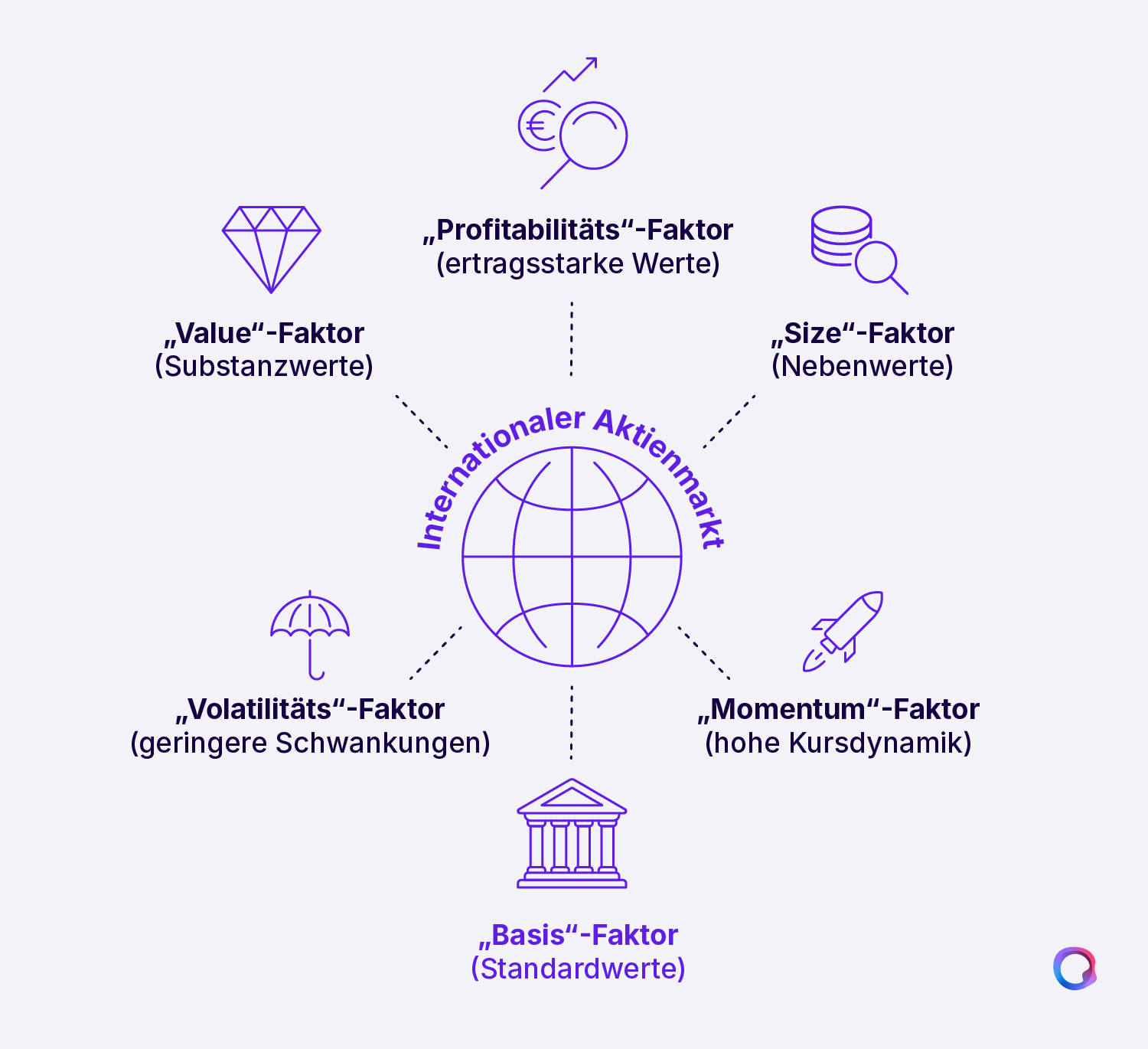
quirion's global ETF portfolio is diversified according to scientific criteria. Market capitalization plays a major role in this. Because that is so, the portfolio also benefits from rising prices in the semiconductor sector with its growing weight on the stock market. For this portfolio, however, market capitalization is not all that counts. In total, the investment strategists take six return factors into account when selecting and combining the ETFs in the portfolio. This is how unnecessary risks are avoided.
Setting your own priorities
Some, however, may be particularly convinced by one investment theme. And want to set their own priorities alongside their core investment. Even then, it is advisable not to concentrate on individual stocks or narrowly focused theme funds.
In our theme portfolios, we combine selected ETFs to increase diversification. The range of investment themes stretches from “Cloud Computing” to “New Energies.” We have also put together a theme portfolio each for “Semiconductors” and “Artificial Intelligence.”
You can find out more about quirion's theme investments here.