Trump's constantly shifting threats and interventions, plus surprise snap elections in Japan: politically, events came thick and fast in January. At times, this also made the markets nervous. A look at what it means for investors.
The pattern is already familiar: when US President Donald Trump threatened eight European countries with punitive tariffs in order to break their resistance to his sought-after "takeover" of Greenland, prices initially fell in the US and in Europe. When Trump withdrew the threat again, things quickly picked up again, at least on the stock markets — even though it was not at all clear how the Greenland question would develop from there. The media and the markets quickly turned to other topics.
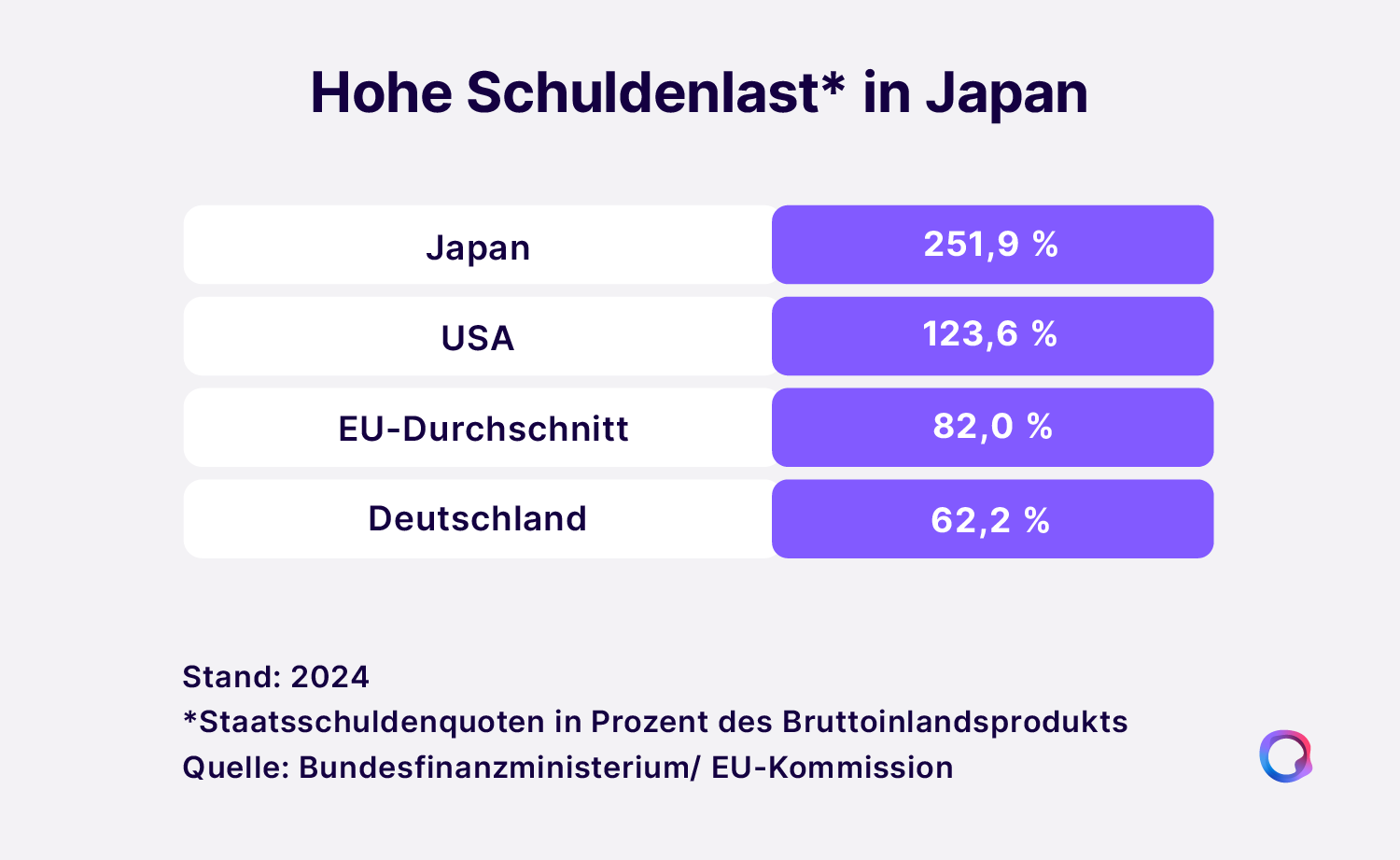
Attention turned, among other things, to Japan, where Prime Minister Sanae Takaichi surprisingly scheduled snap elections for 8 February. She wants to secure a parliamentary majority in order to cut taxes and, at the same time, to kick-start massive investment. The Japanese stock market did initially react positively. But because Japan already has an immensely high debt ratio measured against GDP, the prices of Japanese government bonds collapsed. Their yields rose significantly.
Some fear that the unwinding of so-called carry trades could once again become a burden. The background: "In Japan, interest rates stayed near the zero line for a particularly long time. Some investors therefore borrowed money there and put it into higher-yielding US bonds," explains Philipp Dobbert, chief economist at quirion and at Quirin Privatbank. "That bet then eventually spilled over into the stock markets. Some took on debt in yen and invested on credit in large US tech stocks, for example."
Pressure on the dollar
Regardless of this, prices in the American S&P 500 reached a new record level again at the end of January. At the same time, however, the US dollar slid once more. Trump's remarks that he found the dollar exchange rate "great" and could "make it go up and down like a yo-yo" were hardly helpful. But prices on the currency markets are not set in the White House. What happens with US government bonds, however, is very relevant for the currency markets. They came under selling pressure, which drove yields significantly higher. A flight out of US government bonds is not at all in the interest of the US government.
"I think the US government knows that it can become very expensive for them if they squander trust on the bond market," Dobbert observes. In April last year, the bond markets prompted Trump to adjust his political course. Back then it was about moderating some partly absurd tariff demands. "In any case, it became clear that the market can limit the political room for manoeuvre." Trump may want a weak dollar to make US exports more attractive. But because of the USA's debt burden, he has an interest in interest rates and bond yields being as low as possible.
Meanwhile, Trump has named his candidate to succeed Fed Chair Jerome Powell. Kevin Warsh is due to take up the post in mid-May. The 55-year-old economist was an investment banker and an economic adviser to George W. Bush, and has also already worked for the US central bank for a number of years. While he was regarded back then as an advocate of a restrictive monetary policy, he had recently thrown his weight behind Trump's demands. Trump, with repeated attacks on Powell, has tried to push the Fed towards faster and larger interest-rate cuts. "It was very important that the US central bank did not give in to the fierce criticism from the White House," Dobbert emphasises. "The independence of the Fed must be preserved."
Congressional elections and a Supreme Court ruling
Whether Trump can carry on acting as aggressively and autonomously as he has so far is likely to become clear in November at the latest. Because that is when the midterm elections take place in the US, in which the balance of power in Congress could change. "In the campaign, the still-stubborn inflation in the US will probably be a major topic," Dobbert stresses. And rising import prices — whether due to tariffs or a weak dollar — can amplify inflation.
In addition, a landmark Supreme Court decision on Trump's tariff policy is still pending. It could cause enormous upheaval. In pursuing its aggressive tariff policy, the US government has so far bypassed Congress. It invoked an emergency law from 1977. The court could reject this line of argument or recognise it only in a limited way — for example, restricting it for further applications. The consequences would be hard to foresee.
Just don't speculate
For an investment strategy, however, uncertainties like these mean precisely that you should not keep readjusting to the current news situation or to short-term trend reversals. "It is far too risky to speculate on a particular course of events," Dobbert warns. That things can turn out differently than previously thought was demonstrated again last year. Beyond that, the development was further proof that both the markets and the global economy can adjust to new conditions.
It remains advisable to position your portfolio as broadly as possible worldwide. And to stay invested, even if prices fluctuate more sharply in between. "Over the long term, stock markets trend upwards, because the global economy is geared towards growth," Dobbert explains. "The recent developments have not changed anything about this fundamental relationship."
Find out why forecasts are of no use when it comes to investing here.