
For a long time, the performance of the US exchanges outshone that of many other markets. Even if US stocks fell behind at times in the first months of this year: your investment strategy should not be guided by speculation about short-term trends.
The movement started as early as the beginning of the year. And it continues. Investors from Europe are investing more in European stocks, while withdrawing money from the US stock market. This is shown, for example, by figures from Morningstar: equity ETFs focused on Europe saw net inflows of 7.9 billion euros in April, while equity ETFs with a US focus saw outflows of 2.3 billion euros.
The explanation for the development seems obvious. Whether it's an about-face in foreign policy or tariff chaos: in the first months of his term, US President Donald Trump has raised considerable doubts about whether the US remains a reliable partner politically and economically.
With his tariff hammer, Trump has at times deeply shaken the capital markets as well. The turbulence wasn't limited to stocks. Government bonds and the US dollar also gave way significantly. In the relevant media, the question of whether it's now better to invest „ex USA“ became a trending topic. Fund companies seized the opportunity to immediately throw corresponding products onto the market.
Is the dominance crumbling?
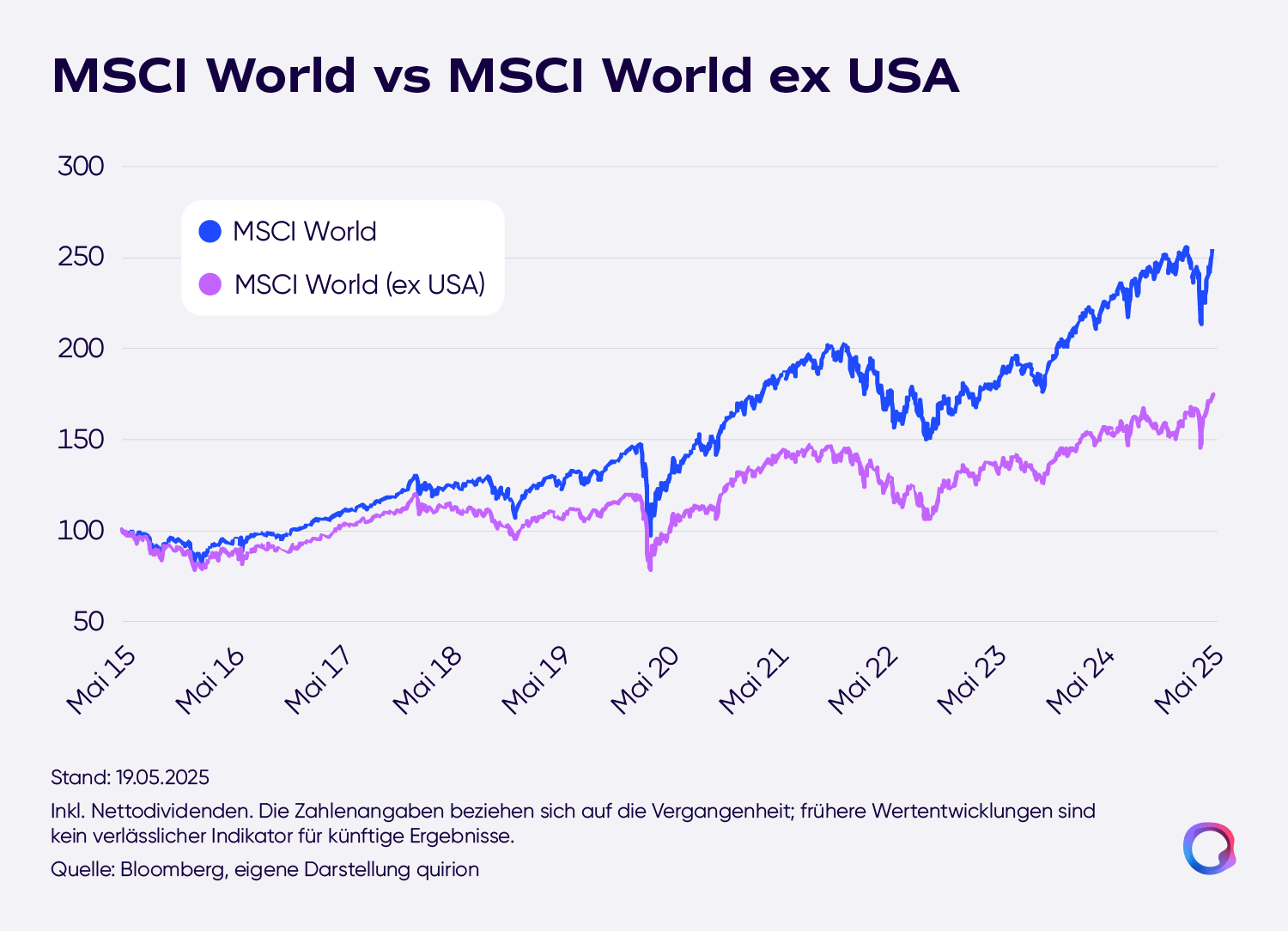
In recent years, the United States has fared far better economically than expected. Experts were repeatedly wide of the mark with their forecasts. The dominance of the US markets was beyond doubt – that of the tech sector in particular. There was debate about whether the US stock market systematically promises higher returns than other investment regions. There was talk of „exceptionalism.“ The phenomenon was explained by a special economic dynamism and the outstanding profitability of the companies.
Now the debate is running in the opposite direction. Rather prematurely: according to the „Global Investment Returns Yearbook“ by UBS and the London Business School, around 64 percent of global market capitalization came from the US at the end of 2024. You don't simply lose such a commanding position. Especially since the US stock market saw a marked recovery movement shortly after the turbulence in April.
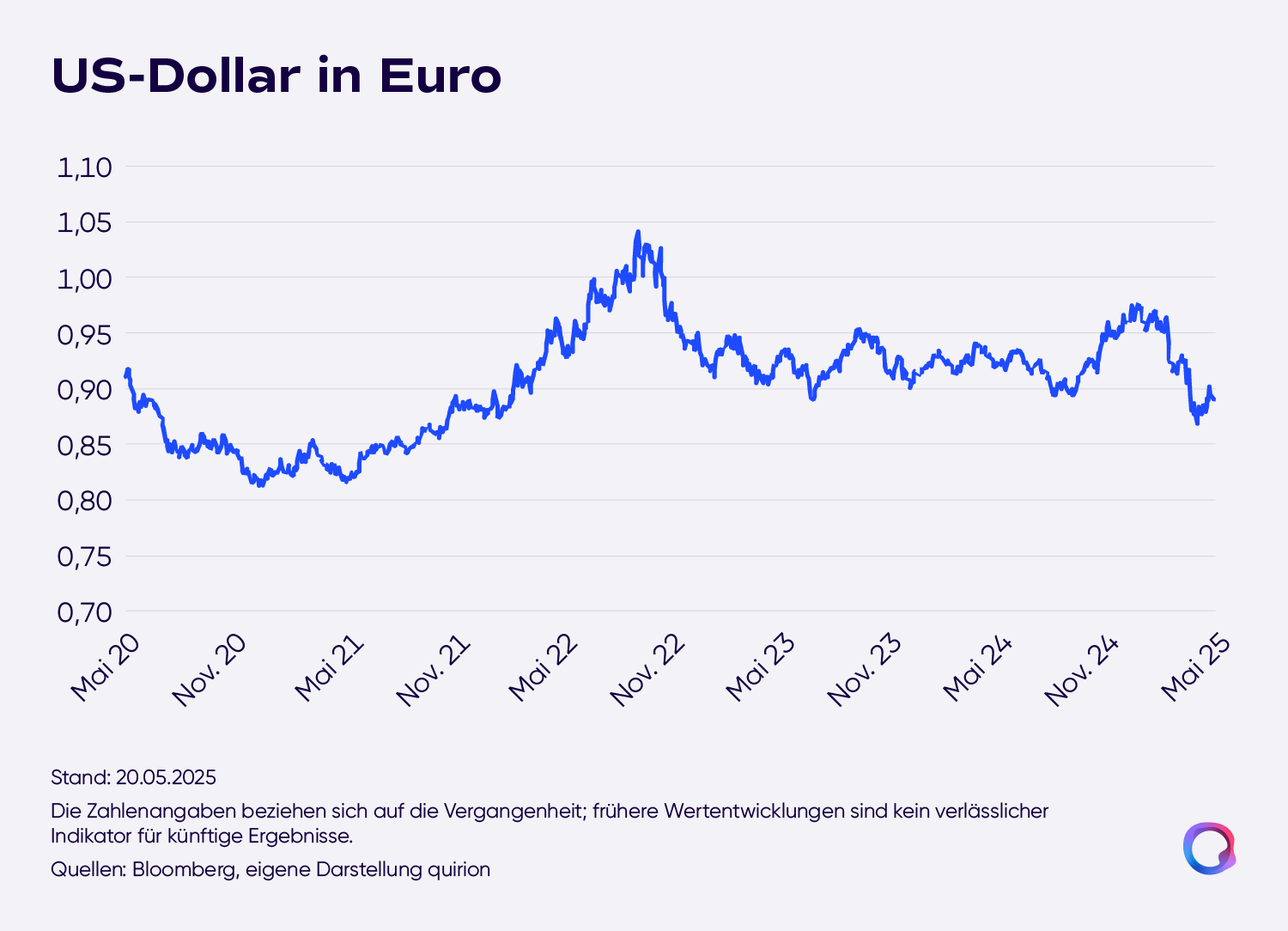
European investors, however, didn't get much of that at first. Because the US dollar also showed itself rather weak against the euro. Which likewise immediately triggered a debate. The dollar's role as the leading currency was called into question. Yet from January to mid-May, the US currency lost just a little over seven percent – a noticeable, but by no means extraordinary movement.
Diversification instead of speculation
Economists do consider it very likely that an economic slowdown will occur in the US. But given the sharp interest rate hikes in 2022 and 2023, many had long since been reckoning with it. Now Trump's tariff hammer is added as a weighing factor. Yet at present it's hard to gauge how things will continue with the tariffs – and how the markets will react to them.
Whether in the US or elsewhere: the markets are always good for a surprise. That has been shown in the past. No one can look into the future. Because that is so, in our investment strategy we rely on diversification instead of forecasts. In doing so, we orient ourselves, among other things, by market capitalization. It carries great importance for the weighting of the individual roughly 8,000 stocks in our global ETF portfolio. Even if it isn't the only criterion. In total, we take five so-called return factors into account.
With our investment strategy, we aim to achieve the best possible ratio of return opportunities to risks through the broadest possible diversification. In the popular MSCI World, which among other things leaves out small companies and emerging markets, the US share stood at over 70 percent at the end of April. In quirion's global ETF portfolio, by contrast, US stocks have a weighting of about 49 percent.
Investing to build wealth is long-term in orientation. And it needs a correspondingly long-term investment strategy. That strategy shouldn't change straight away just because there are larger price fluctuations in between. Because on the markets, those are simply part of the deal.
More about the advantages of diversification can be read here.