
Inflation is eating into the monthly budget. So many people are looking for where they can cut back. But taking the axe to your savings plan first is not a good idea, because: when the markets weaken, you get more units for the same money.
Whether at the supermarket, at the gas station, or when the utility bill arrives in the mail: price trends are causing many people trouble right now. While inflation has jumped this year, the same cannot be said of the equity markets. Time and again there are setbacks there.
We have shown what the current conditions mean for investing, among other places here and here. The core message: staying the course pays off - at least when the portfolio is broadly diversified enough and geared toward the long term, as ours is. This also applies to our savings plans. And perhaps to them in particular.
Don't miss out on the cost-average effect
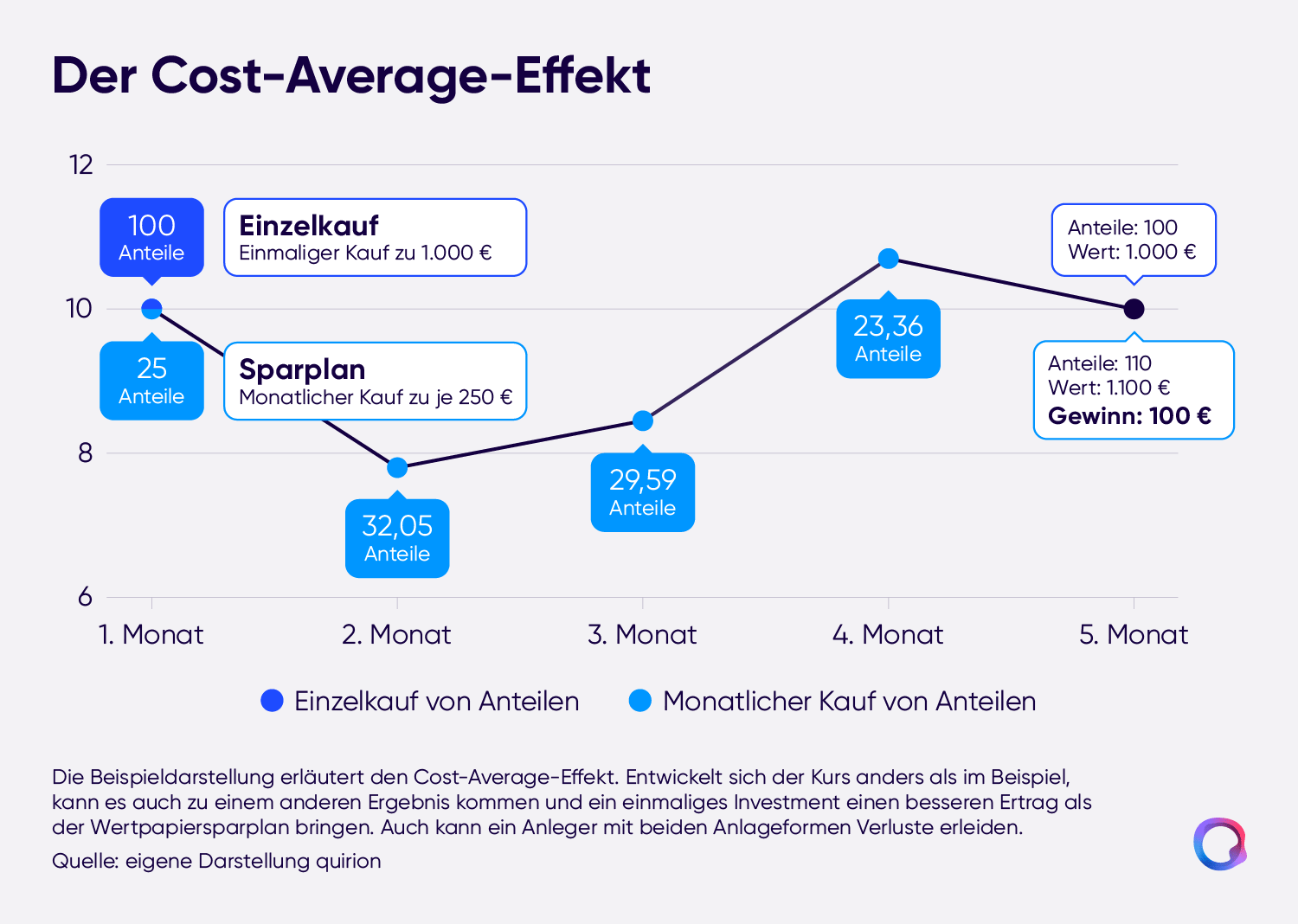
The savings plans do offer the flexibility to pause contributions temporarily. But unless it is absolutely necessary, taking the axe there first is not a good idea. Because in weaker market phases, you get more units for the same money. This is also known as the cost-average effect: anyone who invests a fixed amount each month in an ETF savings plan over the long term acquires more units in phases with low prices than in phases when equities are expensive. Compared with a lump-sum investment, this can result in a more favorable average price.
Investment discipline through automation
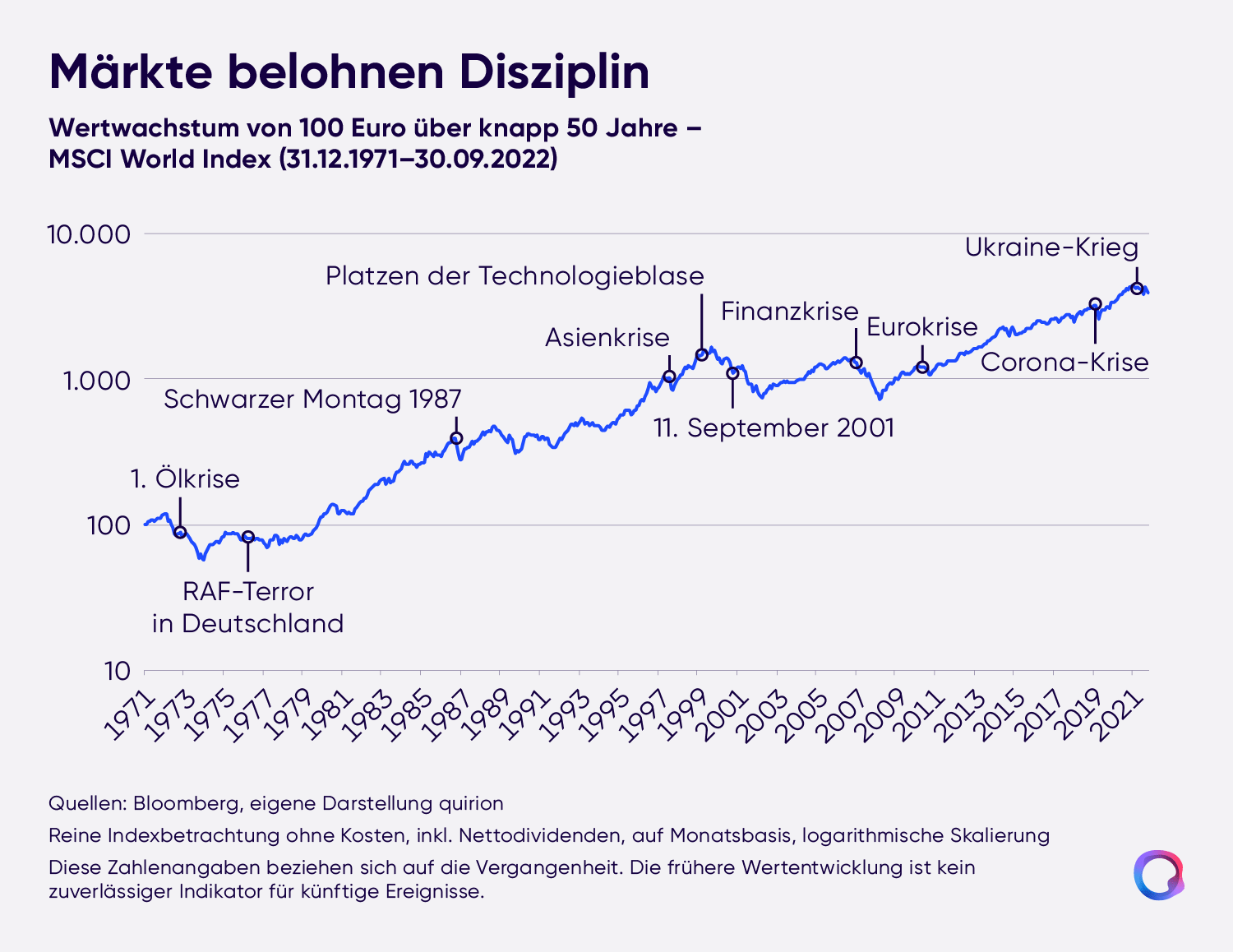
Once a savings plan is set up, the contributions and the investment run automatically. This regularity is a good basis for consistently continuing on the path toward your own investment goals. That investment discipline is rewarded by the markets is something we at quirion are firmly convinced of. Because over the long term, the equity market has always risen.
More than a simple product savings plan
The prerequisite for participating in the return potential of the equity markets without taking on too much risk is the broadest possible diversification. That is precisely what quirion's global portfolios are geared toward, with exposure to more than 8,000 equities. Savings plans based on them are therefore far more than a simple savings plan on a specific product. For comparison: the MSCI World contains around 1,500 stocks.
There is a "side effect" on top: with savings plans like these, you can also, in a certain sense, protect your money from the effects of inflation over the long term. That is another reason to stay the course with your savings plan, especially now.