The buzzword “financial wellbeing” is making the rounds. And the name itself says what it is about: feeling comfortable with your own finances. Investing with a system and plenty of staying power helps with that.
Whether in traditional or social media: there is more and more talk of “financial wellbeing”. The buzzword sounds somewhat like “wellness”. And that actually gets to the heart of the matter. Because this topic is not just about the numbers in your account or on your portfolio statement. It is about structuring your finances in a way that makes you feel good all around.
Right now, however, financial wellbeing in Germany appears to be in rather middling shape. That, at least, is what a survey published in October 2025 by the consulting firm Roland Berger and the Berlin-based House of Finance & Tech shows. According to the study, worries about their financial future preoccupy 52 percent of respondents at least once a week. 27 percent say they have no overview of their own financial situation. One in five assumes that, despite working and saving for retirement, their money will not be enough to maintain their standard of living in old age.
A question of mindset
Money alone does not make you happy. But in many places, it is the necessary means for fulfilling your wishes. Engaging with your finances and developing a healthy “money mindset” is therefore an important first step. If you would rather suppress the very thought of money, you are unlikely to come up with ideas for organizing your finances better.
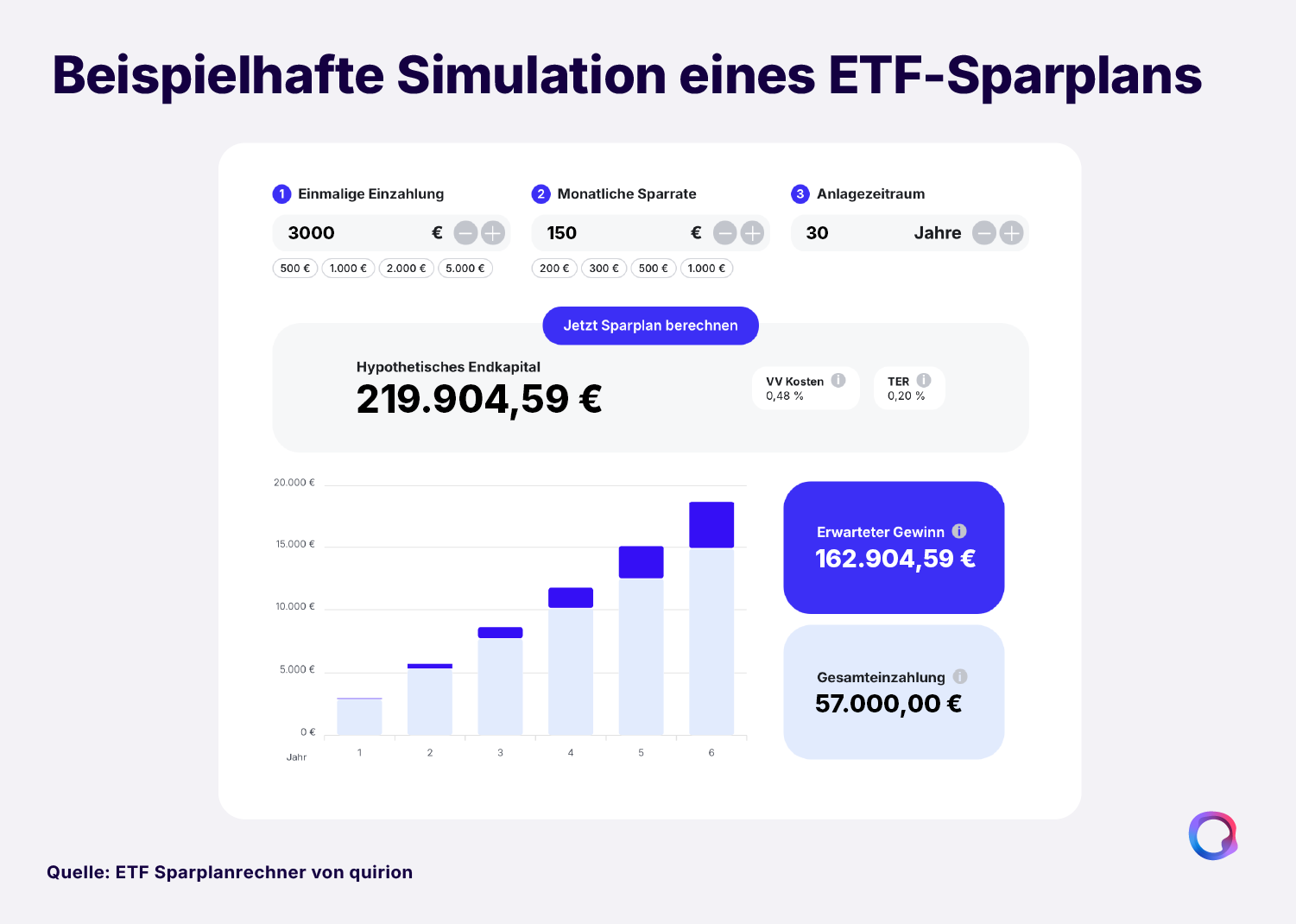
The next big step is to turn your own wishes into real goals. And to formulate them as precisely as possible. “Later in retirement, I don't want to have any money worries”: the wish is understandable, but hard to pin down and therefore hard to act on. It is better to set yourself a clear goal. For example: “For my retirement in 30 years, I want to build up a financial cushion of 200,000 euros.” A goal like that can be pursued concretely.
Adapting your financial planning to your goals
Most people probably have more than one wish and pursue several goals at the same time. Is there enough money for necessary expenses? Which long-term goals matter to me? When do I want to reach them? Only once questions like these have been answered can financial planning begin.
Unfortunately, this principle is rarely followed. Most portfolios are based on individual decisions that were never coordinated with one another. Perhaps a call money account because the interest rate was tempting. A few funds bought because of some recommendation list or other. A few individual stocks that acquaintances recommended. “As much return as possible” or “as safe as possible”: investors often move between these two poles. And when investing, they think mainly of individual securities and products. Yet it makes much more sense to focus on your own life planning. And to derive strategy and product selection from that.
Investing your emergency fund
The foundation of “financial wellbeing” is security in the here and now: you want to be able to pay your ongoing bills without fear of the next debit. An emergency fund that cushions unexpected expenses provides reassurance. A rule of thumb says that this financial buffer should amount to two to three months' net salary for employees and five to six for the self-employed. But that is only a rough guideline that everyone has to adapt to their own needs.
When it comes to the right “parking spot” for your emergency fund, flexibility and security are the most important criteria. You want to be able to access the money at any time, and there should be no fluctuations in value, or only very small ones. At quirion, we have two solutions that meet such criteria: our call money offer and Cash-Invest. And they still let you invest the money profitably.
Goals need time
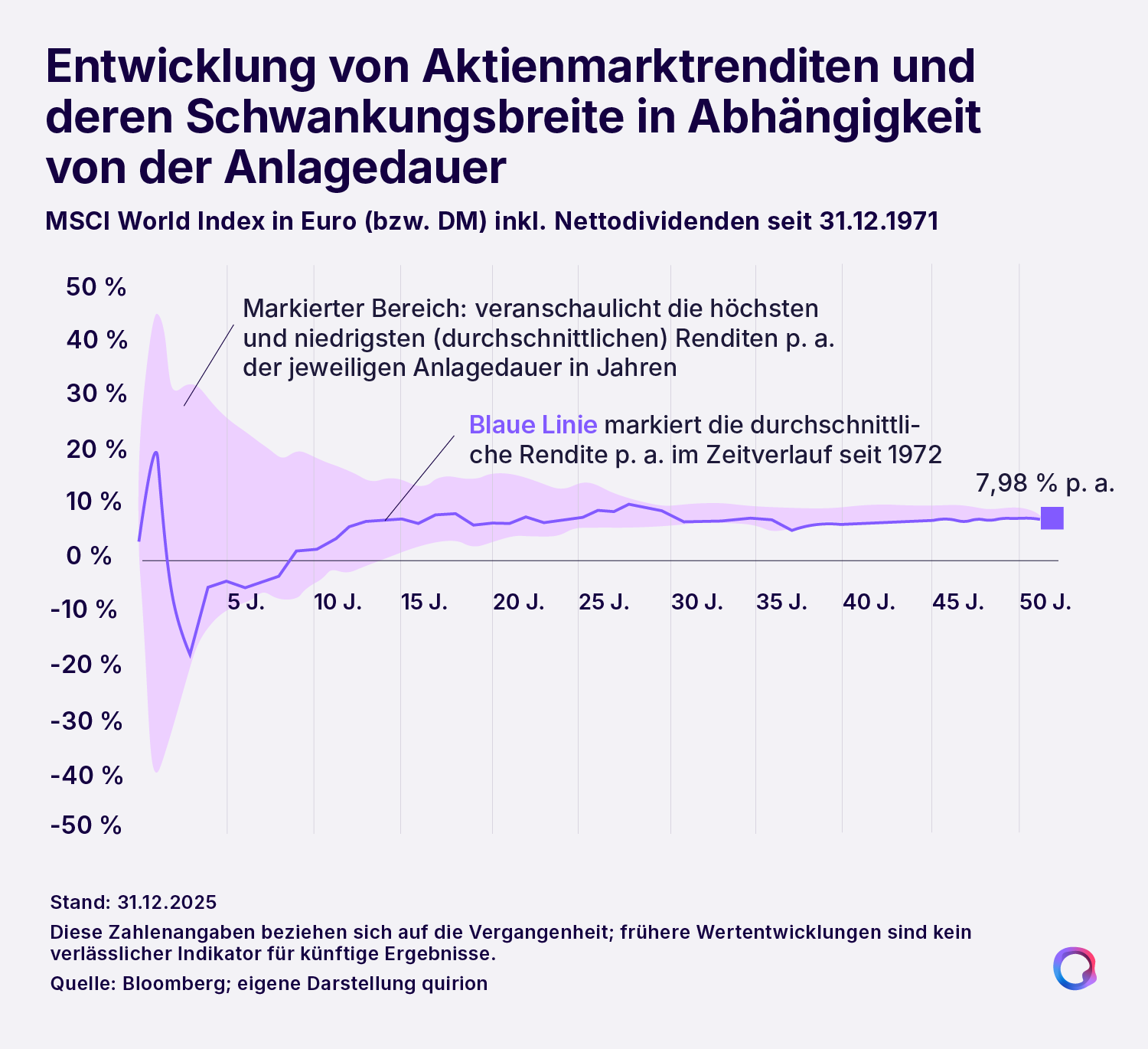
Whether you want to build up wealth to fulfill personal wishes. Or want to provide for your own retirement. Every goal has its own risk profile. One thing applies to all of them: a long investment horizon lets you achieve a lot. Because the longer the time until you reach your goal, the more powerfully compound interest can work as a lever.
However: our emotions often get in our way when building wealth over the long term. Whether it is chasing quick rewards or flight reflexes when things get hectic on the markets: time and again, anyone who invests money has to resist biologically ingrained impulses.
In situations like these, it can help to call a few facts to mind. For example, that short-term fluctuations in value usually even out over long periods. At least if you make broadly diversified use of the capital markets' return opportunities.
Reaching your investment goals, made easy
If you chase every trend, you expose yourself to constant stress. A solid basis for “financial wellbeing” is therefore, above all, a strategy that does not speculate wildly – but permanently ensures an optimal balance between return opportunities and risks. This can be achieved particularly efficiently with ETFs. But selecting and combining individual products is not a sure-fire success. After all, everything should precisely match your risk profile and your goal.
With professional wealth management like quirion, a goal-oriented strategy and a matching product selection are included. You can also use them as part of an ETF savings plan. That way, you get closer to your investment goals step by step. A good basis for feeling comfortable with your own finances – without having to take care of the details yourself.
You can find out more about our savings plans here.