







How to find the right investment for your child
There are many different ways to save for children. Which of them best suits you and your offspring depends on various factors:
- The savings goal: Should gifts of money from relatives be kept safe, should the child itself learn how to handle money, or should you be saving for a major purchase such as a first car?
- Availability of the money: Is it important that your child can access the money flexibly if need be? Or should the assets grow over the years and remain “locked” until they are paid out?
- Return-risk ratio: Should the sum of money grow as much as possible over the coming years, or primarily be kept safe? Many savings products for children offer high security, but nowadays yield hardly any interest. Investments on the stock market are, by comparison, exposed to greater fluctuations, but in return promise all the higher return opportunities over the long term.
Once you know what specifically you are saving for, how flexibly the money should be available and which return-risk ratio you are willing to accept, you can decide on one of the various options for investing money for children.
5 ways to invest for children
From the classic savings book through fixed-term deposits to a savings plan with ETFs: each savings option is suited to different savings goals and circumstances. Let us take a closer look at the following savings methods:
- Savings book
- Home savings contract
- Instant-access savings
- Fixed-term deposits
- ETFs
The classic savings book
A savings book is a traditional bank account on which money is held and earns interest. Deposits and withdrawals can be made at any time, although there is often a notice period for larger amounts.
- Suitable for the following savings goals: A savings book is suitable for smaller purchases and for teaching children the principle of saving.
- Availability of the money and investment period: The money is generally available at any time, although notice periods may apply for larger amounts. Savings books are suitable for flexible saving periods without a fixed term.
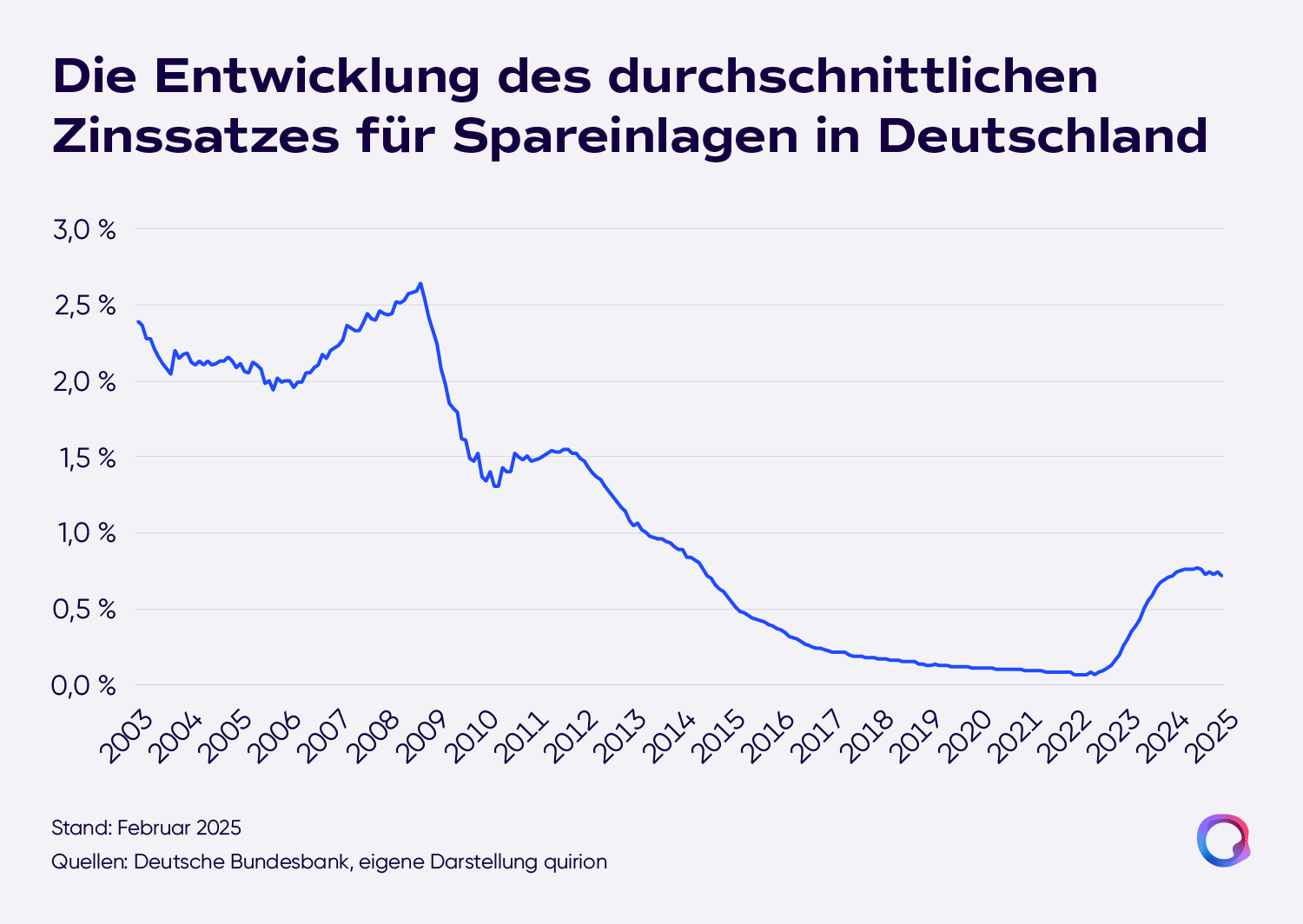
- Risk and return ratio: The savings book is considered a very safe form of investment with minimal risk. However, the interest rates are often very low and frequently below the rate of inflation, which often leads to a real loss of value, or loss of purchasing power.
The home savings contract
A home savings contract combines saving with the option of a later, low-interest loan to finance a property of one's own. However, there is no obligation to actually take out the loan later on.
- Suitable for the following savings goals: Home savings contracts are primarily intended for financing a first flat or house of one's own.
- Availability of the money and investment period: The money saved only becomes available after a fixed savings phase and allocation, which can take several years. Early withdrawals are usually not provided for or are associated with disadvantages, such as the loss of bonus interest.
- Risk and return ratio: Home savings contracts are considered one of the safest forms of saving, with guaranteed credit interest. However, the level of this interest is modest, and the return can additionally be reduced by high closing and account management fees. Compared with newer contracts, older home savings contracts sometimes still contain more attractive interest rates.
Instant-access savings
An instant-access savings account is an interest-bearing account. Money can be paid in and withdrawn from it at any time. Parents or legal guardians can open and manage instant-access savings accounts in their child's name. Once of legal age, the child then manages the account itself.
- Suitable for the following savings goals: An instant-access savings account is suitable above all for short-term savings goals, for example for material wishes, short-term purchases or an upcoming school trip.
- Availability of the money and investment period: With instant-access savings accounts, the money is available daily; there are no fixed terms.
- Risk and return ratio: Instant-access savings accounts are likewise considered very safe, as they are generally protected by the statutory deposit guarantee (up to 100,000 euros). The interest rates vary and can be higher than with a savings book, but are often not sufficient to offset inflation.
Fixed-term deposits
With a fixed-term deposit account, a specific amount is invested for a set term at a fixed interest rate. This form of saving is suitable above all if you already have a certain sum of money for your child and would like to set it aside safely and with interest.
- Suitable for the following savings goals: A fixed-term deposit account is suitable above all for short- to medium-term savings goals where the money is needed at a specific point in time. Typical savings goals for this are the driving licence coming up in the near future or the start of university.
- Availability of the money and investment period: Money held in a fixed-term deposit account is not available during the term. The terms can range from one month to several years.
- Risk and return ratio: Fixed-term deposits are likewise considered very safe and often offer higher interest rates than savings books or instant-access savings accounts. The fixed interest level does not change during the term. This offers the security of a fixed interest rate, but can, especially with longer terms, lead to opportunity costs (forgone additional income) if interest rates have risen again in the meantime. Despite the somewhat higher interest, a fixed-term deposit often fails to offset inflation either.
ETFs (Exchange Traded Funds)
ETFs are exchange-traded funds that replicate a stock market index, for example the MSCI World or the DAX, one to one. They make it possible to invest in a large number of shares or bonds at the same time with a comparatively small amount. Thanks to this passive replication of the indices, the costs of ETFs are very low, as there is no need to pay for management as with actively managed funds. ETFs are held in a securities account. With most providers, parents or legal guardians can open a securities account in their child's name. Once of legal age, the child takes over the management itself.
- Suitable for the following savings goals: ETFs are excellently suited to building wealth over the long term – e.g. in the form of a savings plan. If you start investing early (the earlier, the better), they can later finance various goals such as university, stays abroad or the start of working life. The child can also continue paying into ETFs in adulthood.
- Availability of the money and investment period: ETFs can be traded on the stock market at any time, which offers a high degree of flexibility. For children, however, a long-term investment horizon of at least 10 to 15 years is advisable, in order to benefit from the increases in value expected over the long term and to be able to sit out fluctuations. In addition, care should be taken that the selected ETFs replicate indices that spread as broadly across the globe as possible.
- Risk and return ratio: The following also applies to ETFs: investing on the capital market involves risks. ETFs (especially equity ETFs) offer attractive return potential thanks to their – often, but not always – broad diversification and low costs. It is important that the investment is made over the long term and broadly diversified, in order to minimise fluctuation risks and to make use of the return opportunities of the markets.
The quirion app
Advantages and disadvantages at a glance
Below you will find an overview of the key features of the various investments for children. We have not forgotten the good old piggy bank in this comparison either.
How much should you save each month for children?
There is no blanket answer to that. The size of the monthly savings amount depends on your individual financial means as well as on the savings goals for which the money is to be invested. To create a solid financial foundation for the child's adult life early on, you can use a monthly savings amount of between 25 and 100 euros as a rough guide. With an ETF savings plan, even small monthly amounts can lead to a considerable increase in wealth over the years.
Give it a try! With our handy savings plan calculator you can simulate how the invested capital can develop depending on the investment amount and investment period.
ETF securities account for children
If you would like to save for your child with an ETF savings plan, you have two options: you first pay into a securities account yourself, or you open a junior securities account for your child straight away.
- Your own securities account: The securities assets in your account are attributed to you legally and for tax purposes. On reaching the age of majority, your child has no access to the assets. To give it access, you must first transfer your securities account to your child. Any tax implications are best discussed with your tax advisers.
- Junior securities account: Here, a separate account and securities account is opened for the child. The assets saved belong to your child from the outset. Until the child comes of age, the parents or legal guardians are responsible for managing them as legal representatives. Of interest here: children are also entitled to tax allowances. Assets of the child's own could, however, have a disadvantageous effect with regard to BAföG (student financial support).
Good to know: An ETF securities account can be transferred to the child in the course of an inheritance or gift. This option can be of interest above all to grandparents who pay into an ETF portfolio for their grandchildren.
Conclusion: Investing for children
Depending on the savings goal and investment horizon, various investment options are available to you for building wealth for your children. Depending on the purpose and planned investment period, appetite for risk and return expectations, the various forms of saving are more or less suitable. One thing is certain, however: only with an ETF securities account do you participate in the return opportunities of the capital market on the child's behalf. Important: for all forms of saving: the earlier you start, the better.
At quirion you can invest via ETFs in over 8,000 different shares and 3,000 bonds. You don't have to be a financial professional yourself – we take care of that for you!
Opening an account with quirion is this easy:
Registrieren
Open an account
Deposit money
Claim your welcome bonus
Auf Rendite freuen!